Blitz Vs Rapid Vs Classical Chess
When you think about chess, consider how the format can shape your experience. Blitz chess pushes you to make quick decisions, while rapid chess strikes a balance between speed and strategy. On the other hand, classical chess invites you to engage in deep analysis. Each format has its own appeal, but how do you decide which one suits your style best? Let’s explore the nuances that could help you find your perfect match.
Understanding Blitz Chess
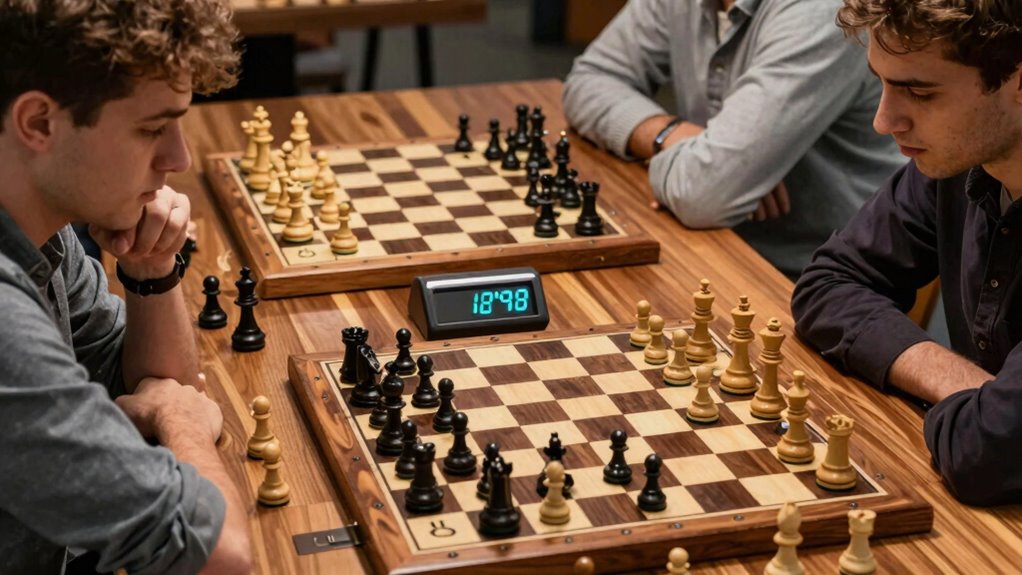
When you immerse yourself in the world of blitz chess, you’ll quickly discover that the clock is just as essential as your strategic prowess. Mastering blitz strategies is key to outsmarting your opponent while racing against time.
In this fast-paced format, each move counts; you can’t afford to linger. Effective time management becomes your greatest ally. Prioritize quick decision-making and develop a keen sense of when to think deeply versus when to play instinctively.
Analyze your opponent’s tendencies and adapt your strategy on the fly. Remember, every second saved can shift the game in your favor.
The Dynamics of Rapid Chess
Although rapid chess offers more time than blitz, the pressure to make quick yet sound decisions remains critical. You’ll find that tactical strategies become essential as each game unfolds.
With typically 10 to 25 minutes per side, you must balance between thinking ahead and managing your clock effectively. Every second counts; you can’t afford to squander time on unnecessary moves. Instead, focus on maintaining a clear plan while being adaptable to your opponent’s tactics.
Balancing strategy and time management is crucial in rapid chess; every second counts. Stay focused and adaptable!
This dynamic forces you to engage in a dance of calculation and intuition. As you refine your time management skills, you’ll discover a newfound freedom in making bold decisions without the paralyzing fear of time running out.
Embrace the challenge—rapid chess rewards ingenuity and quick thinking.
Exploring Classical Chess
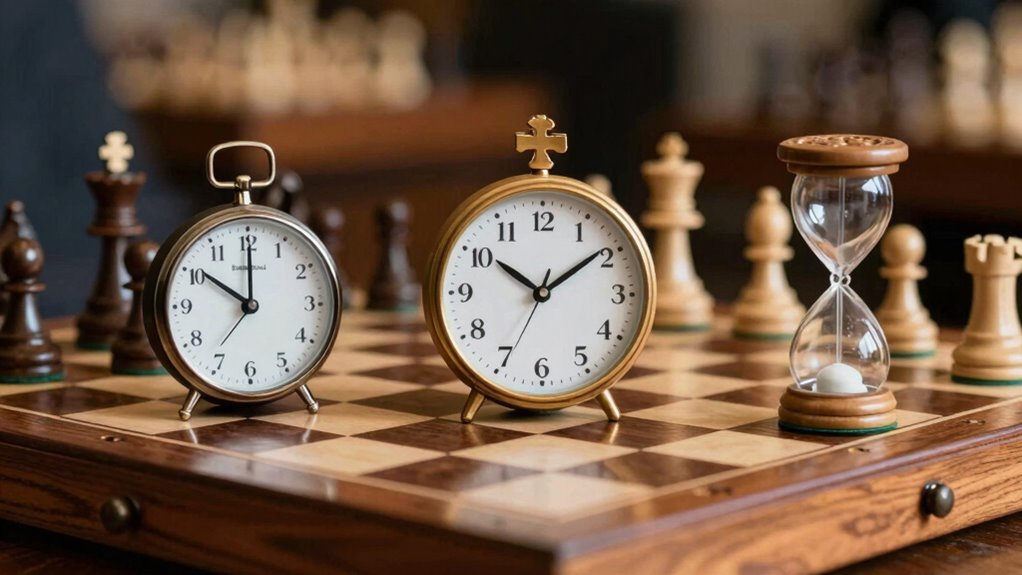
Classical chess stands apart as a format that emphasizes deep strategic thinking and thorough analysis, contrasting sharply with the rapid pace of both blitz and rapid chess.
In this timeless game, you’re encouraged to explore intricate tactical strategies, allowing your mind to investigate layers of possibilities. Each move carries historical significance, reflecting centuries of evolution in chess theory and player innovation.
You’ll find that the longer time controls create a space for creativity and deep reflection, enabling you to craft your unique style while respecting established patterns.
This format not only hones your skills but also cultivates a profound appreciation for the game’s rich heritage.
In classical chess, you embrace freedom through thoughtful deliberation, making each decision count.
Comparing Time Controls
While each chess format has its own charm, the differences in time controls greatly influence gameplay and strategy.
In blitz chess, you need to master blitz strategy, focusing on quick decisions and swift moves under intense pressure.
Rapid chess, on the other hand, allows you to develop rapid tactics, balancing speed with a bit more time for calculation and planning. This format encourages you to think on your feet while still being mindful of your opponent’s moves.
Classical chess emphasizes endurance, demanding patience and deep analysis over longer periods. Here, time management becomes vital, as you must allocate your thinking time wisely to avoid time trouble.
Understanding these differences can enhance your approach to each format, releasing your potential as a player.
Choosing the Right Format for You
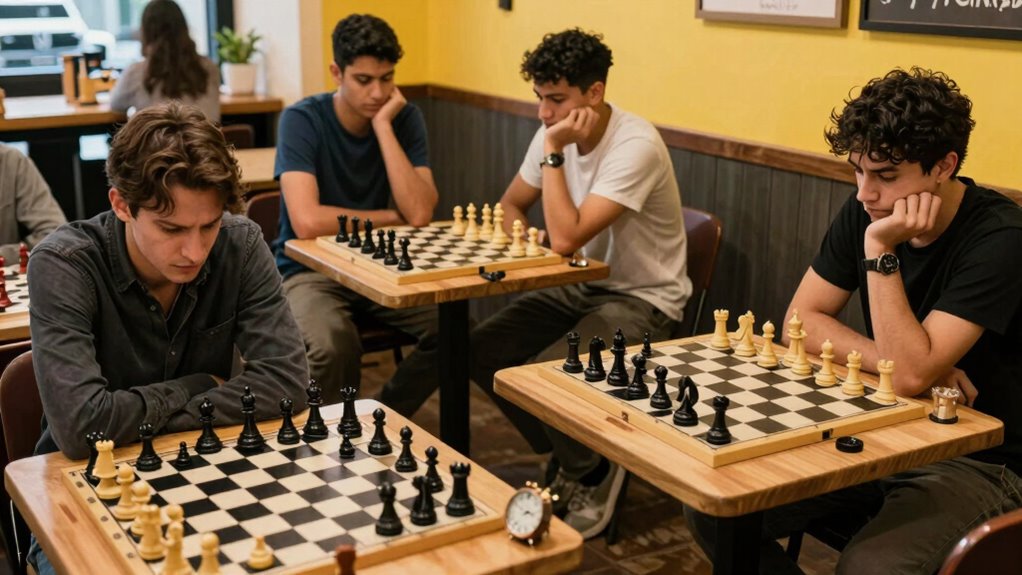
When deciding which chess format suits you best, consider your playing style and goals. Each format offers unique opportunities for strategy preferences and skill development.
Consider your playing style and goals to choose the chess format that best enhances your strategic skills and enjoyment.
Here’s a quick guide to help you choose:
- Blitz: Ideal for fast-paced play; great if you thrive on quick decisions and enjoy the thrill of time pressure.
- Rapid: Balances speed and thought; perfect if you want enough time to strategize without lengthy games.
- Classical: Focuses on deep analysis; best for those who value meticulous planning and strategic depth.
- Personal Goals: Determine what you aim to achieve—whether it’s casual enjoyment, competitive play, or improving your game.
Frequently Asked Questions
Can You Play Blitz Chess Online Against Random Opponents?
Yes, you can play blitz chess online against random opponents. Many online platforms offer this option, letting you enjoy fast-paced games while testing your skills and strategies against a diverse range of players worldwide.
What Are Common Strategies for Rapid Chess?
In rapid chess, enhance your tactical awareness, manage your time wisely, coordinate your pieces effectively, and read your opponent’s psychology. These strategies will help you seize opportunities while minimizing mistakes, maximizing your chances of success.
How Do Chess Ratings Differ Across Formats?
Chess ratings fluctuate considerably across formats; for instance, a player’s blitz rating can be up to 200 points higher than their classical rating. These format differences highlight the unique strategies and time constraints involved in each game.
Are There Specific Tournaments for Blitz Chess?
Yes, there are specific blitz tournaments featuring shorter time controls, typically ranging from three to five minutes per player. These events attract fast-paced action, allowing you to showcase your quick decision-making skills and strategic prowess.
Can Beginners Benefit From Playing Classical Chess?
Playing classical chess offers beginners classical advantages, helping you learn fundamentals deeply. With more time to think, you’ll analyze positions better, develop strategies, and ultimately enjoy the freedom of mastering the game.