10 Best Ellipticals for Small Spaces
Ellipticals have a space problem: the good ones are usually the size of a dining table. If you’re working out in an apartment, a spare bedroom, or a corner of the living room, you need a machine that delivers a real low-impact cardio workout without eating half your floor plan. That means paying attention to two numbers most roundups gloss over — the footprint in inches, and the stride length, which decides whether the machine feels like an elliptical or a stair-stepper in disguise.
I’ve compared the ten best compact ellipticals on Amazon for 2026 through a small-space lens: footprints, folded dimensions, stride lengths, and whether the machine can be moved or stored when you’re done. Most picks here fit in under four feet of length; two full-size machines made the cut only because they’re worth the floor space if you have a dedicated corner. If you’re still planning the room, read up on how much space you actually need for a home gym before you buy.
As an Amazon Associate, I earn from qualifying purchases. Prices fluctuate — check the current price before you buy.
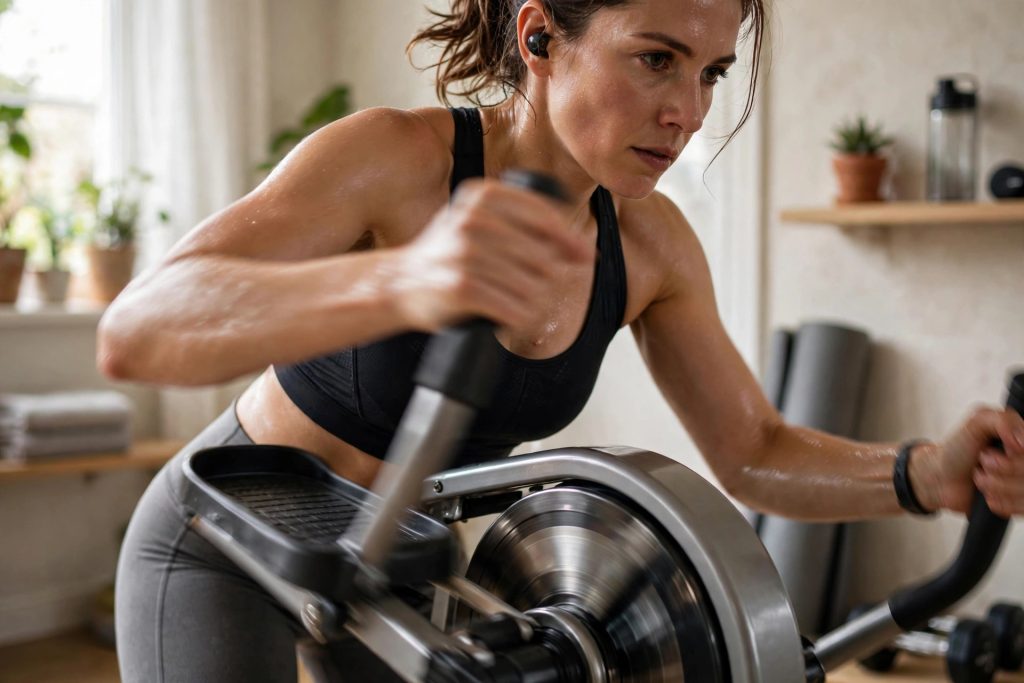
Top 10 Ellipticals at a Glance
| Product | Price | Key Spec | Dimensions | Best For | |
|---|---|---|---|---|---|
| Niceday CT11S Elliptical (15.5" Stride) | ~$350–$450 | 16 magnetic levels, 400 lb capacity, ~90% pre-assembled | 39" × 21" × 60" | Best Overall for Small Spaces | CHECK PRICE |
| Sunny Health & Fitness SF-E905 | ~$200–$280 | 8 magnetic levels, belt drive, pulse grips | 37.8" × 26.6" × 60" | Best Budget | CHECK PRICE |
| Cubii JR1 Under-Desk Elliptical | ~$280–$350 | 8 resistance levels, whisper-quiet, app sync | 23" × 18" × 10" | Best Compact Under-Desk | CHECK PRICE |
| Schwinn 411 Compact Elliptical | ~$450–$800 | 18" stride, 16 ECB levels, Bluetooth + app | 53.8" × 24" × 62.5" | Best Stride Length | CHECK PRICE |
| YOSUDA Folding Elliptical | ~$350–$500 | Folds to ~2 sq ft, 15" stride, 16 magnetic levels | Folds to ~2 sq ft | Best Folding | CHECK PRICE |
| Nautilus E616 Elliptical | ~$700–$1,000 | 20" stride, 25 levels, motorized incline, 29 programs | 70" × 28" × 71" | Best Premium | CHECK PRICE |
| Horizon Fitness EX-59 | ~$550–$750 | 18" stride, Bluetooth speakers, 30-min assembly | 74" × 25" × 64.5" | Best Quiet | CHECK PRICE |
| Doufit Elliptical Machine | ~$180–$280 | 8 magnetic levels, moving arms, pulse sensors | 50" × 20.5" × 61.8" | Best Value | CHECK PRICE |
| Schwinn 430 Elliptical | ~$450–$800 | 20-level ECB resistance, heavy flywheel, 22 programs | 70.1" × 28.2" × 63.2" | Best Magnetic Resistance | CHECK PRICE |
| FUNMILY Magnetic Elliptical | ~$280–$380 | 15" stride, folding, 390 lb capacity | 40" × 20" × 63" | Best for Beginners | CHECK PRICE |
The 10 Best Ellipticals — Quick Reviews
1. Niceday CT11S Elliptical (15.5″ Stride) — Best Overall for Small Spaces
The Niceday CT11S reads like it was designed by someone who’s lived in an apartment: at 39 × 21 inches it takes less floor than a coffee table, yet the rear-drive layout and 15.5-inch stride feel like a machine twice its size. The hyper-quiet magnetic drive lives up to the name — reviewers work out while family sleeps next door — and sixteen resistance levels mean it won’t go easy on you just because it’s small.
It also arrives roughly 90% pre-assembled — you’re tightening bolts, not deciphering a 40-page manual — and the 400-pound capacity on this footprint signals a seriously overbuilt frame. If you want one machine that disappears into a corner and still delivers a real workout, start here.
Key specs: 39″ × 21″ × 60″ · 15.5″ stride · 16 magnetic resistance levels · 400 lb capacity · hyper-quiet magnetic drive · digital monitor with pulse readout · transport wheels · ~90% pre-assembled · ~$350–$450
2. Sunny Health & Fitness SF-E905 — Best Budget
The SF-E905 has been Amazon’s default budget elliptical for the better part of a decade: it’s the cheapest way to get a legitimate full-body elliptical workout at home. Moving handlebars, 8-level magnetic resistance with a smooth belt drive, pulse grips, and a simple LCD tracking time, speed, distance, calories, and pulse. Nothing connects to your phone, and nothing needs to — it just works.
The trade-offs are honest: the 220-pound capacity is the lowest on this list, the stride is shorter than premium machines, and the console is basic. But for consistent low-impact cardio in a small room at the price of a few months of gym membership, nothing beats it — and at 68 pounds it’s one of the easiest to move.
Key specs: 37.8″ × 26.6″ × 60″ · 68 lb · 8 magnetic resistance levels · belt drive · 220 lb capacity · moving arms + pulse grips · LCD monitor (time/speed/distance/calories/pulse) · ~$200–$280
3. Cubii JR1 Under-Desk Elliptical — Best Compact Under-Desk
The Cubii JR1 takes “small spaces” literally: it lives under your desk. This seated pedal exerciser is built for the work-from-home crowd who want movement during the day, not a separate workout block. The ergonomic pedal angle keeps motion smooth and joint-friendly, eight resistance levels run from barely-there to genuinely challenging, and it’s quiet enough for video calls — Cubii built its reputation on office-friendly silence.
It won’t replace standing cardio — your heart rate won’t match a full-size machine. But it turns dead sitting time into active time, which compounds over weeks, and Bluetooth syncs strides and calories to the Cubii app for streaks and goals. For seniors, rehab users, or anyone whose workout window is “during meetings,” it’s the most practical pick here.
Key specs: ~23″ × 18″ × 10″ · ~27 lb · 8 resistance levels · whisper-quiet magnetic mechanism · built-in LCD display · Bluetooth app sync · ergonomic 12° pedal angle · ~$280–$350
4. Schwinn 411 Compact Elliptical — Best Stride Length
Compact ellipticals usually mean short, choppy strides — the Schwinn 411 solves that by packing a full 18-inch stride into a 53.8-inch frame. For anyone over about 5’6″, that’s the difference between a natural glide and marching in place.
Beyond the stride it’s properly equipped: 16 levels of eddy-current magnetic resistance, 13 programs, Bluetooth with the Explore the World app, and contact plus wireless-telemetry heart rate. The 10-year frame warranty is the best backing in the compact class. The trade-off is price — it has crept toward $800, so wait for a sale — and the console isn’t backlit. If you’re torn between cardio machines entirely, our treadmill vs. exercise bike breakdown covers how the math compares.
Key specs: 53.8″ × 24″ × 62.5″ · 100 lb · 18″ stride · 16 ECB resistance levels · 300 lb capacity · 13 programs · Bluetooth + Explore the World app · contact + telemetry HR · 10-yr frame warranty · ~$450–$800
5. YOSUDA Folding Elliptical — Best Folding
Most “compact” ellipticals still permanently occupy their footprint. The YOSUDA goes further: it folds to about two square feet — lean it in a closet, slide it behind a door, reclaim your room. That’s a fundamentally different proposition when the workout space is also the living room.
The specs hold up too: 15-inch stride, 16 magnetic resistance levels, pulse sensors, and an LCD monitor, from a brand with a long home-cardio track record. The caveat is a thinner review base than decade-old rivals — it’s a newer listing. But if storage, not just footprint, is your constraint, nothing else here disappears like this one.
Key specs: folds to ~2 sq ft · 15″ stride · 16 magnetic resistance levels · LCD monitor · pulse sensors · transport wheels · established fitness brand · ~$350–$500
6. Nautilus E616 Elliptical — Best Premium
The E616 is the stretch pick: at 70 inches it needs a dedicated corner. What it gives back is the closest thing to a health-club machine here — 25 resistance levels, motorized incline, 29 programs, and a 20-inch stride on a 22-pound perimeter-weighted flywheel, noticeably smoother than anything in the budget tier. The blue-backlit DualTrack console syncs via Bluetooth to the Explore the World and Nautilus Trainer apps, and a wireless chest-strap heart monitor is included.
This is the buy-once machine for buyers with the space, backed by a 10-year frame warranty and Nautilus’s decades in the category. Note the app’s virtual routes need a subscription, and at 173 pounds you’ll want help with delivery — though transport wheels ease small repositioning.
Key specs: 70″ × 28″ × 71″ · 173 lb · 20″ stride · 25 resistance levels · motorized incline · 29 programs · 22 lb flywheel · 300 lb capacity · Bluetooth + app sync · chest strap included · 10-yr frame warranty · ~$700–$1,000
7. Horizon Fitness EX-59 — Best Quiet
If your walls are thin, the EX-59 deserves your attention. Its belt-driven magnetic system with a 14.3-pound flywheel is engineered for low-decibel operation — early-morning workouts without waking the household are the whole point. It’s marketed for apartments and low ceilings, and at 64.5 inches tall it’s shorter than most full-stride machines.
The feature set is practical: 10 magnetic resistance levels with one-touch keys, an 18-inch stride, Bluetooth speakers and a device holder so your phone is the entertainment system, plus a rapid-charge USB port. Assembly takes about 30 minutes — half what some rivals demand. You trade away incline and resistance range for the quiet focus, but for steady-state cardio in shared spaces it’s the right compromise. Pair it with our guide to the best exercise bikes for home workouts if you’re building a quiet two-machine cardio corner.
Key specs: 74″ × 25″ × 64.5″ · 18″ stride · 10 magnetic resistance levels · 14.3 lb flywheel · 300 lb capacity · Bluetooth speakers + device holder · USB charging · ~30-min assembly · lifetime frame warranty · ~$550–$750
8. Doufit Elliptical Machine — Best Value
The Doufit is the price-performance play: a full-size-feeling elliptical with moving handlebars for under $280. An 8-level magnetic resistance system, clear LCD monitor, pulse sensors, and a steel frame rated to 286 pounds — the fundamentals of a real elliptical workout at a price where rivals sell pedal exercisers.
Calibrate expectations: Doufit is a lesser-known brand, the resistance range is narrower than premium machines, and warranty support won’t match Schwinn or Nautilus. But smooth magnetic resistance with upper-body engagement is what burns the calories, and this delivers it for less than a month at some boutique gyms. For testing whether you’ll actually use an elliptical, that’s exactly the right gamble.
Key specs: ~50″ × 20.5″ × 61.8″ · ~63 lb · 8 magnetic resistance levels · 286 lb capacity · moving + fixed handlebars · LCD monitor · pulse sensors · ~$180–$280
9. Schwinn 430 Elliptical — Best Magnetic Resistance
The second stretch pick earns its place on drive quality alone: eddy-current magnetic resistance with 20 levels and a high-inertia perimeter-weighted flywheel deliver the smoothest resistance curve near this price —
no notches, no dead spots, just a linear ramp from easy spin to genuine grind. A manual incline ramp and 22 programs complete the package for buyers who care how resistance feels.
Like the Nautilus it’s a full 70 inches long, so measure your corner first. In return you get Schwinn’s deepest review history, a 10-year frame warranty, and thoughtful touches like a USB charging port, a three-speed fan, and dual speakers. Watch for sales — it has historically swung between ~$450 and ~$800, and timing is the difference between a good deal and a great one.
Key specs: 70.1″ × 28.2″ × 63.2″ · ~168 lb · 20″ stride · 20-level ECB magnetic resistance · high-inertia flywheel · manual 0–10% incline · 22 programs · 300 lb capacity · DualTrack LCD · USB charging · 10-yr frame warranty · ~$450–$800
10. FUNMILY Magnetic Elliptical — Best for Beginners
Beginners don’t need 29 programs — they need a machine that doesn’t intimidate. The FUNMILY keeps it simple: a 40-inch frame, magnetic resistance, a 15-inch stride suiting a wide range of heights, and a clear digital monitor with heart-rate tracking. Setup is beginner-friendly, and the folding design means it won’t dominate the room while you’re building the habit.
The surprise is the 390-pound capacity — far above expectations at this size and price, signaling a sturdier-than-average frame. FUNMILY isn’t a household name and published specs are thinner than the big brands’, so this is a buy on value rather than pedigree. As a low-stakes first machine for learning your stride and resistance preferences, it’s an easy recommendation.
Key specs: 40″ × 20″ × 63″ · 74 lb · 15″ stride · magnetic resistance · 390 lb capacity · digital monitor + heart rate monitor · folding design · steel frame · ~$280–$380
How to Choose an Elliptical
- Measure your real footprint first. Length × width of the machine plus at least a foot of clearance on the sides and two feet behind for safe mounting. A “compact” 74-inch machine is still over six feet long — tape it out on the floor before ordering.
- Stride length decides the feel. Under 5’6″, a 13–15″ stride is fine; 5’6″ and up, look for 16–18″+ or the motion will feel choppy. The Schwinn 411’s 18″ stride in a 54″ frame is the standout compact achievement here.
- Magnetic resistance is the quiet choice. All ten picks use magnetic systems, but belt-driven and eddy-current (ECB) designs run quieter and smoother than friction pads — a must if you share walls.
- Check weight capacity with headroom. It includes dynamic load, so buy 50+ pounds of headroom above the heaviest user — a 400 lb rating on a compact frame signals genuinely sturdy construction.
- Count the programs you’ll actually use. Beginners thrive on 8–13 simple programs; only pay for 25+ programs and app ecosystems (Nautilus, Schwinn) if you’ll use virtual routes and heart-rate training.
- Think about storage, not just size. Folding machines (YOSUDA, FUNMILY) and transport wheels matter more than an inch or two of footprint if the machine must disappear daily.
- Ceiling height matters too. You’ll stand 10–14 inches above the floor at the top of the stride. In a low-ceiling basement or attic room, shorter machines like the Horizon EX-59 are the safer bet.
FAQs
What is the best elliptical for a small apartment? The Niceday CT11S is the best all-around pick — 39″ × 21″ footprint, 15.5″ stride, whisper-quiet magnetic drive, 400 lb capacity, ~90% pre-assembled. If the machine must vanish between workouts, the folding YOSUDA collapses to ~2 sq ft; if your “gym” is your desk, the Cubii JR1 fits underneath it.
How much room do you need around an elliptical? Plan on the machine’s footprint plus roughly 12 inches of clearance on each side and 24 inches behind for safe mounting and dismounting. Add ceiling clearance too: at the top of the stride you’ll be 10–14 inches above the floor, so measure your height plus that before buying for a low-ceiling room.
Is a compact elliptical as good as a full-size one? For steady-state cardio and weight loss, yes — calorie burn comes from sustained effort, not machine size. You give up stride length (shorter strides feel choppier for taller users) and resistance range, though machines like the Schwinn 411 close the gap with a full 18″ stride in a compact frame.
Are under-desk ellipticals worth it? They’re worth it for what they are: a way to stay active during sedentary hours, not a cardio workout replacement. A Cubii JR1 won’t raise your heart rate like a full-size machine, but consistent low-intensity movement across an eight-hour workday adds up meaningfully — especially for seniors, rehab users, or anyone who struggles to find a dedicated workout window.