Is Paragliding Dangerous?
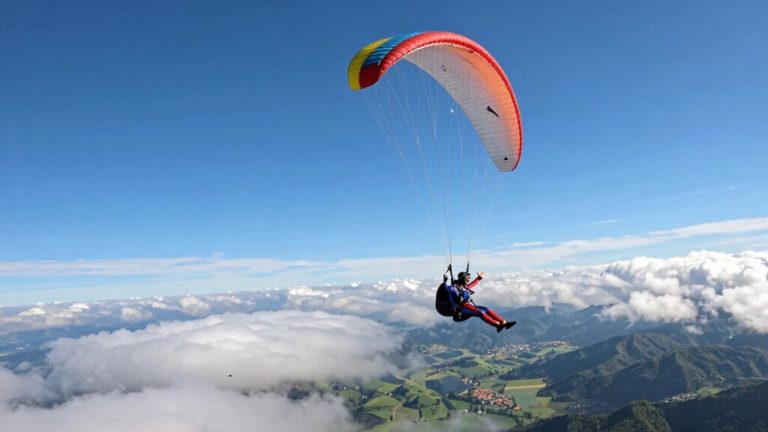
Imagine a skilled paraglider soaring through the air, enjoying a breathtaking view, yet the question of danger lingers. Paragliding is often viewed as perilous, but this perspective may stem from misconceptions rather than facts. By examining risks, safety protocols, and the impact of weather, you can gain a clearer understanding of the true nature of paragliding safety. What factors contribute to the perceptions of danger, and how can they be mitigated?
Understanding the Risks of Paragliding

While paragliding offers the thrill of soaring through the sky, it’s essential to understand that it comes with inherent risks. Your risk perception plays a key role in this adventure; recognizing potential hazards helps you make informed decisions.
Weather conditions, equipment failure, and pilot experience are factors that can greatly influence your safety. Embracing a robust safety culture is important for minimizing risks. This includes adhering to established protocols, using reliable gear, and participating in training sessions.
Common Myths About Paragliding Safety
Many people hold misconceptions about paragliding safety that can skew their perceptions of the sport. For instance, a common myth is that paragliding is inherently dangerous, overshadowing the fact that most flights occur without incident.
Myth debunking reveals that safety misconceptions often stem from a lack of understanding regarding equipment and training. Many assume that paragliding requires no skill, but proper instruction and experience greatly reduce risks.
Another myth suggests that accidents are frequent, while statistics show they’re rare, especially among trained pilots. By addressing these fallacies, you can appreciate paragliding as a thrilling yet safe adventure.
Embracing knowledge helps you navigate the skies with confidence, ensuring your freedom to soar remains untainted by fear.
The Role of Weather Conditions

Understanding the role of weather conditions is essential for safe paragliding. Weather patterns can change rapidly, influencing your flight experience considerably. You need to monitor wind conditions closely, as strong or unpredictable winds can lead to dangerous situations.
For instance, thermals can provide lift but may also create turbulence if they’re too strong. Additionally, overcast skies or impending storms can diminish visibility and affect air stability.
Before taking off, assess local forecasts and consult with experienced pilots to gauge the day’s conditions. By understanding how weather affects your flight, you’ll enhance your safety and enjoy the freedom paragliding offers.
Always prioritize your awareness of weather changes to guarantee a thrilling yet secure adventure in the skies.
Importance of Pilot Experience
When considering paragliding, your level of experience plays an essential role in safety.
Proper flight training equips you with the necessary skills to handle various situations in the air.
Understanding how your experience level affects decision-making can greatly impact your overall safety during flights.
Flight Training Necessity
Although some might underestimate the importance of flight training, having a solid foundation in paragliding techniques is essential for ensuring safety and enhancing the overall flying experience.
Enrolling in flight schools and participating in training programs can provide you with critical skills. Here are four key benefits:
- Technical Knowledge: Understand weather conditions, gear functionality, and aerodynamics.
- Emergency Procedures: Learn how to react effectively in unexpected situations.
- Controlled Environment: Experience flying under the guidance of certified instructors.
- Confidence Building: Gain the self-assurance needed to tackle diverse flying conditions.
Investing time in thorough training not only prepares you for the skies but also elevates your enjoyment and freedom in this exhilarating sport.
Experience Level Matters
Experience level plays an essential role in determining the safety and enjoyment of paragliding. As a pilot, your experience directly influences decision-making, risk assessment, and overall control in the air.
Beginners often make critical mistakes, such as misjudging wind conditions or failing to execute proper launch techniques. These errors can lead to dangerous situations. In contrast, experienced pilots utilize advanced techniques, such as dynamic soaring or precise landings, to enhance their flights and navigate challenging conditions.
Understanding your skill level not only minimizes risks but also maximizes the exhilaration that paragliding offers. Continuous learning and practice are paramount; as you evolve, so does your ability to explore the skies with confidence and freedom.
Embrace the journey, and let your experience guide you.
Equipment Quality and Maintenance

Quality and maintenance of paragliding equipment play an essential role in ensuring safety and performance.
For your safety and enjoyment, follow these important steps:
- Regular Equipment Inspection: Check your wing, harness, and lines for any signs of wear or damage before each flight.
- Prompt Gear Replacement: If you notice fraying lines or fabric tears, replace the gear immediately to avoid potential malfunctions.
- Proper Storage: Store your equipment in a cool, dry place to prevent mold and deterioration.
- Maintenance Log: Keep a log of inspections and repairs to track the lifespan and condition of your gear.
Safety Measures for Paragliding
When it comes to paragliding, understanding and implementing safety measures is crucial for minimizing risks. Regular gear inspections should be a priority; checking for wear and tear can prevent accidents. Additionally, adhering to established safety protocols guarantees you’re prepared for various conditions.
Here’s a quick reference table for essential safety measures:
| Safety Measure | Description |
|---|---|
| Gear Inspections | Regular checks for damage or wear |
| Pre-Flight Briefing | Discuss conditions and emergency plans |
| Weather Assessment | Evaluate conditions before flying |
Comparing Paragliding With Other Adventure Sports

When you compare paragliding to other adventure sports, consider the unique risk assessment factors involved.
Each sport has its own equipment safety standards, which can greatly influence your overall safety.
Additionally, the importance of skill level varies, impacting how effectively you can manage potential hazards.
Risk Assessment Factors
While many adventure sports carry inherent risks, paragliding presents unique challenges that set it apart from activities like rock climbing or skydiving. Understanding these factors is important for effective risk mitigation and accident prevention.
Here are four key aspects to take into account:
- Weather Conditions: Unpredictable winds can dramatically affect your flight.
- Pilot Experience: Your skill level plays a significant role in managing risks.
- Launch and Landing Zones: Selecting safe locations is necessary for successful flights.
- Equipment Maintenance: Regular checks guarantee your gear is in ideal condition.
Equipment Safety Standards
Equipment safety standards play an essential role in ensuring the safety of paragliding, much like in other adventure sports such as skydiving and rock climbing. These standards stem from rigorous equipment testing and quality assurance processes, ensuring that your gear can withstand the demands of flight.
| Adventure Sport | Equipment Safety Standards |
|---|---|
| Paragliding | Regular inspections and testing |
| Skydiving | Parachute integrity checks |
| Rock Climbing | Harness and gear certifications |
Skill Level Importance
Safety in paragliding isn’t solely reliant on equipment; your skill level greatly impacts your overall safety and enjoyment of the sport.
Unlike some adventure sports, paragliding requires specific skill development and familiarity with beginner techniques to navigate the skies safely.
Consider these key aspects of skill level:
- Understanding Weather Conditions: Knowledge of wind patterns considerably influences your flight safety.
- Launching and Landing: Proper techniques can minimize risks during critical phases of your flight.
- Emergency Procedures: Being trained in handling unexpected situations can save your life.
- Equipment Familiarity: Knowing your gear enhances your control and responsiveness.
Mastering these areas elevates your paragliding experience, allowing you to embrace the freedom of flight while ensuring safety.
Personal Stories: Accidents and Safety Improvements

Accidents in paragliding, though infrequent, often spark significant discussions about safety improvements in the sport. When you hear personal experiences of those who’ve faced mishaps, it’s essential to conduct thorough accident analysis.
These stories often reveal underlying issues such as equipment failure or poor weather conditions, prompting innovations in gear design and safety protocols. For instance, advancements in reserve parachutes and better training programs have emerged from earlier accidents.
You’ll find that communities rally around these incidents, fostering a culture of shared knowledge and responsibility. By learning from each accident, the sport evolves, enhancing your freedom to soar while prioritizing safety.
Embracing these lessons is critical for both current and future paraglider enthusiasts.
Frequently Asked Questions
What Are the Most Common Causes of Paragliding Accidents?
The most common causes of paragliding accidents are pilot error and equipment failure. You should always guarantee proper training and regular equipment checks to minimize risks and enjoy the freedom of flying safely.
How Can Beginners Safely Start Paragliding?
To safely start paragliding, you should enroll in training courses and follow beginner tips. Focus on mastering ground handling, understanding weather conditions, and practicing with experienced instructors to build your confidence and skill effectively.
What Insurance Options Are Available for Paragliding?
You can explore various insurance options, including liability coverage tailored for paragliding. Assess policies that cover accidents, equipment damage, and third-party liability to guarantee extensive protection while enjoying your thrilling adventures in the sky.
Are There Age Restrictions for Paragliding Participants?
There’re generally age limits for paragliding, often requiring participants to be at least 14 or 16. Youth paragliding programs exist, but check local regulations to guarantee safety and compliance with age requirements.
How Does Paragliding Compare to Skydiving in Safety?
Paragliding generally has fewer risks than skydiving due to its slower descent and extended flight time, allowing for better control. Implementing safety measures like equipment checks and proper training further enhances your overall safety while enjoying the adventure.