Chess Opening Basics
When you start a chess game, the opening sets the tone for the entire match. You’ll want to focus on key principles, like controlling the center and ensuring your king’s safety. Knowing how to develop your pieces effectively can give you a significant edge. But what are the most common opening strategies, and how can they lead to tactical opportunities? Understanding these fundamentals is essential as you prepare for the challenges ahead.
Understanding Chess Opening Principles

When you begin a chess game, understanding the fundamental principles of openings can greatly enhance your chances of success. Your opening strategies should focus on early moves that improve your position while considering your opponent’s psychology.
Cultivating tactical awareness will allow you to anticipate threats and create counterplay options. Aim for strategic flexibility by developing your pieces effectively, maintaining a sound pawn structure, and prioritizing development.
Positional play is vital, so control key squares and maintain the tempo advantage over your opponent. Remember, the first few moves set the tone for the game, so guarantee your choices align with these principles to maximize your opportunities and secure a strong foundation for the rest of your match.
The Importance of Controlling the Center
Controlling the center of the board is essential because it gives you a significant strategic advantage.
By occupying central squares, you enhance your pieces’ mobility, allowing them to influence the game more effectively.
This control sets the stage for greater tactical opportunities and can dictate the flow of the match.
Central Squares Advantage
The central squares of the chessboard—d4, d5, e4, and e5—serve as the battleground for strategic dominance. Controlling these squares gives you a significant advantage, as it enhances your ability to maneuver pieces effectively.
When you establish central control, you’re not just occupying space; you’re also limiting your opponent’s options and dictating the flow of the game. This strategic positioning allows your pieces to support each other and creates opportunities for attacks.
Piece Mobility Enhancement
As you vie for control of the center, you’ll quickly notice how it enhances the mobility of your pieces. This central dominance not only boosts your piece coordination but also sets the stage for maintaining an advantageous opening tempo.
When your pieces are active and well-placed, you can freely execute your strategies.
- Greater access to key squares allows for swift movement.
- Enhanced coordination leads to powerful tactical opportunities.
- Ideal positioning enables better defense and attack options.
Developing Your Pieces Effectively
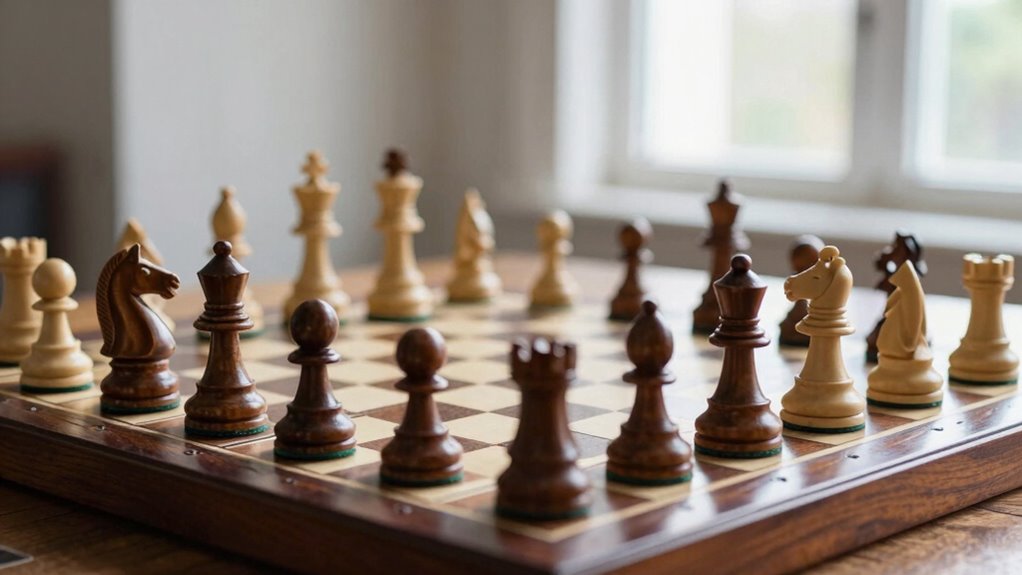
While you may be keen to launch your attack, effectively developing your pieces is essential for establishing a strong foundation in the opening phase of a chess game.
Focus on piece coordination, ensuring your knights and bishops work together while controlling key squares. Prioritize developing strategy over moving the same piece multiple times; each move should serve a purpose.
Aim to control the center early, as this will give your pieces greater mobility and influence. Be mindful of potential threats, and create a harmonious setup that allows for flexible responses.
As you develop your pieces, consider how they can support each other, setting the stage for a powerful mid-game shift. Remember, a well-coordinated army is vital for success!
The Role of King Safety in Openings
Even if you’re enthusiastic to launch an attack, prioritizing king safety during the opening is essential. Your king’s position can greatly influence your opening strategies and overall game.
Here are a few key points to take into account:
- Castling Early: This helps secure your king behind a wall of pawns and connects your rooks.
- Avoid Weak Squares: Verify your pawn structure doesn’t create vulnerabilities that opponents can exploit.
- Coordinate Your Pieces: Develop your pieces to protect the king, not just for offense.
Common Opening Moves for White
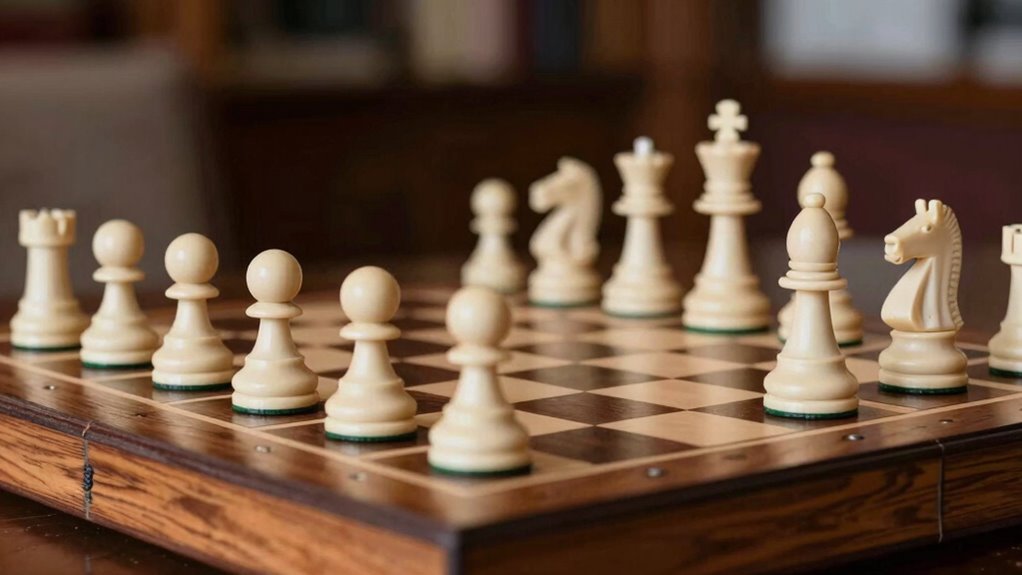
When you start a game as White, your opening moves set the tone for the entire match.
Focusing on pawn strategies, knight development, and bishop control can give you a strong position early on.
Let’s explore these common opening moves to help you gain the upper hand right from the start.
Pawn Opening Strategies
Pawn openings are the foundation of many successful chess strategies, setting the stage for your pieces to develop effectively. By controlling the center and ensuring a solid pawn structure, you can create opportunities for future attacks.
Here are three key strategies to contemplate:
- Establish your center: Moving your pawns to e4 or d4 helps control central squares, giving your pieces more mobility.
- Plan for pawn breaks: Identify moments to push your pawns forward, breaking your opponent’s structure and opening lines for your pieces.
- Develop harmoniously: Coordinate your pawns with your knights and bishops, allowing for a balanced position that supports each piece.
Utilizing these strategies will enhance your game and provide a strong foundation for your opening repertoire.
Knight Development Techniques
After establishing a solid pawn structure, focusing on knight development is essential for a strong opening. You’ll want to prioritize your knights by employing effective knight positioning strategies. For instance, moving your knight to f3 or c3 early allows you to control key central squares while supporting your pawns.
Utilizing knight maneuvering tactics is equally important; consider rerouting your knight to more advantageous squares as the game progresses. For example, transferring a knight from b1 to c3 can greatly enhance your control over the center.
Always be mindful of your opponent’s responses—anticipating their moves helps you maintain flexibility. With these techniques, you’ll effectively set the stage for a dynamic middle game and guarantee your knights play a pivotal role in your strategy.
Bishop Control Methods
Bishops are powerful pieces that can control long diagonals and influence the board’s dynamics early in the game. Mastering bishop control methods, especially through effective bishop placement strategies, can greatly enhance your position.
Here are some diagonal control techniques you can employ:
- Develop your bishops early: Place them on c4 and f4 to target critical squares.
- Maintain flexibility: Avoid committing your bishops too soon to allow for future repositioning based on your opponent’s moves.
- Coordinate with pawns: Use pawns to create open diagonal lines, making your bishops more effective.
Popular Responses for Black
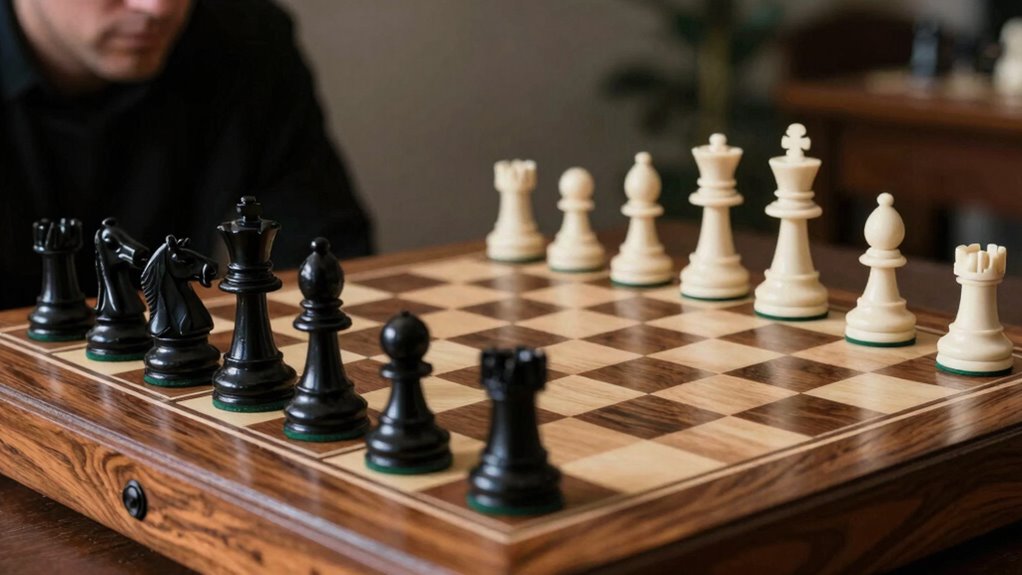
In chess, Black has several popular responses to counter White’s opening moves, each leading to unique game dynamics. One common approach is the Sicilian Defense, where you aim to create an unbalanced position and seize the initiative.
Another popular defense is the French Defense, which focuses on solid pawn structure and counterplay. If you prefer a more classical method, consider the Caro-Kann Defense, offering solid development and a resilient position.
Each of these counter strategies allows you to challenge White’s plans effectively. As you explore these popular defenses, remember to adapt your responses based on your opponent’s moves, maintaining flexibility while seizing opportunities to turn the tide in your favor.
The Concept of Opening Theory
Understanding opening theory is essential for any chess player looking to improve their game, as it provides a framework for the initial moves and strategies. Mastering this concept can set you up for success.
Here are some key aspects of opening theory:
- Opening Strategies: These are tried-and-true methods to control the center and develop pieces efficiently.
- Theoretical Frameworks: You can analyze established openings to understand their strengths and weaknesses, allowing you to adapt your play.
- Flexibility: It’s important to remain open to adjusting your strategy based on your opponent’s moves.
Recognizing Opening Traps and Tactics
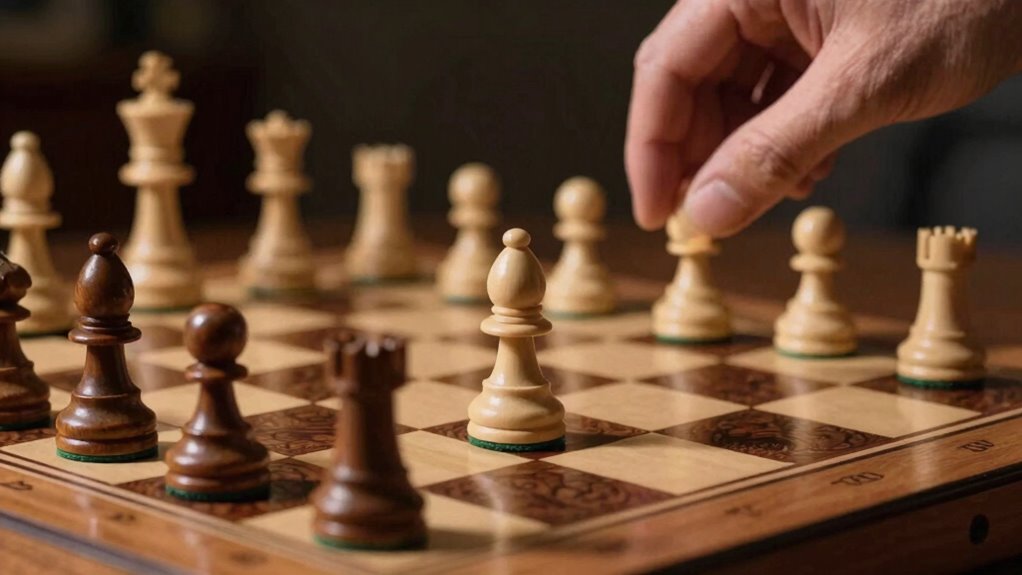
While you develop your opening repertoire, recognizing traps and tactics becomes essential for avoiding pitfalls and seizing opportunities. Understanding common tactical motifs can help you stay alert. Below is a table highlighting some frequent opening traps you may encounter:
| Trap Name | Description |
|---|---|
| Scholar’s Mate | A quick mate using the f7 square |
| Fried Liver Attack | A tactical assault on f7 after Nf3 |
| Legal’s Mate | A clever checkmate using a bishop |
| The Nimzowitsch Trap | A pawn sacrifice to gain the initiative |
| The Benoni Trap | A counterplay opportunity in the Benoni Defense |
Transitioning to the Middlegame
As you finish your opening moves and begin moving to the middlegame, it’s crucial to assess your position and the potential plans that lie ahead.
Focus on your shifting strategies to guarantee your pieces are coordinated and ready for action. Consider these key aspects:
- Identify weaknesses: Look for vulnerabilities in your opponent’s position that you can exploit.
- Develop a plan: Create a clear strategy, whether it’s launching an attack, controlling the center, or enhancing piece activity.
- Utilize middlegame tactics: Be on the lookout for tactical opportunities like forks, pins, and discovered attacks to gain an advantage.
Resources for Learning Chess Openings
To improve your chess openings, you’ll want to explore various resources that can enhance your understanding.
Recommended books and guides offer foundational knowledge, while online courses and videos provide interactive learning experiences.
Additionally, practice tools and apps can help you refine your skills and apply what you’ve learned.
Recommended Books and Guides
Understanding chess openings is essential for any player looking to improve their game, and turning to the right resources can make all the difference.
Here are some recommended resources to enhance your opening strategies:
- “My Great Predecessors” by Garry Kasparov: This series dives into the opening choices of world champions, offering insights you can apply in your own games.
- “Chess Opening Essentials” by Dimitri Komarov: A great guide for beginners, covering fundamental openings and their strategic ideas.
- “The Complete Opening Repertoire for the 21st Century” by Joshua Doknjas: This all-encompassing book is perfect for players wanting to build a solid opening repertoire.
Online Courses and Videos
With the wealth of information found in books and guides, you might find that online courses and videos complement your learning experience effectively. They provide interactive tutorials and video lectures that can deepen your understanding of chess openings. You can learn at your own pace, revisiting concepts as needed.
Here’s a quick comparison of different resources:
| Resource Type | Key Features |
|---|---|
| Online Courses | Structured learning paths |
| Video Lectures | Visual and auditory learning |
| Interactive Tutorials | Hands-on practice scenarios |
| Live Webinars | Real-time Q&A with experts |
Exploring these options can enhance your mastery of chess openings and give you the freedom to learn in a way that suits you best.
Practice Tools and Apps
While studying chess openings through books and videos is beneficial, utilizing practice tools and apps can considerably enhance your skills.
These chess apps provide interactive ways to learn and refine your opening practice, making it more engaging and effective. Here are some great options to take into account:
- Lichess: Offers a variety of puzzles and training tools focused on openings.
- Chess.com: Features extensive resources, including opening databases and interactive lessons.
- CT-ART: A dedicated app for honing your tactical skills, which are essential for maneuvering through openings.
Using these tools allows you to practice openings in real-time, analyze your games, and learn from your mistakes.
Embrace these resources, and you’ll find your understanding of chess openings deepening in no time!
Frequently Asked Questions
What Is the Best Opening for Beginners?
The best beginner openings are the Italian Game and the Ruy Lopez. Avoid common mistakes like moving the same piece multiple times early. Focus on control, development, and protecting your king for better results.
How Long Should I Spend Studying Openings?
You should spend about 30 minutes a week on opening study. Effective time management helps you balance learning openings with practicing tactics and strategy, ensuring you enjoy the game while steadily improving your skills.
Can I Improvise During the Opening Phase?
Absolutely, you can improvise during the opening phase! Mastering improvisation strategies while adhering to opening principles lets you release creativity, transforming your game into a masterpiece. Just remember to balance instinct with foundational knowledge for success.
Are There Openings That Guarantee a Win?
No openings guarantee a win, but effective opening strategies set you up for success. Combine solid tactics with adaptability, and you’ll enhance your chances of victory while enjoying the freedom to explore different approaches.
How Do Openings Differ in Blitz Chess?
In blitz chess, openings require rapid decisions, focusing on blitz strategies that prioritize speed over depth. You’ll need to adapt quickly, choosing flexible lines that can catch your opponent off guard while managing time effectively.