Alpine Vs Nordic Skiing
When it comes to winter sports, you might say there are two main roads to explore: the thrilling descent of Alpine skiing and the serene glide of Nordic skiing. Each path offers unique challenges and rewards, appealing to different preferences. Are you drawn to speed and technique, or do you prefer endurance and the beauty of nature? Understanding these distinctions can help you choose which skiing style suits you best.
Overview of Alpine Skiing

Alpine skiing, often referred to as downhill skiing, is an exhilarating winter sport that combines speed, skill, and the breathtaking beauty of snow-covered mountains.
Its ski history dates back to the early 19th century in Norway, evolving into a competitive sport by the mid-20th century.
You’ll find that famous athletes like Jean-Claude Killy and Lindsey Vonn haven’t only dominated the slopes but also inspired countless enthusiasts to embrace the thrill of alpine skiing.
The sport requires precision and technique, allowing you to carve your way down steep runs while feeling the rush of the cold air.
As you navigate the slopes, you’ll appreciate how this sport offers both freedom and a connection to a rich legacy of skiing excellence.
Overview of Nordic Skiing
While both alpine and Nordic skiing offer unique experiences on the snow, Nordic skiing, often called cross-country skiing, emphasizes endurance and technique over speed.
With roots tracing back to ancient Scandinavia, this sport evolved from practical means of winter travel into a beloved recreational activity. You’ll find that Nordic skiing encourages exploration and connection with nature, allowing you to traverse varied terrain at your own pace.
Nordic skiing invites you to explore nature’s beauty at your own pace, blending history with the joy of winter adventure.
Popular techniques, like the classic stride and skate skiing, cater to different preferences and skill levels. As you glide through the snow, you’ll appreciate the rhythmic motion and the fresh air, embracing the freedom that comes with each stride.
Nordic skiing not only enhances your physical fitness but also invites you to discover the serenity of the winter landscape.
Key Differences in Technique

When comparing Alpine and Nordic skiing, you’ll notice distinct differences in stance and posture that markedly affect your performance.
Alpine skiing emphasizes a more aggressive, crouched position for better control during turns, while Nordic skiing promotes an upright posture to facilitate glide and endurance.
Understanding weight distribution techniques in both styles is essential for mastering the slopes and trails effectively.
Stance and Posture
Understanding stance and posture is essential for mastering both alpine and Nordic skiing techniques. In alpine skiing, you adopt a wider, more aggressive stance, optimizing your balance while maneuvering downhill slopes. Here, posture variations emphasize a forward lean, engaging your core to maintain control.
In contrast, Nordic skiing relies on a more upright stance, promoting efficient gliding and energy conservation. Your posture adjustments in this style allow for greater mobility and endurance over longer distances.
Embracing these distinct stance adjustments not only enhances your performance but also fosters a deeper connection with the snow beneath you. By mastering your posture, you’ll reveal the freedom to carve through alpine runs or glide smoothly across Nordic trails, fully enjoying the skiing experience.
Turning Methods
Mastering turning techniques in skiing can greatly enhance your experience on the slopes, as each style demands a unique approach.
In Alpine skiing, you’ll often rely on carving turns, where you engage your edges to create smooth arcs in the snow. This method allows for speed and precision, perfect for those steep runs.
On the other hand, Nordic skiing emphasizes parallel turns, focusing on maintaining a consistent, fluid motion. Here, you’ll use your poles for balance and momentum, making it ideal for varied terrain.
Each technique requires distinct body movements and mindset, so practicing both will give you the freedom to navigate any slope with confidence.
Embrace the differences, and you’ll find joy in mastering both styles.
Weight Distribution Techniques
Weight distribution is essential in both Alpine and Nordic skiing, as it directly impacts your control and efficiency on the slopes.
In Alpine skiing, you’ll focus on weight shifting primarily to the downhill ski during turns, which helps maintain balance control and enhances your ability to carve through snow.
Conversely, Nordic skiing requires a more dynamic approach; you’ll distribute your weight evenly while gliding, allowing for a fluid motion that emphasizes balance control and efficiency.
You’ll notice that as you shift your weight from one ski to the other, it enhances your rhythm and speed.
Mastering these techniques not only improves your performance but also gives you the freedom to explore varied terrains with confidence and grace.
Equipment Essentials for Each Style

When choosing between alpine and Nordic skiing, understanding the essential equipment for each style is vital.
Alpine skis are built for speed and control on downhill runs, while Nordic skis prioritize efficiency and glide on flat terrain.
Let’s break down the key gear you’ll need to excel in both styles.
Ski Types Comparison
While both alpine and Nordic skiing offer thrilling experiences on snow-covered slopes, the equipment essential for each style differs considerably. Understanding the ski types can help you navigate terrain challenges with confidence.
- Alpine Skis: Designed for downhill speed, they’re wider and heavier, perfect for carving turns on steep slopes.
- Nordic Skis: Lighter and narrower, these skis excel in gliding across flat or rolling terrain, giving you the freedom to explore vast landscapes.
- Bindings: Alpine bindings are fixed, providing stability for downhill runs, while Nordic bindings allow your heel to lift, enhancing your range of motion.
Choosing the right ski style not only impacts your performance but also enriches your connection with the breathtaking outdoors.
Essential Gear Overview
Choosing the right gear is essential for maximizing your skiing experience, whether you’re carving down alpine slopes or gliding through Nordic trails.
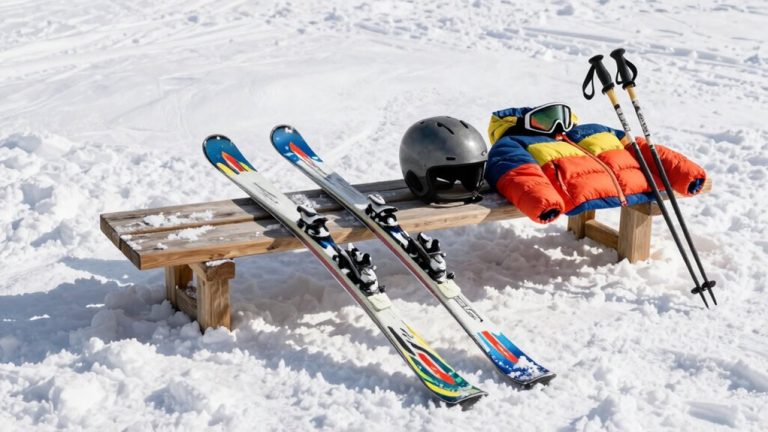
For alpine skiing, focus on sturdy skis, boots, and bindings designed for downhill performance. Don’t forget a helmet for safety and goggles for visibility.
In contrast, Nordic skiing requires lighter gear, like cross-country skis and flexible boots that allow for a natural stride.
Regardless of your style, prioritize clothing layers to regulate your body temperature. Start with moisture-wicking base layers, add insulation, and finish with a waterproof outer layer.
Finally, don’t overlook gear maintenance; regularly check your equipment for wear and tear to guarantee a safe, enjoyable outing. Your freedom on the slopes depends on it!
Popular Destinations for Alpine Skiing
Alpine skiing offers thrilling experiences across a variety of stunning destinations that cater to all skill levels.
If you’re looking to hit the slopes, consider these top ski resorts nestled in breathtaking mountain ranges:
- Whistler Blackcomb, Canada – With over 8,000 acres of terrain, this resort promises endless adventure and vibrant après-ski culture.
- Chamonix, France – Known as the “capital of extreme skiing,” it offers challenging runs and awe-inspiring views of Mont Blanc.
- Aspen, Colorado – This iconic destination combines luxury with diverse skiing options, making it perfect for both beginners and seasoned pros.
These destinations not only provide fantastic skiing but also a sense of freedom as you carve through fresh powder and embrace the majestic landscapes around you.
Popular Destinations for Nordic Skiing

When it comes to Nordic skiing, several destinations stand out for their stunning landscapes and well-groomed trails. If you’re seeking freedom on the slopes, consider these top spots:
| Destination | Features | Best Time to Visit |
|---|---|---|
| Whistler, Canada | Scenic trails, diverse terrain | December – March |
| Aspen, Colorado | Beautiful backcountry access | January – February |
| Norway’s Lillehammer | Breathtaking fjords, Olympic trails | February – March |
Each of these ski resorts offers unique experiences, allowing you to glide through picturesque scenery. Whether you’re a beginner or an expert, these destinations provide ample opportunities to explore nature while enjoying a thrilling workout. Grab your gear and embrace the freedom of Nordic skiing!
Health Benefits of Each Skiing Style
Exploring the scenic trails of Nordic skiing isn’t just about enjoying breathtaking views; it’s also a fantastic way to enhance your physical health.
This style offers incredible cardiovascular benefits, helping you boost your stamina and endurance. Plus, it engages multiple muscle groups, ensuring a full-body workout.
Here are three key health benefits of Nordic skiing:
- Improved cardiovascular health: Elevate your heart rate and strengthen your heart.
- Enhanced muscle engagement: Activate your arms, legs, and core, building overall strength.
- Weight management: Burn calories efficiently while enjoying the outdoors.
On the other hand, Alpine skiing focuses more on lower body strength and balance, offering its own unique health perks.
Choose your adventure and embrace the freedom of movement!
Frequently Asked Questions
Can Beginners Learn Both Alpine and Nordic Skiing Simultaneously?
Imagine a bird learning to soar and dive simultaneously; you can indeed embrace both alpine and nordic skiing at once. With focused practice, you’ll find skill acquisition in each discipline enhances your overall experience and freedom.
What Is the History of Alpine and Nordic Skiing?
Skiing’s origins trace back to ancient Scandinavia, where people used wooden skis for travel. Over time, equipment evolved dramatically, leading to specialized gear for both alpine and Nordic styles, enhancing your skiing experience and freedom on snow.
Are There Age Restrictions for Starting Either Skiing Style?
There aren’t strict age restrictions for starting skiing, but many kids hit the slopes as young as three! Embrace the freedom to choose your skiing age; just guarantee safety and proper instruction are in place.
How Do Weather Conditions Affect Skiing Performance for Both Styles?
Weather impacts your skiing performance considerably. Conditions like snow quality and temperature create performance variation, affecting grip and control. You’ll need to adapt your technique and gear to maximize enjoyment and safety in changing weather.
What Safety Gear Is Recommended for Both Alpine and Nordic Skiing?
You should wear a helmet for impact protection and choose protective clothing to shield against the elements. Layering up helps maintain warmth while allowing freedom of movement, essential for enjoying your skiing experience safely.