Snowboarding Vs Skiing
When it comes to winter sports, snowboarding and skiing present distinct experiences that cater to different preferences. You might find snowboarding’s freestyle creativity appealing or appreciate skiing’s precision and control. Each sport has its own techniques, equipment, and cultural vibes. But which one suits your personality and lifestyle better? Exploring the nuances of each can help you make an informed decision on the slopes. Let’s break down the key differences that define these two popular sports.
The Basics of Snowboarding
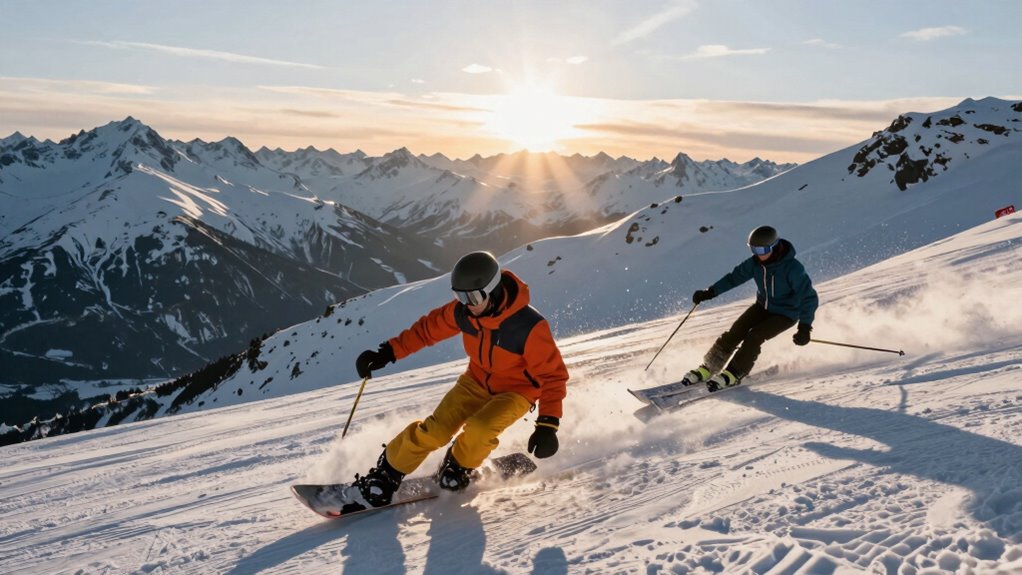
When you first strap on a snowboard, you’re stepping into a unique blend of balance, technique, and thrill that sets it apart from skiing.
Strapping on a snowboard invites you to experience a thrilling fusion of balance and technique unlike any other sport.
Snowboarding emerged in the 1960s, evolving from surf and skate culture into a distinct sport with its own identity.
As you navigate the slopes, you’ll discover various snowboarding styles—freestyle, freeride, and alpine, each offering a different experience.
Freestyle emphasizes tricks and jumps in terrain parks, while freeride focuses on off-piste adventures, embracing natural features.
Alpine snowboarding, on the other hand, is all about carving turns on groomed runs.
Understanding these styles not only enhances your skills but also deepens your appreciation for snowboarding’s rich history and the freedom it provides on the mountain.
The Basics of Skiing
While both snowboarding and skiing offer exhilarating experiences on the slopes, skiing has its own set of fundamentals that make it a distinct adventure.
To truly grasp skiing, you’ll want to focus on key skiing techniques that have evolved over centuries, shaped by skiing history itself.
Imagine:
- Gliding smoothly down a pristine slope, feeling the rush of cold air against your face.
- Mastering the art of carving turns with precision, as you dance with the mountain.
- Steering through diverse terrains, from steep runs to gentle trails, embracing your freedom.
With these foundational elements, you’ll not only enhance your skills but also deepen your connection to the sport. Prioritizing safety guidelines ensures that you can enjoy the slopes while minimizing risks.
Embrace the thrill, and let the slopes take you on an unforgettable journey!
Equipment Comparison
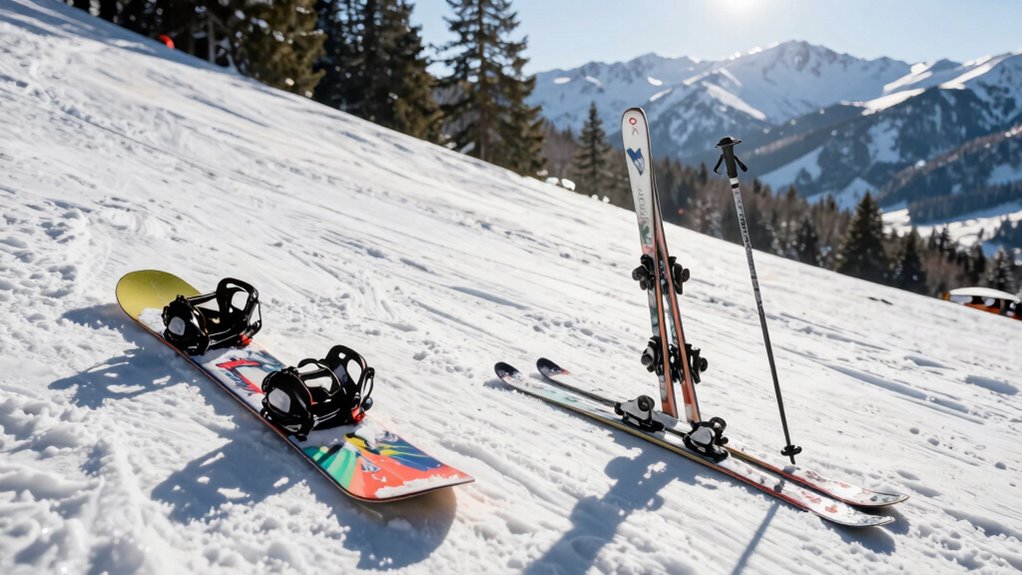
When it comes to snowboarding and skiing, the differences in equipment are essential to your experience on the slopes.
Snowboards feature a single wide plank that requires different techniques compared to the two separate skis used in skiing.
Understanding these design distinctions, along with the necessary gear and accessories for each sport, can help you choose the right setup for your adventure.
Snowboard vs. Ski Design
Understanding the differences in snowboard and ski design is essential for making an informed choice about your winter sports equipment. Each offers unique advantages that cater to your riding style and terrain preferences.
- Board Shape: Snowboards come in various shapes like directional and twin, giving you flexibility for different styles.
- Ski Length: Skis are often longer, allowing for stability at high speeds, but they can be harder to maneuver in tight spaces.
- Flexibility: Snowboards have varying flex patterns, impacting how responsive they’re to your movements.
With these factors in mind, you’ll find the right fit that matches your adventurous spirit and allows you to express your freedom on the slopes.
Choose wisely, and enjoy the ride!
Gear and Accessories Differences
Choosing the right board or skis goes beyond just their design; it also involves the gear and accessories that enhance your experience on the slopes.
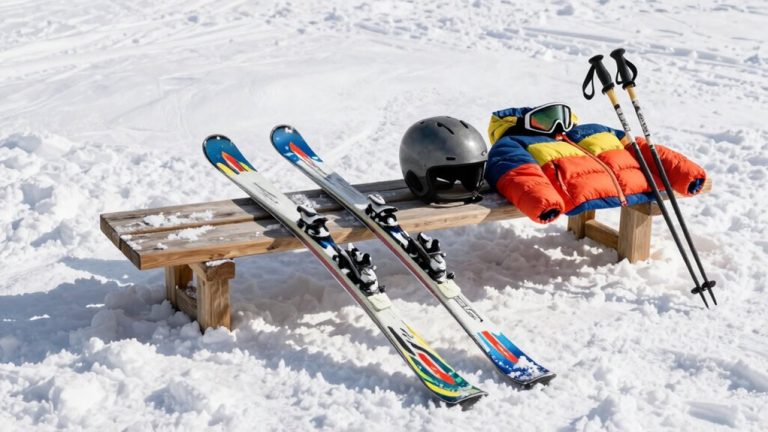
For snowboarding, pay attention to bindings types and boot design that offer comfort and control. Skiing requires poles; their usage can improve stability and rhythm.
A helmet’s importance can’t be overstated—both sports demand it for impact protection. Your apparel choices should prioritize layering strategies for warmth and breathability.
Don’t overlook goggle features, as visibility is essential in changing weather. Ultimately, both sports offer unique gear that can elevate your ride, so choose wisely to maximize your freedom and enjoyment out there in the snow!
Learning Curve: Which Is Easier?
When it comes to learning snowboarding or skiing, balance and coordination play essential roles right from the start.
You’ll likely find that your initial experiences differ considerably, affecting how quickly you pick up each sport.
As you progress over time, the learning curve can shift, revealing which activity might be easier for you personally.
Balance and Coordination
While both snowboarding and skiing demand balance and coordination, the learning curve for each can vary considerably.
In snowboarding, you’ll rely heavily on your core and lower body to maintain stability, often using specific balance techniques, while skiing requires a more dynamic approach.
Picture yourself:
- Gliding smoothly down a slope, knees bent and weight centered.
- Shifting your body to carve turns seamlessly.
- Finding your rhythm in coordination exercises that strengthen your agility.
If you’re just starting out, you might find snowboarding a bit more challenging due to the need for a solid foundation in balance.
Alternatively, skiing allows for a more natural stance that some may find easier to navigate initially.
Ultimately, it’s about what feels right for you and where you find freedom on the mountain.
Initial Learning Experience
The initial learning experience in snowboarding and skiing can feel quite different, influencing how quickly you pick up the sport. Your first impressions matter, as they shape your confidence and willingness to embrace the slopes. Snowboarding often requires a steeper learning curve initially; you’ll need to adjust to being sideways on the board. Meanwhile, skiing allows for a more natural stance, which might feel easier at first. Instructor guidance is essential in both cases, ensuring you learn the right techniques from the start. Check out the comparison below:
| Aspect | Snowboarding | Skiing |
|---|---|---|
| Initial Stance | Sideways | Forward |
| Fall Frequency | More frequent falls | Less frequent falls |
| Learning Curve | Steeper | Gentler |
| Control | Edge control | Pole planting |
| Overall Experience | More challenging fun | Easier to grasp |
Progression Over Time
As you progress in either snowboarding or skiing, the differences in learning curves become more pronounced.
Historically, skiing’s evolution allowed for quicker initial skill acquisition, but snowboarding often leads to faster skill progression once you’ve mastered the basics.
Consider these elements:
- Balance: Skiing promotes independent leg movement, while snowboarding requires you to align your body and board.
- Stance: In skiing, you face forward; snowboarding has you sideways, influencing your comfort level.
- Falling: Snowboarders typically experience more falls early on, but they also learn to recover faster.
Ultimately, each sport offers unique challenges and rewards.
Your choice may depend on whether you crave the freedom of carving down snowy slopes or the thrill of mastering tricks on a board.
Techniques and Styles
Whether you’re carving down a slope or gliding gracefully through powder, mastering techniques and styles is essential to enhancing your snowboarding or skiing experience.
In snowboarding, freestyle techniques let you express yourself through tricks, spins, and jumps, allowing for creativity and flair. You’ll want to focus on balance and body movement to nail those aerial maneuvers.
On the other hand, skiing emphasizes carving styles, where precision and control define your descent. Engaging your edges and shifting your weight smoothly lets you carve clean lines down the mountain.
Understanding both disciplines can enrich your skills and give you the freedom to navigate various terrains with confidence.
Terrain Adaptability
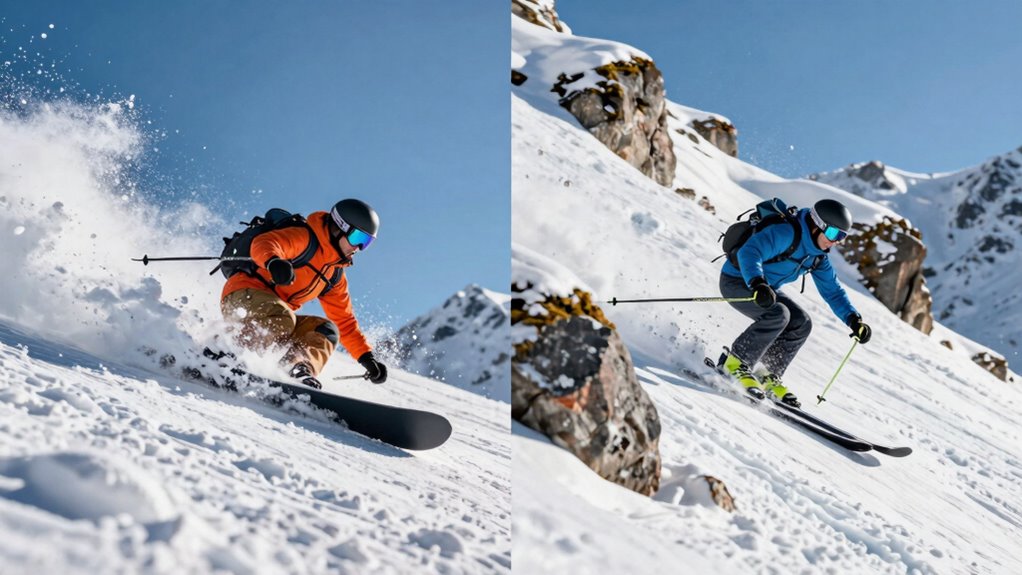
Mastering techniques and styles not only enhances your skills but also prepares you for different terrains.
Whether you’re carving through powder or gliding on groomed runs, developing your adaptability skills is essential for embracing the terrain variety you’ll encounter.
- Moguls: You’ll need precision and quick reflexes to navigate those challenging bumps.
- Backcountry: Here, you can experience untouched snow and unpredictable conditions, demanding your best maneuvering.
- Park: Jumps and rails await, where your creativity and courage come into play.
Safety and Injury Risks
While both snowboarding and skiing offer exhilarating experiences on the slopes, they come with distinct safety and injury risks that every rider should understand. Injury statistics reveal that snowboarders are more prone to wrist injuries, while skiers often face knee injuries. Wearing proper safety gear can greatly reduce these risks.
| Activity | Common Injuries |
|---|---|
| Snowboarding | Wrist fractures |
| Skiing | Knee ligament tears |
| Both | Head injuries |
Investing in quality helmets, knee pads, and wrist guards is essential for enjoying your time on the mountain while staying safe. By being aware of these risks and taking precautions, you can embrace the freedom of the slopes with confidence.
Cultural Differences and Community
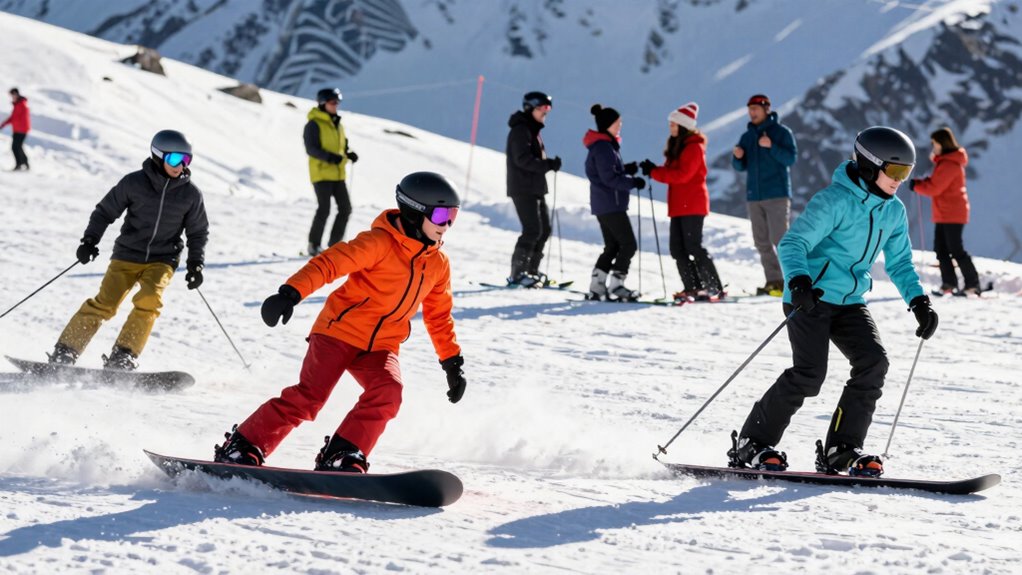
Snowboarding and skiing each foster unique cultures and communities that reflect their distinct styles and philosophies on the slopes. If you’re drawn to the freer, more laid-back snowboard culture, you’ll find vibrant camaraderie among fellow riders who embrace creativity and expression.
On the other hand, the ski community often showcases a more traditional and competitive spirit, highlighting skill and precision.
Consider these lifestyle differences:
- Fashion: Snowboarders favor loose, colorful gear, while skiers typically opt for sleek, fitted outfits.
- Social Dynamics: Snowboarders often gather in parks, sharing tricks, while skiers may prefer groomed runs and après-ski bonding.
- Events: Competitions and festivals for both sports celebrate their unique identities.
Ultimately, these cultural nuances shape your experience on the mountain.
Choosing the Right Sport for You
When it comes to choosing the right sport for you, it helps to reflect on your personal preferences and goals.
Think about your lifestyle factors—do you prefer the thrill of carving down a mountain or the freedom of maneuvering the slopes sideways? Snowboarding offers a unique style and culture, while skiing tends to attract those who enjoy speed and agility.
Consider how much time you can commit to learning; snowboarding might take a little longer to master, but it can be incredibly rewarding.
Also, think about your social circles—are your friends more into one sport than the other?
Ultimately, the best choice aligns with your personality, values, and the experiences you seek on the slopes.
Frequently Asked Questions
What Are the Best Locations for Snowboarding and Skiing?
You’ll love resorts like Aspen and Whistler for stunning slopes and diverse terrain parks. These locations offer thrilling experiences, perfect for both beginners and experts seeking freedom and excitement in the snow. Enjoy the ride!
How Much Does It Cost to Get Started in Each Sport?
To get started, you’ll typically spend around $200-$400. Gear rentals and beginner packages often cover essentials, making it easier for you to plunge into without breaking the bank while enjoying the thrill of the slopes.
Are There Age Restrictions for Snowboarding or Skiing?
Imagine a vast mountain range, where age limits fade like shadows at dusk. You’ll find safety regulations ensuring everyone rides, regardless of age. Embrace the freedom; adventure awaits, whether you’re young or young at heart.
Can You Snowboard or Ski on All Types of Snow?
You can snowboard or ski on various snow types, but conditions matter. Powder offers freedom and fun, while icy or slushy snow can challenge your skills. Choose wisely for the best experience on the slopes!
What Clothing Is Recommended for Snowboarding and Skiing?
Picture yourself carving through fresh powder; you’ll want moisture-wicking base layers and a waterproof jacket to stay warm and dry. Layering guarantees you can embrace the freedom of the mountains without getting cold or damp.