Indoor Cricket Vs Outdoor Cricket
Imagine stepping onto a compact indoor cricket field, where every move counts and the atmosphere buzzes with intensity. Indoor cricket contrasts sharply with the expansive outdoor game, where natural elements play a vital role. Each format demands unique skills and strategies, shaping player experiences and audience engagement in distinct ways. What factors truly define the appeal of each version? Understanding these nuances can reveal why both formats hold unique places in the hearts of cricket enthusiasts.
Overview of Indoor Cricket
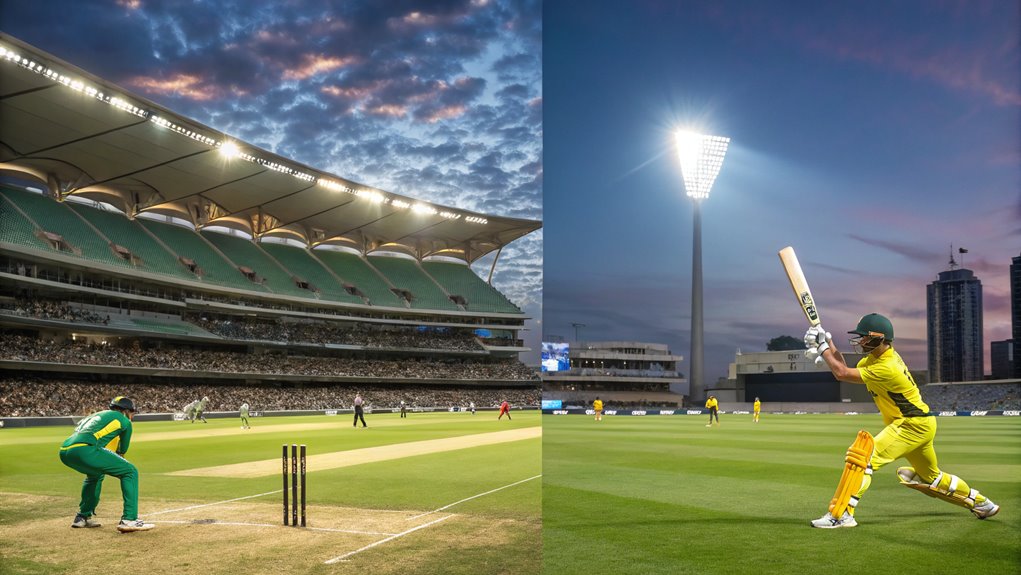
Indoor cricket offers a unique twist on the traditional game, catering to players who seek a fast-paced and dynamic experience. This game format transforms the classic elements of cricket into a more compact setting, typically played indoors within marked boundaries.
You’ll find that matches are shorter, often lasting just an hour, allowing for multiple games in a day. The rules adapt to the enclosed environment, emphasizing quick reflexes and strategic plays.
With fewer players on each side, teamwork and communication become essential, enhancing your engagement on the field. Indoor cricket not only maintains the thrill of batting, bowling, and fielding but also fosters a sense of camaraderie among players, making it an exciting alternative to outdoor cricket.
Overview of Outdoor Cricket
When you think about outdoor cricket, the field dimensions and layout play an essential role in shaping the game.
Unlike indoor settings, you’ll encounter natural elements that can influence play, from wind to sunlight.
Additionally, the duration of matches varies greatly, making outdoor cricket a unique experience regarding strategy and endurance.
Field Dimensions and Layout
The layout of an outdoor cricket field is meticulously designed to enhance the game’s dynamics and strategy. Understanding the field boundaries and pitch size is essential for players and fans alike. The pitch, located at the center, measures 22 yards long, while the field can vary in size but generally ranges between 450 to 500 feet in diameter. This variance influences tactics and player positioning during matches.
| Feature | Description |
|---|---|
| Pitch Size | 22 yards (20.12 meters) |
| Field Diameter | 450-500 feet (137-152 meters) |
| Boundary Type | Circular or oval |
| Grass Height | 1-2 inches |
| Outfield Area | Varies based on ground size |
This layout not only defines the game’s boundaries but also fosters strategic depth, encouraging teams to adapt their tactics accordingly.
Natural Elements Impact
While playing outdoor cricket, you can’t ignore how natural elements greatly impact the game. The weather can shift dramatically, bringing rain, wind, or extreme heat, which affects player performance and strategy.
Climate variability introduces challenges, as conditions can change from one match to another, requiring you to adapt quickly. Additionally, natural hazards like uneven ground or unexpected wildlife can disrupt play and create safety concerns.
You’ve got to stay alert and responsive to these factors, as they can influence everything from pitch behavior to field positioning. Embracing these elements can enhance your enjoyment and mastery of the game, ultimately making outdoor cricket an exhilarating experience that tests your skills against nature itself.
Game Duration Variances
Although outdoor cricket typically follows a structured format, game duration can vary considerably based on several factors. The game pacing is influenced by weather conditions, the format (Test, ODI, or T20), and interruptions like injuries or the umpire’s decisions. You’ll find that match timelines can stretch or shorten dramatically depending on these elements.
| Format | Average Duration | Key Factors |
|---|---|---|
| Test | 5 days | Weather, innings length |
| ODI | 8 hours | Overs limit, rain delays |
| T20 | 3 hours | Quick overs, fewer breaks |
Understanding these variances helps you appreciate the complexities of outdoor cricket and how they impact your experience as a spectator or player.
Playing Environment: Indoor Vs Outdoor
When choosing between indoor and outdoor cricket, it’s essential to reflect on how the playing environment impacts the game. The differences in lighting conditions and surface types can greatly influence your performance and enjoyment.
Here are some key factors to bear in mind:
- Lighting Conditions: Indoor venues typically offer consistent lighting, reducing glare and shadows, while outdoor games depend on natural light, which can vary.
- Surface Types: Indoor cricket often features synthetic surfaces, providing a faster game, whereas outdoor pitches can be grass or turf, affecting ball behavior.
- Weather Impact: Outdoor cricket faces weather challenges, from rain delays to scorching sun, while indoor cricket remains unaffected.
- Space Limitations: Indoor arenas often have limited space, altering gameplay dynamics compared to the vastness of outdoor fields.
These elements play a pivotal role in how you experience the game.
Game Rules and Regulations
Understanding the game rules and regulations is essential, as they shape the experience of both indoor and outdoor cricket.
In indoor cricket, you’ll find unique rule variations, such as fewer players and modified scoring systems, which enhance game fairness. The ball’s bounce can change dramatically in an enclosed space, impacting strategy and gameplay.
Conversely, outdoor cricket adheres to more traditional rules, allowing for longer matches and a wider playing field, which can lead to more complex tactics.
Both formats require players to adapt their skills to differing regulations, fostering a dynamic environment.
Ultimately, knowing these rules not only enhances your enjoyment but also encourages a sense of freedom to express your competitive spirit within the boundaries of fair play.
Equipment Differences
The differences in equipment between indoor and outdoor cricket greatly influence how the game is played.
Understanding these distinctions can enhance your appreciation for both formats. Here are key differences:
- Bat Types: Indoor cricket bats are typically lighter and shorter, designed for quick maneuverability, while outdoor bats are heavier for power hitting.
- Ball Materials: Indoor cricket uses softer balls made from synthetic materials, reducing injury risk, whereas outdoor games use harder leather balls that can create more bounce and speed.
- Protective Gear: Indoor players often wear less protective gear due to the softer ball, while outdoor players need more equipment to shield against harder impacts.
- Playing Surface: Indoor surfaces are often smoother, requiring different shoe traction compared to the varied outdoor terrain.
These equipment differences shape your playing style and strategy in each environment.
Player Dynamics and Team Size
While both indoor and outdoor cricket share fundamental rules, the player dynamics and team sizes differ considerably, shaping the overall experience of the game. Indoor cricket typically features smaller teams, often with just six players, fostering close-knit team communication. In contrast, outdoor cricket usually has eleven players per side, leading to a broader range of player roles and responsibilities.
Here’s a quick comparison:
| Indoor Cricket | Outdoor Cricket |
|---|---|
| 6 players per team | 11 players per team |
| Tight team dynamics | Diverse player roles |
| Quick decision-making | Strategic gameplay |
| Constant communication | Varied communication styles |
Understanding these differences can enhance your appreciation of each format’s unique player dynamics and how they influence team performance.
Skill Development and Training
As you immerse yourself in the world of cricket, recognizing the distinct skill sets required for indoor and outdoor formats can greatly enhance your training regimen.
To develop your abilities effectively, consider these training methods tailored to each environment:
- Batting Techniques: Indoor cricket demands quicker reflexes and precise shot placement, so focus on tight footwork and hand-eye coordination.
- Bowling Skills: Adjust your bowling style for indoor play, emphasizing spin and accuracy, while outdoor bowling can incorporate pace and swing.
- Fielding Drills: Enhance your agility and catching skills in confined spaces indoors, whereas outdoor training allows for a broader range of fielding scenarios.
- Game Strategy: Indoor cricket requires rapid decision-making, so work on quick tactical adjustments, while outdoor play can involve more strategic planning.
Weather Impact on Gameplay
When you step onto an outdoor pitch, temperature can greatly influence your performance and strategy.
Hot or cold conditions can affect everything from your grip on the bat to the ball’s behavior in the air.
Wind, too, plays an essential role, altering how you aim your shots and field placements, making every game a unique challenge.
Temperature Considerations
Temperature plays an essential role in shaping the dynamics of both indoor and outdoor cricket, influencing everything from player performance to the behavior of the ball.
Understanding the temperature impact can help you adapt your game accordingly. Here are four key considerations:
- Player Stamina: Higher temperatures can lead to quicker fatigue, affecting your endurance on the field.
- Ball Behavior: In warmer conditions, the ball may travel faster, impacting both bowling and batting strategies.
- Pitch Conditions: Heat can dry out pitches, making them harder and faster, requiring climate adaptation in your approach.
- Indoor vs Outdoor: Indoor cricket offers controlled temperatures, reducing the variability that outdoor players face in fluctuating weather.
Wind Effects
While temperature particularly influences gameplay, wind is another vital factor that can alter strategies and player performance in both indoor and outdoor cricket.
In outdoor matches, wind challenges can greatly affect ball trajectory and bounce, forcing bowlers and batsmen to adapt their techniques. You might find yourself adjusting your stance or shot selection based on the wind’s direction and intensity.
Meanwhile, indoor cricket, shielded from these elements, allows for more consistent play, but players still face potential airflow from ventilation systems, which can influence ball movement.
Embracing effective wind strategies in outdoor settings can enhance your team’s performance, enabling you to capitalize on favorable conditions while mitigating the impact of adverse winds. Adjustments are essential for success in this dynamic environment.
Audience Experience and Engagement
Though both indoor and outdoor cricket offer thrilling experiences, the way audiences engage with each format can differ markedly. In indoor cricket, you’ll find a more intimate setting, fostering closer interactions between players and spectators.
Meanwhile, outdoor cricket allows for larger crowds, creating a vibrant atmosphere.
Here are some key aspects of audience engagement in both formats:
- Proximity: Indoor cricket’s smaller venues enhance personal connections.
- Atmosphere: Outdoor games thrive on large crowds and festive environments.
- Accessibility: Indoor cricket can attract diverse audiences due to localized settings.
- Interactive Elements: Both formats utilize technology to enhance the spectator experience, but indoor cricket often employs more immediate feedback systems.
Ultimately, both formats cater to unique preferences, enriching your cricket experience.
Popularity and Cultural Significance
Audience engagement in cricket varies greatly between indoor and outdoor formats, reflecting broader trends in popularity and cultural significance.
Outdoor cricket enjoys a rich tradition in countries like England and Australia, where it’s woven into the social fabric. You’ll find expansive fields and passionate crowds, highlighting cultural differences that shape the game.
On the flip side, indoor cricket has surged in popularity, especially in urban areas, where space is limited. It caters to fast-paced lifestyles and offers a more accessible playing experience.
These popularity trends illustrate how different environments influence cricket’s reach, adapting to modern needs. Ultimately, both formats celebrate the spirit of cricket, each contributing uniquely to its global narrative.
Frequently Asked Questions
Can Indoor Cricket Be Played Year-Round Regardless of Weather?
Yes, you can play indoor cricket year-round, enjoying significant weather advantages. It allows you to keep honing your skills, regardless of rain or shine, ensuring your passion for the game never faces interruptions.
What Age Groups Are Best Suited for Indoor Cricket?
You’ll find that youth participation flourishes in indoor cricket, especially for ages 6 to 16. It fosters skill development in a controlled environment, allowing young players to grow their talents without the unpredictable whims of weather.
Are There Any Health Benefits to Playing Indoor Cricket?
Absolutely, playing indoor cricket boosts your cardiovascular fitness and encourages social interaction. You’ll improve your agility and coordination while enjoying the camaraderie with teammates, making it a fun way to stay active and healthy.
How Does Scoring Differ Between Indoor and Outdoor Cricket?
Scoring strategies shift considerably; indoor cricket’s scoring rules often emphasize speed and precision, while outdoor games allow for broader tactics. You’ll notice how these differences shape your gameplay and impact team dynamics throughout the match.
Is There a Difference in Injury Risk Between Indoor and Outdoor Cricket?
Yes, there’s a difference in injury rates between indoor and outdoor cricket. Indoor conditions can lead to more collisions and falls, while outdoor play exposes you to varying weather and terrain, both impacting overall injury risks.