Paragliding Vs Hang Gliding
Is there really a clear winner when comparing paragliding and hang gliding? Both sports promise breathtaking views and the thrill of flight, yet they cater to different desires and experiences. Understanding the nuances between their equipment, flight mechanics, and safety considerations can greatly influence your choice. So, which aerial adventure aligns more closely with your personal preference for tranquility or excitement in the skies? Let’s explore the key differences that will guide your decision.
Overview of Paragliding

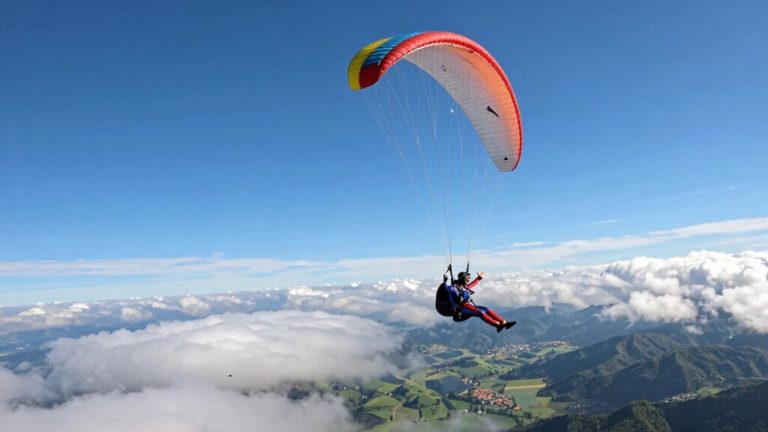
Paragliding offers a thrilling experience as you soar through the sky, harnessed only by a lightweight fabric wing. This adventure sport has roots tracing back to the late 20th century, evolving from parachuting and gliding innovations.
As you glide, you’re part of a rich paragliding history that celebrates human ingenuity and the quest for freedom. Locations like the French Alps and the cliffs of Cape Town serve as breathtaking launch sites, attracting enthusiasts keen to embrace the winds.
These diverse terrains provide unique challenges and stunning views, enhancing your connection to nature. Each flight is a reminder of your ability to break free from the constraints of everyday life, capturing the essence of adventure and exploration that paragliding embodies.
Overview of Hang Gliding
Hang gliding offers a unique flying experience, characterized by its distinctive equipment and design, which includes a lightweight frame and fabric wing that you control with your body movements.
As you master flight techniques, you’ll find that balancing and steering become intuitive, enhancing your connection with the air around you.
However, understanding the safety considerations is essential, as they directly impact your overall enjoyment and security while soaring through the skies.
Equipment and Design
When it comes to the thrilling world of aerial sports, understanding the equipment and design of hang gliding is essential for both enthusiasts and newcomers.
Hang gliders primarily consist of a lightweight frame covered in durable materials, such as aluminum and Mylar. This combination guarantees both strength and flexibility, allowing for peak performance in various weather conditions.
Unlike paraglider types that rely on inflated wings, hang gliders feature a rigid wing structure that provides superior control and stability during flight. The control bar, integral to maneuvering, connects you directly to the glider, fostering a sense of freedom as you soar through the skies.
Selecting the right hang glider materials and design greatly impacts your overall experience, enhancing your journey into the boundless blue.
Flight Techniques
Mastering flight techniques in hang gliding is essential for harnessing the full potential of your glider and enhancing your overall experience in the air.
By understanding aerodynamic principles and responding effectively to control inputs, you’ll access a world of freedom. Here are key techniques to elevate your flight:
- Weight Shift: Use your body to shift weight for better maneuverability.
- Brake Control: Adjust the brakes to maintain ideal speed and altitude.
- Thermal Utilization: Recognize and ride thermals for extended flights.
- Glide Path Management: Learn to manage your approach for a smooth landing.
Additionally, familiarity with safety protocols enhances overall flying experience and confidence.
Embrace these techniques, and feel the exhilarating rush of soaring through endless skies.
Your journey in hang gliding awaits!
Safety Considerations
While the thrill of hang gliding offers an unparalleled connection to the skies, prioritizing safety is crucial for a successful experience.
Before you launch, conduct a thorough risk assessment, considering factors like weather conditions, equipment integrity, and your personal skill level. Familiarize yourself with emergency procedures; knowing how to react in case of an unexpected situation can make all the difference.
Always wear a helmet and appropriate gear, and verify your glider is properly maintained. Understanding the air currents and terrain can help you make informed decisions during your flight.
With these precautions in place, you can embrace the freedom of hang gliding while minimizing risks, allowing you to truly enjoy the breathtaking views and exhilarating sensations of soaring through the air.
Equipment Differences
Although both paragliding and hang gliding offer thrilling aerial experiences, the equipment you use plays an essential role in shaping your adventure.
Understanding the distinctions between paragliding gear and hang gliding gear can elevate your freedom in the skies. Here’s what you should consider:
Recognizing the differences between paragliding and hang gliding gear can enhance your experience in the air.
- Wing Design: Paragliding wings are softer and more flexible, while hang gliders have rigid wings for stability.
- Harness Type: Paragliding uses a seated harness, offering comfort; hang gliders utilize a prone, more aerodynamic position.
- Weight: Paragliding gear is lighter for easier transport, while hang gliders can be bulkier due to their structure.
- Control Methods: Paragliders rely on brake toggles; hang gliders use weight shifting for maneuvering.
Choosing the right gear sets the stage for your ultimate flight experience!
Flight Mechanics and Techniques

When you compare paragliding and hang gliding, the differences in wing design markedly shape your flight experience.
Each craft demands unique launching and landing techniques that can affect not only your performance but also your safety in the air.
Understanding these mechanics will enhance your skills and help you make the most of your time aloft.
Wing Design Differences
As you explore the nuances of wing design in paragliding and hang gliding, you’ll quickly notice that these two aerial sports rely on distinct flight mechanics and techniques.
The wing shape and airfoil design dramatically influence your flight experience. Consider these differences:
- Paragliding wings feature a wider surface area, allowing for better lift at lower speeds.
- Hang gliders utilize a rigid frame, offering enhanced stability and control in turbulent conditions.
- The airfoil design in paragliders promotes softer landings, giving you a sense of safety.
- Conversely, hang gliders provide exhilarating speed and responsiveness, fulfilling your desire for freedom.
These design elements shape your journey through the skies, making each flight a unique adventure.
Launching and Landing Techniques
Mastering launching and landing techniques is essential for a safe and enjoyable experience in both paragliding and hang gliding.
For launching, you’ll want to familiarize yourself with various launching methods, such as the forward and reverse launches. Each method has its nuances, and understanding wind conditions is vital. As you prepare to lift off, focus on your body positioning and wing control for a smooth takeoff.
When it comes to landing strategies, precision is key. Approach your landing zone with awareness of wind direction and terrain. Aim for a controlled descent, using flaring techniques to reduce your speed as you touch down.
Whether you’re soaring high or coming in for a landing, mastering these techniques will enhance your freedom in the skies.
Safety Considerations
Although both paragliding and hang gliding offer exhilarating experiences, safety deliberations play an essential role in ensuring a secure adventure.
Paragliding and hang gliding provide thrilling adventures, but prioritizing safety is crucial for a secure experience.
To embrace the freedom of the skies, you’ll need to prioritize safety with effective risk assessment and robust emergency protocols. Here are four vital aspects to take into account:
- Weather conditions: Always check forecasts; strong winds can turn a thrilling flight into a perilous situation.
- Equipment checks: Regularly inspect your gear for wear and tear to prevent unexpected failures.
- Training: Invest in quality training to master techniques and enhance your decision-making in the air.
- Emergency preparedness: Familiarize yourself with emergency protocols so you can respond calmly in critical situations.
Choosing the Right Adventure

When you’re ready to commence on an adventure in the skies, understanding the nuances between paragliding and hang gliding can greatly enhance your experience. Your adventure preferences play a vital role in this decision.
If you crave a more relaxed, scenic glide, paragliding might be your best bet. It allows for easy take-offs and soft landings, giving you a chance to soak in the views.
Conversely, if you’re seeking speed and agility, hang gliding offers a thrilling experience with its rigid wings and faster maneuvers.
Reflect on your personal experiences, as past adventures can guide you in choosing the right path. Ultimately, both options promise an exhilarating sense of freedom, but the choice hinges on what excites you most.
Frequently Asked Questions
Can I Use a Paragliding Wing for Hang Gliding?
No, you can’t use a paragliding wing for hang gliding. The equipment differences make them incompatible. Each wing’s design serves distinct flying styles, so stick to the specific gear for your aerial adventures.
Which Sport Is More Affordable to Start?
Paragliding generally offers a more affordable entry point. Equipment expenses for wings and harnesses are lower compared to hang gliding. Cost comparison reveals paragliding’s accessibility, making it ideal for those seeking freedom in the skies.
Are There Age Restrictions for Paragliding or Hang Gliding?
“Age is but a number,” yet both sports have age requirements. Generally, you must be at least 14 or 16, depending on local safety guidelines. Always prioritize safety, no matter your age or experience level.
How Long Do Paragliding and Hang Gliding Flights Typically Last?
Typically, you’ll enjoy flight durations ranging from 20 to 60 minutes. Factors like weather conditions, your skill level, and the chosen site can greatly influence your experience, enhancing the feeling of freedom as you soar.
Can I Fly in All Weather Conditions With Either Sport?
You can’t fly in all weather conditions; both sports have weather limitations. Always prioritize safety precautions—strong winds, storms, or turbulence can turn freedom into peril. Choose your days wisely, and embrace the thrill responsibly.