Skydiving Equipment Explained
When you step into the world of skydiving, understanding your equipment is essential. Each component, from parachutes to harness systems, plays an important role in guaranteeing your safety and comfort during freefall. Knowing the differences in parachute types and the purpose of an Automatic Activation Device (AAD) can enhance your experience considerably. Let’s explore these key elements to prepare you for your jump and make sure you’re equipped for both safety and enjoyment.
Parachutes: Types and Functions

When you’re skydiving, understanding the different types of parachutes and their functions is vital for a safe and enjoyable experience.
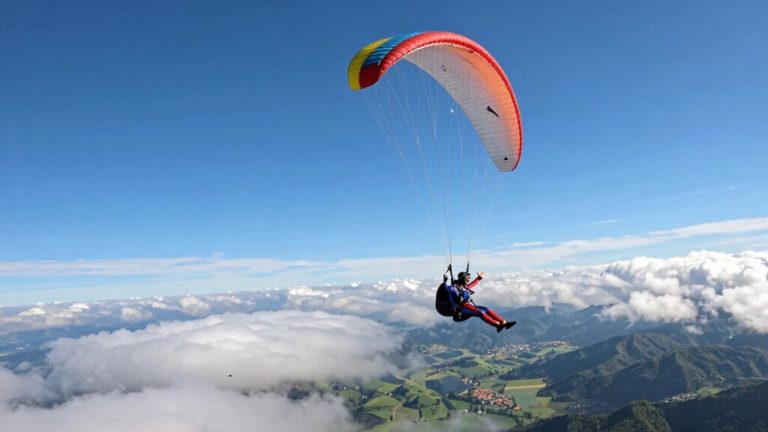
Parachute design plays a significant role in your descent and landing. The most common canopy shapes are round and rectangular. Round canopies offer stability and a gentle descent, ideal for beginners, while rectangular designs provide greater control and maneuverability, perfect for experienced jumpers. Each shape affects your speed and landing precision.
Additionally, wingsuits utilize advanced parachute designs for enhanced gliding capabilities, allowing you to soar through the sky.
Familiarizing yourself with these types and their respective functions guarantees you can make informed choices, enhancing your sense of freedom during the exhilarating skydive.
Harness and Container Systems
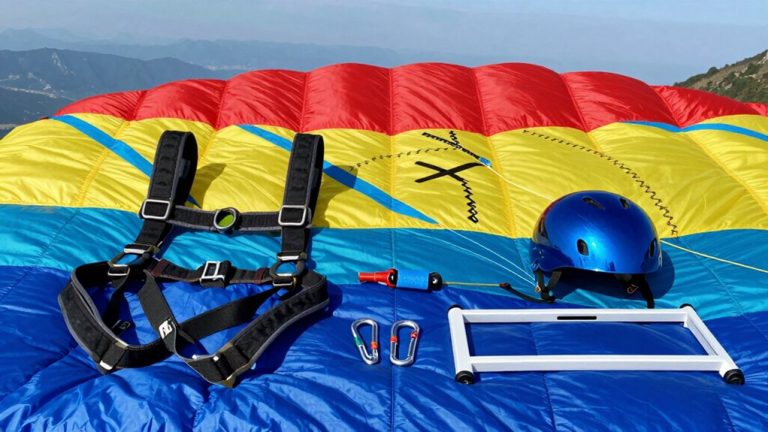
A well-designed harness and container system is essential for any skydiver, as it directly affects both safety and comfort during your jump. You’ll encounter various harness types, including the three-ring and the minimalist designs, each offering unique benefits. The container features, like the deployment bag and closing system, play a critical role in ensuring your parachute opens smoothly.
| Harness Types | Container Features |
|---|---|
| Three-ring harness | Deployment bag |
| Minimalist harness | Pin and flap closure |
| Skyhook harness | Reserve parachute pocket |
| Tandem harness | Quick-release mechanism |
| Custom-fit harness | Zippered access compartments |
Choosing the right combination enhances your experience, allowing you to embrace the thrill of freefall with confidence.
AAD (Automatic Activation Device)

An Automatic Activation Device (AAD) plays an essential role in ensuring your safety while skydiving.
It monitors your altitude and freefall time, automatically deploying your parachute if you haven’t done so at a predetermined altitude.
Understanding its functionality and importance can greatly enhance your overall safety in the sport.
AAD Functionality Overview
Automatic Activation Devices (AADs) play an essential role in enhancing skydiving safety by automatically deploying your parachute if you fail to do so at a predetermined altitude.
AAD technology utilizes advanced sensors to monitor your descent speed and altitude, guaranteeing your parachute opens when needed. If you’re free-falling too fast, the AAD triggers the deployment sequence, giving you peace of mind while you embrace the thrill of the jump.
Regular AAD maintenance is vital; it guarantees the device functions correctly and reliably during your dive. Familiarize yourself with your AAD’s specific requirements and perform checks before each jump.
Importance for Safety
While you might feel confident in your skydiving skills, the significance of an Automatic Activation Device (AAD) for safety can’t be overstated. This essential piece of equipment acts as a backup, ensuring that you deploy your parachute in case of an emergency.
During your pre jump briefing, it’s important to understand the AAD’s function and settings.
Here are some key reasons to prioritize an AAD:
- Automatic Deployment: Activates at a preset altitude, reducing human error.
- Emergency Procedures: Provides an extra layer of security if you lose consciousness or fail to deploy your chute.
- Peace of Mind: Allows you to focus on the thrill of freefall, knowing you have a reliable safety mechanism in place.
Embrace freedom, but always prioritize safety!
Jumpsuits and Protective Gear
Choosing the right jumpsuit and protective gear is vital for a safe and enjoyable skydiving experience. You’ll want to take into account jumpsuit materials such as nylon or polyester, which provide durability and flexibility.
Look for options that offer breathability and moisture-wicking properties to keep you comfortable during freefall. Additionally, protective padding is essential; it shields your body from potential impacts and abrasions during landing. Focus on areas like the knees, elbows, and hips, where protection is most needed.
Make sure your jumpsuit fits snugly without restricting movement, allowing you to embrace the freedom of the sky. Investing in quality gear not only enhances your performance but also boosts your confidence as you soar through the clouds.
Altimeters: Measuring Your Descent

After gearing up with the right jumpsuit and protective equipment, your next vital component is the altimeter. This device measures your altitude and is essential for ensuring a safe and controlled descent.
Proper altimeter calibration is fundamental; an accurate reading can mean the difference between a smooth landing and a risky situation. You must understand your descent rates as you freefall, allowing you to deploy your parachute at the right moment.
Proper calibration of your altimeter is crucial for a safe landing; knowing your descent rates ensures timely parachute deployment.
- Choose between analog and digital altimeters based on your preference.
- Regularly check and adjust your altimeter calibration before each jump.
- Familiarize yourself with your descent rates to enhance your overall skydiving experience.
With a reliable altimeter, you can truly embrace the freedom of the skies.
Additional Accessories for Skydivers
When you’re preparing for a jump, having the right additional accessories can greatly enhance your skydiving experience.
Skydiving gloves are essential for maintaining grip and protection during freefall and landing. They’re designed to withstand wind resistance while ensuring your hands stay warm and nimble, allowing you to manipulate your parachute’s controls with precision.
Camera mounts are another popular accessory, enabling you to capture breathtaking footage of your descent. By securely attaching your camera to your helmet or chest, you can document your adventure without compromising safety.
These mounts are engineered for stability, ensuring your equipment stays in place even during turbulent maneuvers. With the right gear, you’ll not only enjoy the thrill of the jump but also relive those exhilarating moments for years to come.
Frequently Asked Questions
How Do I Choose the Right Skydiving School?
To choose the right skydiving school, research their skydiving certifications and safety protocols. Visit reviews, compare training programs, and assess instructors’ experience to guarantee you’re getting the best training for your adventurous spirit.
What Is the Minimum Age for Skydiving?
You must be at least 18 years old to skydive solo. For youth skydiving, some schools offer tandem jumps with parental consent, but age requirements vary. Always check specific regulations at your chosen skydiving center.
Can I Skydive if I Have a Medical Condition?
You can skydive with a medical condition, but you’ll need medical clearance. Certain health conditions may pose risks, so it’s essential to consult a physician to guarantee your safety and enjoy the experience fully.
What Should I Wear Underneath My Jumpsuit?
Think of your outfit as a second skin, embracing you in the sky. For comfort, consider moisture-wicking layers beneath your jumpsuit, ensuring freedom of movement while managing temperature. Prioritize lightweight, breathable fabrics for ideal layering options.
How Much Does Skydiving Typically Cost?
Skydiving typically costs between $200 to $400. This includes tandem jumps or solo jumps, with a pricing breakdown covering instruction, gear rental, and jump fees. Consider various skydiving packages for the best value.