Skydiving Safety Rules
Did you know that nearly 1 in every 100,000 jumps results in a fatality, highlighting the importance of strict safety rules in skydiving? Understanding and following these guidelines can greatly reduce risks and enhance your experience. From gear checks to weather evaluations, every detail counts. So, how do you guarantee that your jump is not only thrilling but also safe? Let’s explore the essential safety measures every skydiver should know.
Understanding Your Gear

When you prepare for a skydive, understanding your gear is vital for your safety and enjoyment. Your parachute system, harness, and altimeter are your lifelines, so knowing how they work is imperative.
Regular gear maintenance guarantees your equipment remains in top shape, preventing potential malfunctions. Before each jump, conduct thorough equipment inspections to check for wear and tear, frayed lines, or malfunctioning parts.
Familiarize yourself with the deployment process and emergency procedures. This knowledge not only boosts your confidence but also enhances your overall experience.
Pre-Jump Safety Checks
Before you take the plunge, conducting pre-jump safety checks is essential to assure a safe and successful skydive.
Start with a thorough gear inspection—check your parachute, harness, and altimeter. Confirm everything is functioning correctly and securely fastened.
Start with a comprehensive gear check—ensure your parachute, harness, and altimeter are secure and operational.
Don’t skip the pre-jump briefing; it’s your chance to go over important details with your instructor. Discuss exit procedures, emergency protocols, and any last-minute questions you might have.
This preparation not only boosts your confidence but also enhances your freedom in the sky. Remember, skipping these checks can lead to dangerous situations, so take them seriously.
Freefall Techniques

Once you’re in the sky and ready to freefall, mastering your body position is key to a safe and enjoyable experience.
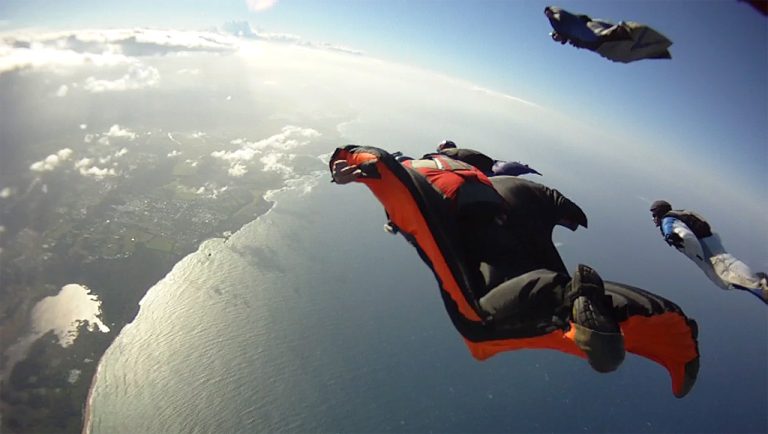
Start by achieving the right freefall orientation: keep your body horizontal, with arms spread wide and legs slightly apart. This position helps you maintain stability and control.
Your head should be in a neutral position, looking forward, allowing you to gauge your altitude and surroundings.
As you descend, focus on your body positioning—tighten your core to prevent excessive movement and adjust your limbs to steer. Remember, small adjustments can make a big difference.
Practice these techniques consistently, and you’ll find that the thrill of freefall becomes even more exhilarating, giving you the ultimate sense of freedom in the sky.
Landing Procedures
When you approach landing, proper target selection is essential for a safe touchdown.
Utilize controlled descent techniques to manage your speed and direction, ensuring a smooth approach.
Finally, adopt a safe landing position to minimize the risk of injury as you touch down.
Proper Target Selection
Selecting the right landing target is essential for a safe skydiving experience. Before you jump, conduct a thorough landing zone evaluation. Look for open fields, clear of obstacles, and consider wind direction and speed.
Proper target area selection helps guarantee you land safely without encountering hazards like power lines or buildings. Familiarize yourself with the layout of the landing zone and any potential challenges.
Check for any markers or flags that indicate wind patterns, as these will guide your approach. Prioritize wide, flat areas that allow for a smooth landing.
Controlled Descent Techniques
After identifying a suitable landing target, mastering controlled descent techniques is key to ensuring a safe landing.
To achieve effective descent control, you must maintain awareness of your altitude and adjust your body position accordingly. Keep your legs extended and your arms out to stabilize airflow around you.
As you approach the landing zone, use your parachute’s toggles to steer towards your target, making gentle inputs to guide your trajectory. Practice slowing your descent by pulling down on the rear risers to create drag.
Always be prepared to adapt your technique based on wind conditions. By honing these controlled descent skills, you’ll enhance your flight experience and land confidently, embracing the freedom of the skies.
Safe Landing Position
A safe landing position is essential for minimizing injury upon touchdown. To guarantee a smooth landing, you should adopt the proper landing techniques.
As you approach the ground, keep your feet and knees together, and prepare to touch down softly on your feet. Bend your knees slightly to absorb the impact and roll onto your side if necessary. This posture enhances injury prevention by distributing the force of landing evenly throughout your body.
Remember to steer your parachute into the wind for a controlled descent. Practice these techniques during training to build muscle memory.
The freedom of skydiving is exhilarating, but prioritizing safety with the right landing position guarantees you can enjoy it again and again.
Weather Considerations
When planning your skydive, you must consider the weather conditions carefully.
Wind speed can greatly impact your safety, so always check the limits before jumping.
Additionally, evaluating cloud cover is essential; low visibility can lead to dangerous situations during your descent.
Wind Speed Limits
Although you might be keen to jump, understanding wind speed limits is vital for your safety. Wind speed effects can greatly impact your descent and landing, making it essential to adhere to established limits.
For most skydivers, ideal conditions include winds below 10-15 mph. When winds exceed this range, the risks of erratic landings and loss of control increase dramatically. Strong gusts can make it challenging to steer your parachute or stabilize your body during freefall.
Always check local weather reports before your jump and consult with your instructor to guarantee conditions are safe. Remember, prioritizing your safety over the thrill of jumping is key to enjoying the freedom of skydiving responsibly.
Cloud Cover Assessment
Cloud cover plays an important role in skydiving safety, and evaluating it before your jump is crucial. Proper visibility assessment can make the difference between an exhilarating experience and a risky one.
Here are four key points to take into account regarding cloud types:
- Cumulus Clouds: Generally safe, but watch for vertical growth.
- Stratus Clouds: Can reduce visibility and indicate overcast conditions; avoid them.
- Cirrus Clouds: High-altitude, usually harmless, but check for changing weather.
- Nimbostratus Clouds: Thick and dark, indicating rain; steer clear to maintain safety.
Always assess cloud cover to guarantee your skydiving adventure is as thrilling as it’s safe.
Freedom in the skies requires awareness of your surroundings!
Emergency Protocols

In the event of an emergency during a skydive, knowing the proper protocols can make all the difference. If you experience a parachute malfunction, stay calm and execute your emergency procedures immediately.
First, check that your main parachute is properly deployed. If it’s not functioning, pull your reserve parachute’s release handle. Remember, altitude is vital, so act quickly. Always maintain awareness of your surroundings to navigate effectively during a descent.
If you land in an unexpected location, assess your environment before exiting your harness. Remember to communicate your experiences with your instructor and fellow jumpers afterward; sharing knowledge fosters a safer skydiving community.
Embracing these protocols lets you enjoy the freedom of skydiving while prioritizing safety.
Frequently Asked Questions
What Is the Minimum Age Requirement for Skydiving?
You must be at least 18 to skydive alone; age restrictions are in place for safety. While youth skydiving can be thrilling, it’s essential to prioritize responsibility and adhere to established guidelines for freedom in the skies.
Can I Skydive if I Have a Medical Condition?
You can skydive with a medical condition, but you’ll need medical clearance. A thorough health assessment is crucial to guarantee your safety and well-being. Always consult a doctor before making that thrilling leap.
What Should I Wear for Skydiving?
You should wear comfortable, suitable footwear and weather-appropriate clothing for skydiving. Consider layering for cold conditions and breathable fabrics for warmth, ensuring you feel free and unrestricted during your exhilarating jump. Enjoy the experience!
Are There Weight Limits for Skydiving Participants?
Yes, there are weight restrictions for skydiving participants to guarantee safety. Most companies have limits, usually between 220 to 250 pounds, depending on equipment and conditions. It’s essential to check these before your jump.
How Do I Choose a Reputable Skydiving School?
To choose a reputable skydiving school, check for skydiving certifications and instructor experience. Read reviews, visit the facility, and ask about their safety record. Trust your instincts—freedom’s best enjoyed with the right guidance.