Common Fouls and Penalties in Karate
In karate, the line between victory and defeat can be razor-thin, often hinging on the understanding of fouls and penalties. You might think that a strong technique guarantees success, but illegal strikes or excessive contact can quickly turn the tide against you. Understanding these rules not only sharpens your skills but also helps maintain your focus. So, what are the most common fouls you need to watch out for, and how can they impact your match?
Understanding the Rules of Karate Competitions
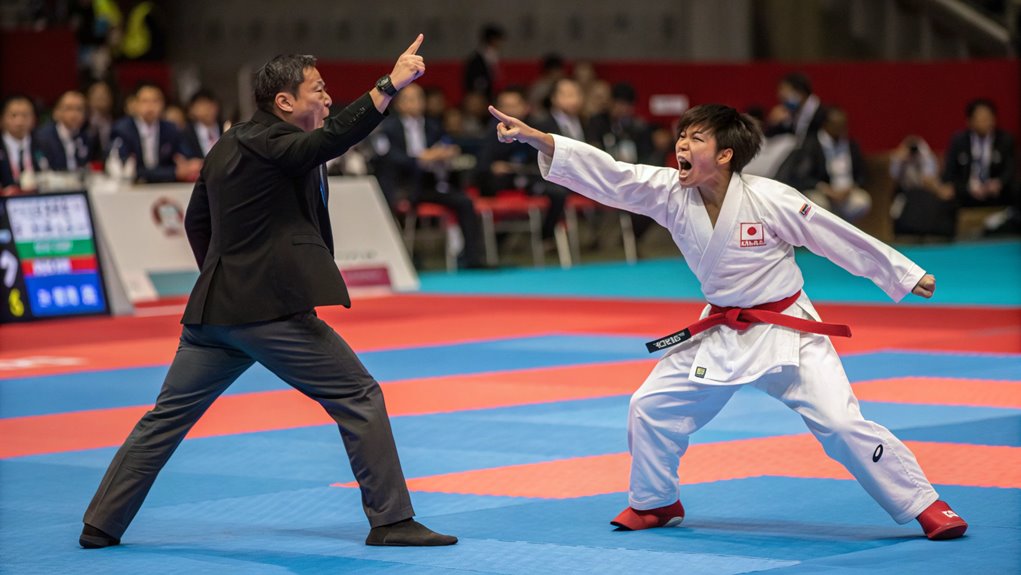
When you step onto the mat for a karate competition, understanding the rules is essential to your success. You need to familiarize yourself with the karate scoring systems that determine how points are awarded.
Whether it’s a point-based system or a continuous sparring format, knowing the specifics can give you an edge. Each tournament format has its own nuances, so pay attention to the guidelines provided before the competition.
Understanding the nuances of each tournament format can enhance your performance and give you a competitive advantage.
You want to be free to express your skills without the hindrance of penalties or misunderstandings. Embrace the spirit of competition by respecting the rules and staying informed.
This knowledge empowers you to focus on your performance, allowing you to showcase your abilities in the best possible light.
Illegal Strikes and Target Areas
In karate, understanding illegal strikes and target areas is essential for maintaining a fair and safe competition. You need to know that certain areas of the body, like the back of the head, throat, or groin, are considered illegal targets. Striking these areas can lead to penalties, as it can cause serious injury.
Additionally, prohibited techniques like elbows, knees, and certain types of kicks can also result in disqualification if used improperly. By focusing on permissible strikes and respecting the rules, you guarantee a level playing field for everyone.
Embrace the spirit of martial arts while avoiding illegal targets and techniques, allowing you to express your skills freely without compromising the safety of others.
Excessive Contact and Its Consequences
Understanding illegal strikes is just the beginning; managing contact during sparring is equally important. Excessive contact can lead to injuries, undermining your freedom to train effectively.
Keeping an eye on contact intensity guarantees you and your partner can spar safely while honing your skills. It’s vital to implement safety measures, like controlling your power and using proper protective gear.
Remember, martial arts is about respect and growth, not proving who’s stronger. By being mindful of your actions, you create an environment where everyone can thrive.
If you find yourself landing heavy blows, take a step back and adjust. Staying aware of your contact intensity helps maintain the integrity of the sport and supports a positive training atmosphere for all.
Unsportsmanlike Conduct and Behavior
In karate, showing disrespect toward your opponent can lead to serious penalties.
You might think excessive celebrations are harmless, but they can also be seen as unsportsmanlike behavior.
Let’s explore how these actions can impact your standing in the sport.
Disrespecting Opponents
While competing in karate, showing respect for your opponent is essential, as unsportsmanlike conduct can undermine the spirit of the martial art. Disrespecting your opponent, whether through taunts, aggressive gestures, or refusal to acknowledge their skill, not only reflects poorly on you but also violates martial arts etiquette.
Remember, every competitor deserves recognition for their hard work and dedication. By maintaining opponent respect, you contribute to a positive environment that fosters growth and camaraderie.
When you step onto the mat, embody the values of honor and humility. This mindset enhances your experience and elevates the sport itself. Embrace the freedom of competition, but never forget that respect is the true mark of a skilled martial artist.
Excessive Celebrations
Celebrating victories is a natural part of competition, but going overboard can cross the line into unsportsmanlike conduct. You should embrace celebration etiquette to honor your hard work while maintaining respect for your opponent.
Excessive celebrations—like taunting or prolonged displays—can provoke negative reactions and disrupt the spirit of the match. Emotional control is key; it’s important to channel your excitement in a way that uplifts rather than alienates. A simple fist pump or a nod to your opponent can express joy without crossing the line.
Out of Bounds Violations
When a competitor steps out of the designated area during a match, it can lead to an out of bounds violation that disrupts the flow of the contest. Staying within the ring boundaries is vital, as it keeps the spirit of competition alive.
When you venture outside the match area, not only do you risk a penalty, but you also lose the opportunity to engage fully with your opponent. This violation can halt the action, making it harder for you to maintain momentum.
Failing to Follow Referee Instructions
In karate, following the referee’s instructions is essential for maintaining order and fairness during matches.
If you disobey, you risk facing penalties that could affect your performance and standing.
Understanding the referee’s authority helps you navigate the rules effectively and stay in the competition.
Importance of Compliance
Compliance with referee instructions is essential for maintaining the integrity of a karate match. When you adhere to the rules, you not only showcase your skills but also foster an environment of respect and fairness.
This commitment to rule adherence is crucial for self-discipline development, a core value in martial arts. By following the referee’s guidance, you demonstrate your dedication to the sport and your opponents, ensuring everyone has a fair chance to excel.
Ignoring these directives can lead to chaos, undermining the very essence of karate. Embracing compliance allows you to express your freedom as a martial artist while honoring the traditions and structure that make karate a respected discipline.
Your journey in karate thrives on this balance.
Consequences of Disobedience
Disobeying referee instructions can lead to serious repercussions in a karate match. When you fail to follow directions, you not only risk your chances of winning but also expose yourself to disqualification risks.
Every competitor must uphold behavioral expectations, which are essential for maintaining the integrity of the sport. Ignoring a referee’s call can result in penalties or even a complete disqualification, putting your hard work and dedication on the line.
Remember, the referee’s role is to guarantee fairness and safety in the match, so respecting their authority is crucial. If you want to compete freely and enjoy the spirit of karate, stick to the rules and show respect for the officials.
Your success depends on it!
Referee’s Authority Explained
Understanding the referee’s authority is essential for every karate competitor, as it directly impacts your performance and the match’s outcome.
The referee signals are your guide to the rules and flow of the match. Ignoring these instructions can lead to penalties or even disqualification.
Remember, authority delegation is significant; the referee’s role is to maintain order and guarantee fair play. When you fail to adhere to their commands, you’re not just risking your standing but also undermining the spirit of karate.
Embrace the referee’s guidance, and you’ll find freedom in your movements and strategies. Respect their decisions, and you’ll elevate your game, allowing your skills to shine without unnecessary interruptions.
Equipment Violations and Penalties
While practicing karate, it’s essential to verify that your equipment meets the required standards, as any violations can lead to penalties during competitions.
Using proper protective gear is vital for your safety and the safety of your opponents. If your gear doesn’t comply with safety standards—like wearing a damaged helmet or improper gloves—you could face immediate penalties, including disqualification.
Confirm your uniform fits right and is free of prohibited items, like jewelry. Remember, the rules are in place to keep everyone safe while allowing you to express your martial arts skills freely. Additionally, safety precautions should always be prioritized to ensure a secure training environment.
Take responsibility for your equipment; it’s not just about competition—it’s about your journey as a karate practitioner. Stay informed and prepared to avoid unnecessary setbacks.
Consequences of Multiple Fouls
When a competitor commits multiple fouls during a karate match, the repercussions can escalate quickly. Each foul you accumulate not only impacts your performance but also leads to penalty escalation by officials.
Initially, you might receive a warning, but with continued infractions, you risk harsher consequences. This can range from point deductions to disqualification, stripping you of your chance to compete freely.
Your momentum can be shattered, and the pressure intensifies as you navigate the match, knowing that every move is under scrutiny. It’s vital to maintain control and respect the rules to avoid this slippery slope.
Frequently Asked Questions
What Types of Fouls Are Most Common in Karate Competitions?
In the dance of combat, you’ll often see illegal strikes and excessive contact trip up competitors. These missteps can shatter the flow, turning fierce warriors into cautious dancers, seeking freedom within the rules of the ring.
How Can I Appeal a Foul Call During a Match?
To appeal a foul call, follow the foul appeal procedures outlined by your organization. Present your case calmly to the officials, ensuring you understand match dispute resolution processes, so you can assert your rights effectively.
Are There Different Penalties for Junior and Senior Competitors?
In the arena of competition, junior penalties often feel like gentle breezes, while senior penalties can strike like a thunderclap. You’ll notice differences in severity, reflecting the experience and responsibility expected from each age group.
What Is the Role of the Referee in Enforcing Fouls?
The referee’s responsibilities include observing matches closely and making foul assessments. They guarantee fair play, issuing warnings or penalties when necessary, so you can focus on your technique without worrying about unfair advantages.
Can a Competitor Be Disqualified for a Single Foul?
A single foul can lead to disqualification if it meets specific disqualification criteria. Think of it as a chain; one link can break the whole. You must be aware of the potential consequences, so stay vigilant.