Karate Scoring System Explained
When it comes to karate competitions, understanding the scoring system is essential for success. You’ll find that points are awarded based on the quality and effectiveness of your techniques, with kicks often scoring higher than punches. But what exactly do judges look for? The distinction between terms like Waza-Ari and Ippon can greatly impact your match outcome. Let’s explore the nuances of the karate scoring system to help you maximize your performance in tournaments.
Overview of Karate Scoring
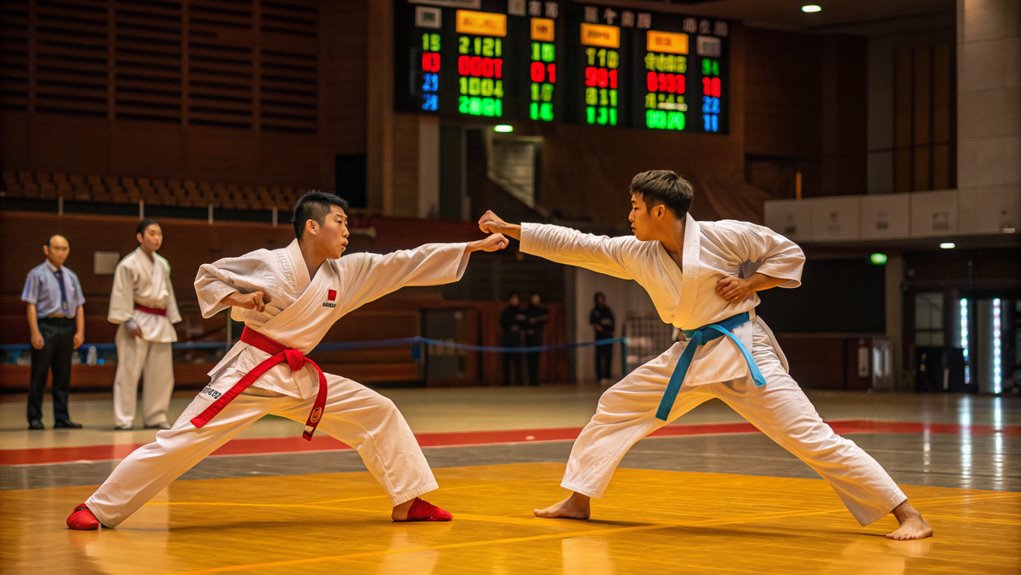
In karate, scoring is essential for determining the winner of a match, and understanding it can enhance your experience as a spectator or participant.
Karate scoring varies across competition formats, whether you’re watching a local tournament or a prestigious championship. Typically, points are awarded based on the quality and control of techniques executed, rewarding precision and timing.
In some formats, judges evaluate performances to decide the winner, fostering a sense of fair play. It’s liberating to grasp these scoring nuances, as it adds depth to your appreciation of the sport.
Types of Techniques and Their Point Values
Understanding the types of techniques used in karate and their corresponding point values is essential for grasping how scoring works during a match.
Techniques fall into two main categories: kicking techniques and punching techniques. Kicking techniques often score higher due to their complexity and power, with points awarded for accurate, controlled strikes to designated areas. A well-executed roundhouse kick or front kick can earn you significant points.
On the other hand, punching techniques, while effective, typically score fewer points. A clean jab or cross can still contribute to your tally but won’t match the impact of a powerful kick.
Mastering these techniques not only boosts your score but also enhances your overall performance in the ring.
Judging Criteria in Karate Competitions
While competing in karate, knowing the judging criteria is essential for success. The judges evaluate your performance based on key factors that guarantee competition fairness. Here’s what they look for:
- Technique: Judges assess the precision and effectiveness of your techniques. Clean, powerful strikes score higher.
- Control: Demonstrating control over your movements and your opponent shows discipline and skill, which judges highly value.
- Spirit: Your attitude and determination during the match can sway judges. A strong fighting spirit often earns extra points.
Familiarizing yourself with these criteria can empower you to enhance your performance and achieve your goals.
Embrace the freedom of expression in your techniques, and let your passion shine through each move!
The Role of Judges and Referees
Judges and referees play an essential role in karate competitions, ensuring that matches are fair and adhere to established rules.
You’ll find that judges have specific responsibilities, like scoring techniques and evaluating fighters’ performances based on criteria such as power, control, and precision.
Meanwhile, referees hold authority over the match, making real-time decisions about fouls and enforcing the rules. Their presence helps maintain order in the dojo, allowing fighters to express their skills freely without the chaos of disputes.
Referees ensure fair play and order during matches, empowering fighters to showcase their skills without disruption.
With their keen eyes and quick judgments, these officials help create an environment where each competitor can shine.
Understanding Waza-Ari and Ippon
In karate, understanding the terms Waza-Ari and Ippon is essential for scoring in matches.
Waza-Ari represents a significant technique that earns you points, while Ippon signifies a full point, often leading to victory.
Knowing these distinctions can help you strategize better during your bouts.
Definition of Waza-Ari
Waza-Ari represents an essential scoring element in karate, reflecting a technique that demonstrates control and effectiveness. Understanding its significance can elevate your performance.
Here are three key aspects of waza-ari:
- Control: Waza-Ari showcases your ability to maintain balance and composure during an attack.
- Technique: The scoring emphasizes the execution of proper techniques, like a well-timed punch or kick.
- Impact: Waza-Ari is awarded when a technique lands with sufficient force and precision but doesn’t achieve the full score of Ippon.
For example, a swift jab that momentarily stuns your opponent can earn you a waza-ari.
Embracing waza-ari’s significance not only enhances your skills but also captures the essence of karate’s spirit.
Definition of Ippon
Ippon is the highest score in karate, representing a decisive technique that demonstrates complete control, power, and precision. To achieve Ippon, you must execute a strike that showcases your skill and mastery, leaving no doubt in the judges’ minds.
Throughout karate history, the criteria for what constitutes an Ippon have evolved, reflecting the sport’s dynamic nature. As scoring systems developed, the emphasis on technique and effectiveness grew stronger, pushing practitioners to refine their abilities.
Embracing the spirit of freedom in martial arts, you endeavor not only for victory but for artistic expression in your movements. Understanding Ippon is essential, as it captures the essence of karate and its journey through scoring evolution, encouraging you to pursue excellence on the mat.
Scoring Importance in Matches
Scoring plays an essential role in matches, influencing strategy and outcomes for competitors.
Understanding how Waza-Ari and Ippon impact match dynamics can enhance your performance. Here are three key points to reflect on:
- Scoring Strategy: Knowing when to go for Waza-Ari or Ippon can shift the momentum. A well-timed attack can secure a win.
- Point Accumulation: Each point earned shapes the match, pushing you to adapt your tactics as you gauge your opponent’s strengths and weaknesses.
- Psychological Edge: Scoring a decisive Ippon can demoralize opponents, giving you the freedom to control the match pace.
Embrace these elements, and you’ll navigate the scoring system with confidence, ultimately enhancing your chances of victory.
Scoring in Different Karate Styles
When you think about scoring in karate, it’s essential to understand how different styles approach it.
Point fighting rules focus on controlled techniques, while full-contact scoring emphasizes power and impact.
Traditional karate judging often blends these elements, creating a unique scoring experience for competitors.
Point Fighting Rules
While the specifics may vary across different karate styles, point fighting rules generally emphasize controlled techniques and the importance of scoring through precise strikes.
To thrive in this environment, keep these key points in mind:
- Controlled Techniques: Always aim for accuracy and control. A well-placed strike can earn you points.
- Point Deduction: Be aware that excessive contact or unsportsmanlike behavior can lead to point deduction, impacting your score.
- Penalty Enforcement: Judges enforce penalties to maintain fairness and integrity, so guarantee you follow the rules.
Full-Contact Scoring
In full-contact karate, the scoring system shifts dramatically from point fighting, emphasizing not just technique but also the effectiveness of strikes. Here, full contact techniques reign supreme, and you’ll find that judges focus more on the impact rather than the number of points scored.
Scoring accuracy becomes essential, as judges assess how well each strike lands and how it affects your opponent. A powerful punch or kick that visibly impacts your opponent can earn you higher scores, showcasing your skill and control.
Unlike point fighting, where quick touches might suffice, full-contact demands a deeper understanding of strategy and strength. Embrace this freedom to express your martial artistry while aiming for that decisive impact that leads to victory.
Traditional Karate Judging
Full-contact karate offers a stark contrast to traditional karate judging, where the emphasis often lies on technique, form, and control rather than sheer power.
In traditional karate competitions, you’ll find that judges assess performances based on several key factors:
- Technique: Precision and execution of movements in traditional kata are essential.
- Form: Judges look for proper stance, posture, and fluidity in your actions.
- Competition Etiquette: Respect and adherence to the rules reflect your understanding of the martial art.
Embracing these elements allows you to express your freedom within the confines of tradition.
Mastering traditional karate judging means valuing the art itself, ensuring your performance resonates with the spirit of the practice while celebrating your individuality.
Strategies for Maximizing Points in Competition
To maximize your points in karate competition, focus on precision and speed during your techniques.
Combine offensive tactics with defensive strategies to create a well-rounded approach. When you attack, aim for clean, controlled strikes that hit your opponent’s scoring zones.
Blend offensive and defensive techniques for a balanced strategy, focusing on precise strikes to your opponent’s scoring zones.
Use quick footwork to maintain distance and evade counters, making it harder for your opponent to score. Don’t forget to assess your opponent’s movements; anticipating their attacks can help you capitalize on openings.
Implement feints to confuse them, drawing out reactions that you can exploit. Remember, maintaining composure under pressure is key.
Frequently Asked Questions
How Are Ties Resolved in Karate Competitions?
In karate competitions, ties get resolved through tie-breaking methods that consider scoring criteria. Judges evaluate performance quality, effective techniques, and overall control, ensuring you showcase your skills and determination to win decisively.
Can Points Be Deducted for Fouls or Misconduct?
Yes, points can be deducted for foul penalties during competitions. In fact, nearly 15% of matches involve misconduct consequences, highlighting the importance of discipline. Keeping your focus guarantees you avoid unnecessary point losses and penalties.
What Happens if a Competitor Is Injured During a Match?
If you get injured during a match, officials conduct an injury assessment to guarantee your safety. If deemed serious, you might have to forfeit or pause until you’re cleared to continue. Your well-being matters most.
Are There Age or Weight Categories in Karate Competitions?
Yes, there are age divisions and weight classes in karate competitions. You’ll find categories for both young and mature athletes, ensuring fair matchups, promoting safety, and allowing everyone to showcase their skills in a level playing field.
How Is Spectator Behavior Monitored During Competitions?
Spectator behavior’s monitored through established etiquette and behavior guidelines. You’re encouraged to cheer respectfully, avoid distractions, and maintain a supportive atmosphere, ensuring everyone enjoys the competition while respecting athletes’ focus and dedication.