10 Best Foam Rollers for Muscle Recovery
Foam rolling works — athletes, lifters, runners, and physical therapists all swear by self-myofascial release for loosening tight muscles, speeding post-workout recovery, and keeping nagging stiffness from turning into an injury. But not all foam rollers do the same job. A soft smooth roller glides gently over a sore back; a knobby deep-tissue roller digs into a stubborn IT band like a thumb press; and a vibrating roller adds percussive stimulation that makes a 90-second session feel like a full massage. Buy the wrong density for your tolerance and the roller gathers dust.
The choices that actually matter are simpler than the marketing suggests: density (soft for beginners and rehab, firm for experienced rollers), length (a full-length 36-inch roller lets you roll your whole back in one pass, while compact 12-inch rollers target calves, glutes, and the travel bag), and texture (smooth for even pressure, zones or knobs for mimicking a therapist’s hands). A couple of premium models add vibration, which genuinely helps for post-leg-day soreness — at a genuinely premium price. If you’re rehabbing something specific, pair rolling with proper joint support like the best knee braces for sports injuries rather than rolling your way through a structural problem. I’ve verified the specs and editorial signals behind the ten best foam rollers on Amazon so you can match the roller to your pain tolerance and your goals.
As an Amazon Associate, I earn from qualifying purchases. Prices fluctuate — check the current price before you buy.
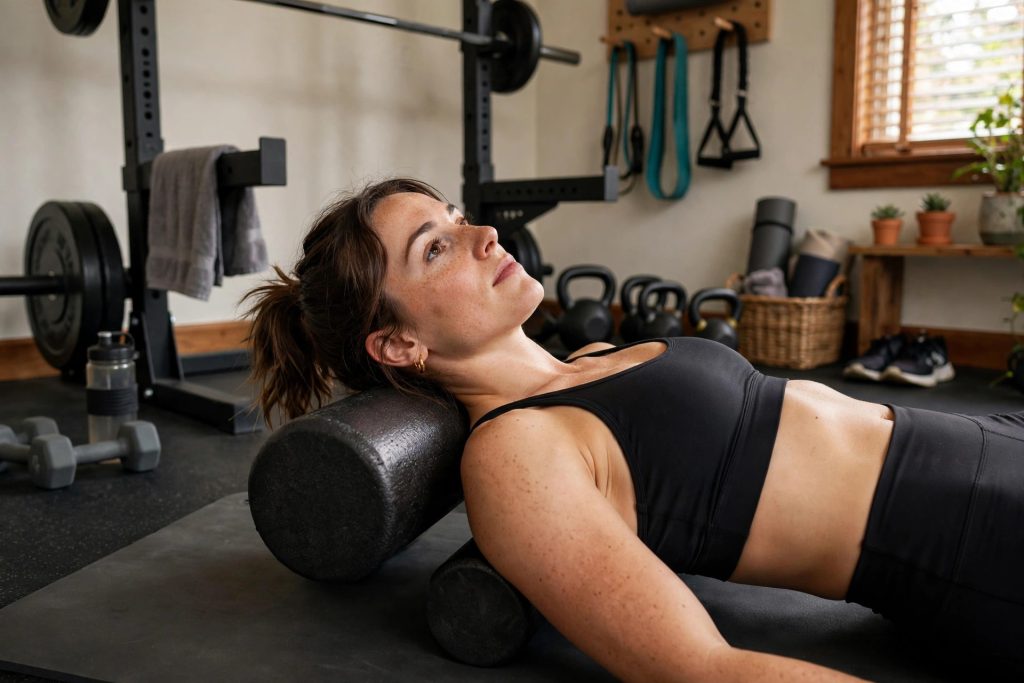
Top 10 Foam Rollers at a Glance
| Product | Price | Key Spec | Dimensions | Best For | |
|---|---|---|---|---|---|
| TriggerPoint GRID Foam Roller 13" (Black) | ~$30–$38 | Multi-density EVA over hollow core, 500 lb capacity, 1-yr warranty | 13" × 5.5" | Best Overall | CHECK PRICE |
| TriggerPoint GRID X Extra-Firm 13" | ~$35–$45 | Twice the firmness of standard GRID, 550 lb capacity | 13" × 5.5" | Best Extra-Firm for Deep Tissue | CHECK PRICE |
| RumbleRoller Original Textured 12" Compact (Blue) | ~$45–$70 | Patented flexible knobs, latex-free, medium-firm | 12" × 5" | Best Deep-Tissue Knobbed | CHECK PRICE |
| 321 STRONG Medium-Density (Orange) | ~$25–$30 | Medium density 13", ~41,000 ratings, includes eBook | 13" × 5.25" | Best Value Grid Roller | CHECK PRICE |
| Amazon Basics High-Density Round 12" (Black) | ~$15–$25 | Molded polypropylene EPP, firm, holds shape | 12" × 6" | Best Budget | CHECK PRICE |
| OPTP PRO-Roller Soft Density 36"×6" (Pink) | ~$30–$45 | Low-density soft closed-cell EVA, PT-clinic standard since 2009 | 36" × 6" | Best Soft / Best for Beginners & Physical Therapy | CHECK PRICE |
| LuxFit Speckled 36" (Blue) | ~$20–$30 | Extra-firm 2 lb/ft³ molded polypropylene, 3-yr warranty | 36" × 6" | Best Full-Length for Back | CHECK PRICE |
| Gaiam Restore Compact Textured 12"×4" | ~$20–$25 | Textured surface, gym-bag size | 12" × 4" | Best Travel | CHECK PRICE |
| Hyperice Vyper 2.0 Vibrating (Black) | ~$149–$199 | 3 vibration speeds (45/68/92 Hz), rechargeable ~2 hrs, TSA carry-on approved | 11.75" × 5.75" | Best Vibrating | CHECK PRICE |
| Theragun Wave Roller (Smart Vibrating) | ~$99–$149 | 5 frequencies via Therabody app (Bluetooth), wave-groove texture, 3-hr battery | 12" × 5.1" | Best App-Connected Vibrating | CHECK PRICE |
The 10 Best Foam Rollers — Quick Reviews
1. TriggerPoint GRID Foam Roller 13″ (Black) — Best Overall
The GRID is the foam roller that turned foam rolling into a mainstream recovery habit. Its hollow core wrapped in multi-density EVA — “Distrodensity zones” that mimic flat palms, fingers, and fingertips — gives you three pressure levels in one roller, so you can start on the gentle zones and work up to the aggressive ones without swapping equipment. The rigid core supports 500 pounds and never deforms, which is why GRID rollers survive years of daily use while cheap EPP rollers dent and crack.
This is the safest first serious roller to buy: firm enough to actually do something, versatile enough for back, quads, IT bands, and glutes. One thing to watch: the 13-inch length won’t cover your full back in a single pass — full-length fans should look at the LuxFit or OPTP 36-inchers below. And because colors ship under separate ASINs, make sure your order is the black variant at checkout. The 1-year warranty and sweat-resistant cover round out the category standard.
Key specs: Multi-density EVA over rigid hollow core · Distrodensity zones (flat palms + fingertips) · 500 lb capacity · 13″ × 5.5″ · sweat-resistant · 1-yr warranty · ~$30–$38
2. TriggerPoint GRID X Extra-Firm 13″ — Best Extra-Firm for Deep Tissue
If the standard GRID feels like a warm-up, the GRID X is the main event. TriggerPoint rates it at twice the firmness of the original, with a denser EVA that holds up under a 550-pound capacity — this is the roller for people who find regular foam rollers “too soft” and want pressure that actually matches a therapist’s elbow on a knotted quad. Same 13-inch Distrodensity layout, same hollow-core construction, just far less forgiving.
Beginners, this is not your roller. Reviewers consistently describe it as lacrosse-ball firm, and the wrong first purchase here teaches people that “foam rolling hurts” instead of that it helps. Confirm your variant at checkout (separate ASINs by color), and note some buyers report a rubbery smell when the box first opens — it airs out, but it’s worth knowing. If you roll daily and want maximum pressure from a compact roller, this is it.
Key specs: 2× firmness of standard GRID · multi-density EVA, hollow core · 550 lb capacity · 13″ × 5.5″ · sweat-resistant · ~$35–$45
3. RumbleRoller Original Textured 12″ Compact (Blue) — Best Deep-Tissue Knobbed
The RumbleRoller is the deep-tissue specialist’s cult pick. Instead of zones or ridges, its surface is covered in firm, flexible knobs that deflect around bony prominences while sinking into soft tissue — the closest a foam roller comes to replicating a thumb pressing into a knot. It’s medium-firm, latex-free, and the 12-inch compact size makes it a travel-friendly torturer. Lifters and runners with chronic IT band or glute medius issues swear by this texture because nothing else digs quite like it.
“Travel-friendly” here is a double-edged sword: the knobs demand technique and tolerance, and 12 inches is small for broad back work. This is strictly for experienced rollers — if you’ve never foam rolled, start with the GRID or the OPTP below and graduate to knobs when smooth surfaces stop feeling like anything. Expect it to feel intense for the first week; that’s the point.
Key specs: Patented flexible knobs · medium-firm · latex-free · 12″ × 5″ · compact travel-friendly · ~$45–$70
4. 321 STRONG Medium-Density (Orange) — Best Value Grid Roller
The 321 STRONG is the answer to “do I really need to pay $35 for a GRID?” A medium-density 13-inch grid-style roller with the same zone concept — varied surface patterns for different pressure — at a price that routinely sits $5–$15 under the big brand. With roughly 41,000 ratings, it has one of the deepest review histories of any foam roller on Amazon, and it ships with an eBook of exercises so beginners aren’t rolling blind.
It’s not a deep-tissue instrument — serious knot-hunters will find the medium density too forgiving, and the build doesn’t have TriggerPoint’s hollow-core engineering. And like most rollers, colors live on separate ASINs, so confirm the orange/medium-density main listing at checkout. But as a first roller or a second roller for the office, the value-per-dollar is hard to beat.
Key specs: Medium-density grid-style · 13″ × 5.25″ · ~41,000 ratings · includes eBook · separate ASINs per color · ~$25–$30
5. Amazon Basics High-Density Round 12″ (Black) — Best Budget
Twenty dollars gets you a genuinely firm foam roller — that’s the whole pitch of the Amazon Basics high-density model, and it’s a good one. Molded from polypropylene EPP, it’s dense enough to hold its shape under full body weight, which is where most budget rollers fail (they dent permanently within weeks). For basic pre-workout rolling of quads, calves, and lats, firm and cheap beats fancy and forgotten.
The compromise is the smooth surface: one uniform pressure, no zones, no knobs, no texture variety. If you don’t know yet whether you like foam rolling, that’s actually fine — it’s a low-stakes experiment. The 12-inch length is the flagship; other sizes are separate ASINs, so check your cart. For students, dorms, and “I just want to try this” buyers, it’s the minimum viable roller, and minimum viable is enough.
Key specs: Molded polypropylene EPP · high-density firm · holds shape · smooth surface · 12″ × 6″ · ~$15–$25
6. OPTP PRO-Roller Soft Density 36″×6″ (Pink) — Best Soft / Best for Beginners & Physical Therapy
The OPTP PRO-Roller is the roller your physical therapist already owns. The low-density soft version has been the PT-clinic standard since 2009 — a full 36-inch closed-cell EVA roller with gentle, forgiving pressure designed for rehab, seniors, fibromyalgia-friendly rolling, and anyone who finds standard rollers unbearably painful. The full length lets you roll your entire back, lie lengthwise on it for postural stretches, and use it for core exercises — it’s a multi-tool, not just a massager.
The flip side: experienced rollers and deep-tissue fans will find it too soft to feel like anything. This is a feature for its audience, not a flaw. Confirm the pink variant at checkout — the blue 36-inch version is a separate ASIN. If you’re starting a rehab routine, are new to rolling, or are buying for an older family member, this is the safest and most recommended option on the list.
Key specs: Low-density soft closed-cell EVA · PT-clinic standard since 2009 · 36″ × 6″ full length · gentle pressure · separate ASIN per color · ~$30–$45
7. LuxFit Speckled 36″ (Blue) — Best Full-Length for Back
Full-length rollers are the right tool for back work — you can lie lengthwise, roll the whole thoracic spine in one pass, and do chest-opening stretches — but most are soft. The LuxFit is the firm full-length alternative: extra-firm 2 lb/ft³ molded polypropylene in a 36-inch bar, so you get serious pressure across the whole back without the roller flattening under you. The standout spec is the warranty: a full 3 years, triple what TriggerPoint offers, on a roller that costs less than the GRID.
The surface is smooth, with no zones or texture, so pressure is uniform — fine for broad back rolling, less interesting for targeted knot work. And 36 inches is bulky: this lives in your home gym, not your carry-on. If your priority is back and postural work at home, with firm pressure and the best warranty on this list, the LuxFit is the pick.
Key specs: Extra-firm 2 lb/ft³ molded polypropylene · 36″ × 6″ full length · smooth surface · full 3-year warranty · ~$20–$30
8. Gaiam Restore Compact Textured 12″×4″ — Best Travel
Gaiam’s Restore compact roller exists for one job: living in your gym bag. At 12 inches long and 4 inches in diameter, it’s the smallest full-function roller here, and the textured surface adds more bite than a smooth travel roller has any right to. Throw it in a suitcase, roll calves and IT bands in the hotel room after a travel day, toss it back. For runners and frequent travelers who refuse to skip recovery days, that convenience is the whole value proposition.
The narrow 4-inch diameter is the trade-off: it’s less stable than 5- or 6-inch rollers when you’re rolling your back, and it can feel wobbly until you learn it. This is a secondary roller for most people — your firm 13- or 36-inch roller lives at home, the Gaiam lives in the bag. Pair it with a portable recovery plan (and the best ankle supports for running if travel mileage is the context) and jet-lag soreness gets a lot less mysterious.
Key specs: Textured surface · gym-bag size · 12″ × 4″ · lightweight · ~$20–$25
9. Hyperice Vyper 2.0 Vibrating (Black) — Best Vibrating
The Vyper 2.0 is the premium end of foam rolling: a standard-looking roller with a vibrating core running at three speeds (45, 68, and 92 Hz) that adds percussive stimulation on top of body-weight pressure. The practical effect is real — vibration increases local blood flow and temporarily dulls pain perception, so post-leg-day quads tolerate deeper pressure than they would on a dead roller. About 2 hours of rechargeable battery, and it’s TSA carry-on approved, which tells you who it’s aimed at: traveling athletes.
Everything about it costs more, though: roughly 6–10× the price of a basic roller, plus it’s loud on max speed and the vibration does nothing if you hate the sensation. One caution from the research: this is a single-source ASIN, so verify the live listing before you buy — confirm the seller, the price, and that it’s actually the Vyper 2.0 in your cart. If budget allows and you’re already deep into recovery tech, it’s the best vibrating roller on Amazon.
Key specs: 3 vibration speeds (45/68/92 Hz) · rechargeable ~2 hrs battery · TSA carry-on approved · single-source ASIN — verify live listing · loud on max · ~$149–$199
10. Theragun Wave Roller (Smart Vibrating) — Best App-Connected Vibrating
Therabody’s answer to the Vyper trades raw power for smarts: the Wave Roller connects over Bluetooth to the Therabody app with five vibration frequencies, a wave-groove texture that grips tissue instead of sliding over it, and a 3-hour battery that outlasts the Hyperice. It’s the “guided recovery” roller — the app walks you through routines, which matters if you’ll actually follow along.
At ~6 pounds it’s noticeably heavy, and some users report the surface feels slippery when hands are sweaty. It also costs more than any manual roller on this list, though it undercuts the Vyper. Buy it if you want vibration plus coaching in one device and you’re already in the Therabody ecosystem; buy the Vyper if you want the strongest vibration; buy any of the manual rollers above if $99+ for a foam roller makes you wince. Note it as priced, and confirm your exact model at checkout.
Key specs: 5 frequencies via Therabody app (Bluetooth) · wave-groove texture · 3-hr battery · ~6 lb · some report slippery surface · ~$99–$149
How to Choose a Foam Roller
- Start with density, not features. Beginners, seniors, and rehab users should go soft (OPTP PRO-Roller soft) or medium (GRID, 321 STRONG); experienced rollers who want real pressure go firm (GRID X, RumbleRoller, Amazon Basics high-density). Too-firm rollers teach new users that rolling hurts; too-soft rollers bore experienced ones.
- Match the length to the job. A full 36-inch roller (LuxFit, OPTP) is best for back work — you roll the whole spine in one pass and can lie lengthwise on it. A 12–13 inch roller (GRID, RumbleRoller, Gaiam) targets legs, glutes, and IT bands better and fits a gym bag. Many serious rollers eventually own one of each.
- Texture decides the sensation. Smooth rollers (Amazon Basics, LuxFit, OPTP) give even, gentle pressure. Grid zones (GRID, 321 STRONG) add variety without brutality. Knobs (RumbleRoller) mimic a therapist’s thumbs and hurt accordingly. Choose the sensation you can tolerate daily, not the one that impresses you in a review video.
- Vibrating vs. manual is a budget question, not a magic question. Vibration (Vyper 2.0, Wave Roller) genuinely helps blood flow and pain tolerance, but it costs 6–10× a manual roller and needs charging. If you’re unsure, buy a $25 manual roller first — you can always upgrade when you’ve built the rolling habit.
- Check durability signals and warranty. Hollow-core rollers (GRID, GRID X) and molded polypropylene (Amazon Basics, LuxFit) resist permanent dents; cheap EPP rollers flatten. Warranty tells you what the maker believes: LuxFit’s 3-year warranty and TriggerPoint’s 1-year warranty are meaningful; no-warranty rollers are disposable.
- Confirm the exact variant at checkout. Foam roller colors and sizes often live on separate Amazon ASINs — the GRID black, 321 STRONG orange, and OPTP pink links here all point to the specific variant reviewed. Always check the size, color, and seller in your cart before buying, and for the single-source Vyper 2.0, verify the live listing.
FAQs
What size and firmness of foam roller is best for beginners? Start with a medium-density roller around 13 inches long, like the TriggerPoint GRID or the 321 STRONG — firm enough to feel like something, forgiving enough to use daily. If you’re coming off an injury or have low pain tolerance, go softer with the OPTP PRO-Roller. Beginners should avoid extra-firm (GRID X) and knobbed (RumbleRoller) rollers until smooth rolling feels easy; 5–10 minutes a day beats one painful weekly session.
Are vibrating foam rollers worth the money? For most people, no — a $25–$35 manual roller delivers 90% of the benefit. Vibrating rollers like the Hyperice Vyper 2.0 and Theragun Wave Roller add real value for serious athletes: the vibration increases blood flow and raises pain tolerance, letting you roll harder after brutal sessions. If you train 5+ days a week or already own other recovery tech, they’re a reasonable splurge; otherwise, build the habit on a manual roller first.
How often should I foam roll? Daily is fine for most people — 5–10 minutes on the muscles you trained, using slow passes (about an inch per second) over each area and pausing 20–30 seconds on tender spots. You can roll before workouts to warm up tissue and after to ease soreness. Avoid rolling directly on joints, bones, or injured areas, and if something hurts sharply rather than “good hurt,” stop.
Can a foam roller replace stretching or professional massage? No — it complements them. Rolling improves tissue quality and short-term range of motion, but it doesn’t replace a full stretching routine or a therapist’s diagnosis of a real injury. Think of the roller as daily maintenance, stretching as flexibility work, and massage or physical therapy as the heavy repair. If pain persists more than a couple of weeks despite rolling, see a professional.