
Flyboarding Equipment Explained
Did you know that flyboarding can elevate you up to 15 meters in the air? This thrilling water sport relies on specialized equipment, each component playing a vital role in your performance and safety. From the jet ski that provides propulsion to the boots that secure your feet, understanding these elements is essential. Let’s explore the intricacies of flyboarding gear and how it all comes together for an exhilarating experience.
What Is a Flyboard?
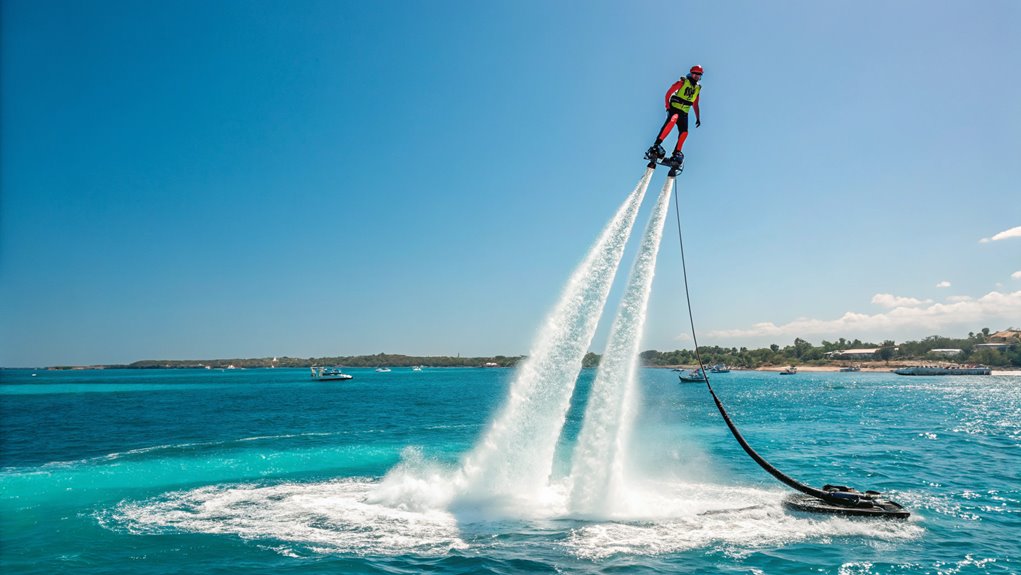
A flyboard is an innovative water sports device that allows you to soar above the water while propelled by powerful jets. This incredible invention traces its roots back to the mind of Franky Zapata, who revolutionized water sports in 2011.
Combining jet propulsion and hydro dynamics, flyboard innovations have transformed how you experience water. You’ll find yourself gliding, flipping, and diving with ease, capturing a sense of freedom like never before.
The device connects to a jet ski, drawing water through a hose and shooting it down, enabling you to elevate and maneuver. With each advancement, flyboarding enhances your aquatic adventures, blending technology with exhilaration.
Embrace the thrill and discover the endless possibilities of flyboarding today!
The Role of the Jet Ski
While you’re soaring above the water on a flyboard, the jet ski plays an essential role in delivering the power needed for your aerial adventures. Depending on the jet ski types you choose, you’ll find varying horsepower and capabilities, which directly influence your flyboarding experience. High-performance models are ideal because they provide robust thrust, crucial for lifting you into the sky.
However, don’t overlook jet ski maintenance; keeping your machine in top shape guarantees reliability and performance. Regular checks on the engine, fuel system, and impeller can prevent frustrating breakdowns during your sessions.
Understanding the Hose System
Understanding the hose system is vital for maximizing your flyboarding experience. The hose connects your flyboard to the jet ski, delivering water propulsion.
You’ll need to pay attention to hose pressure; it directly influences your lift and maneuverability. Higher pressure means more power, allowing you to soar with freedom. However, if the hose length is too short, it can restrict your movement and height, limiting your aerial experience.
Conversely, a longer hose could lead to decreased pressure, making it harder to achieve those thrilling stunts. Balancing hose pressure and length is essential for ideal performance.
Flyboard Boots and Bindings
When you strap into your flyboard boots and bindings, you’re not just securing your feet; you’re establishing a crucial connection between you and the board that influences your control and performance.
The flyboard design integrates advanced binding materials, providing the essential support for your movements. High-quality materials, such as reinforced plastics and adjustable straps, guarantee a snug fit, enabling you to maneuver with precision.
This connection is fundamental for executing tricks and achieving that exhilarating feeling of flight. The right boots empower you to push limits, maximize freedom, and enjoy every moment in the air.
Safety Gear and Equipment
When you’re flyboarding, wearing the right safety gear is vital for your protection and enjoyment.
A well-maintained life jacket, helmet, and wetsuit can greatly reduce the risk of injury.
We’ll also cover essential tips for keeping your equipment in top shape to guarantee a safe experience on the water.
Essential Safety Gear
Safety gear is essential for anyone looking to enjoy flyboarding, as it not only enhances your experience but also greatly reduces the risk of injury.
Adhering to safety regulations is vital, and wearing the right protective clothing is your first line of defense. A well-fitted life jacket guarantees buoyancy and keeps you afloat in emergencies, while a helmet protects your head from impacts.
Don’t forget to wear water shoes or boots, which provide traction and safeguard your feet. Additionally, consider impact vests for extra protection against falls.
By equipping yourself with this essential safety gear, you’ll not only feel more secure but also enjoy the exhilarating freedom of flyboarding with confidence.
Your adventure awaits—suit up and soar!
Equipment Maintenance Tips
Maintaining your flyboarding equipment and safety gear is key to ensuring both performance and longevity.
Start with regular inspections; check your board, jetpack, and safety gear for any signs of wear or damage. Look for frayed straps, corrosion, or cracks in the equipment.
Next, prioritize equipment cleaning after each session. Rinse saltwater off your gear with fresh water to prevent corrosion and buildup, which can hinder performance. Don’t forget to dry everything thoroughly to avoid mold and mildew.
For your safety gear, inspect helmets and life vests for proper function and fit.
The Importance of a Life Jacket
When you’re flyboarding, safety should always be your top priority, and wearing a life jacket is essential. It provides significant flotation and stability, helping you stay buoyant in the water if you lose balance or fall. Additionally, pre-flight safety checks, including wearing a life jacket, are crucial to ensure a safe and enjoyable experience on the water.
Safety First Priority
While flyboarding offers exhilarating experiences above the water, prioritizing safety is crucial for every participant. Wearing a life jacket isn’t just a recommendation; it’s an essential safety protocol that can save your life.
Before you take off, verify you’re familiar with the emergency procedures, so you’re prepared for any situation.
- Always check your life jacket for proper fit.
- Make sure it’s securely fastened before hitting the water.
- Practice falling safely in controlled environments.
- Familiarize yourself with the equipment and how it operates.
- Stay within designated flyboarding zones to minimize risks.
Floatation and Stability Benefits
A life jacket not only enhances your safety but also greatly improves your stability while flyboarding. By providing essential floatation advantages, a life jacket allows you to maintain better control over your movements, reducing the risk of falls. With enhanced buoyancy, you can focus on mastering tricks and enjoying the ride without the constant worry of sinking.
| Feature | Floatation Advantages | Stability Enhancements |
|---|---|---|
| Increased Buoyancy | Keeps you afloat easily | Helps maintain balance |
| Adjustable Fit | Custom comfort | Reduces shifting weight |
| Reflective Strips | Enhances visibility | Boosts confidence |
| Lightweight Design | Easier maneuverability | Supports freedom of movement |
| Durable Materials | Long-lasting performance | Offers reliable support |
Investing in a quality life jacket is key to enjoying your flyboarding experience.
Learning the Basics of Control
Understanding how to control your flyboard is essential for an enjoyable experience on the water. Mastering control techniques and honing your balancing skills can elevate your flyboarding adventure. Here are some key points to focus on:
Mastering control techniques and balancing skills is key to an enjoyable flyboarding adventure on the water.
- Body Position: Keep your knees slightly bent and your body centered over the board.
- Weight Distribution: Shift your weight forward or backward to control your altitude.
- Arm Movements: Use your arms to steer; they act as your rudder.
- Practice: Regular practice helps you understand the nuances of control.
- Stay Relaxed: Tension can throw off your balance; stay loose to enhance your maneuverability.
Maintenance and Care for Flyboarding Gear
To keep your flyboarding gear in prime condition, regular maintenance is crucial. Start with gear cleaning after each use; rinse your equipment with fresh water to remove salt and debris. This prevents corrosion and prolongs the life of your gear. Additionally, store your equipment in a dry, cool place away from direct sunlight to avoid damage.
Here’s a simple maintenance checklist for your flyboarding gear:
| Task | Frequency | Notes |
|---|---|---|
| Gear Cleaning | After each use | Rinse thoroughly |
| Visual Inspection | Weekly | Check for wear and tear |
| Equipment Storage | After use | Store in a dry place |
| Hose Maintenance | Monthly | Inspect for leaks |
| Nozzle Cleaning | After every session | Guarantee peak performance |
Following these steps guarantees your freedom on the water remains uninterrupted!
Finding the Right Flyboarding Location
Choosing the right location for flyboarding can greatly enhance your experience on the water. You’ll want to seek out the best locations that not only offer stunning views but also adhere to local regulations.
Selecting the ideal flyboarding location enhances your water adventure, combining stunning views with compliance to local regulations.
Here are some key factors to reflect on:
- Water Conditions: Look for calm waters to guarantee stability.
- Accessibility: Choose locations with easy access for launching and landing.
- Safety: Prioritize areas with minimal boat traffic.
- Scenic Views: Enjoy breathtaking landscapes while you fly.
- Local Regulations: Always check for any permits or restrictions.
Finding the perfect spot is essential for a safe and exhilarating flyboarding experience.
Frequently Asked Questions
How Much Does Flyboarding Equipment Typically Cost?
Flyboarding equipment prices range from $3,000 to $15,000, depending on the brand and features. Well-known flyboarding gear brands like Zapata Racing and Flyboard offer various options, ensuring you find the perfect fit for your adventure.
Can Beginners Use Advanced Flyboarding Equipment?
Yes, beginners can use advanced flyboarding equipment, but safety precautions are essential. Statistically, 70% of injuries occur from improper use. Start with recommended gear, ensuring you’re comfortable before progressing to more complex setups. Embrace the thrill responsibly!
What Is the Weight Limit for Flyboarding Gear?
The weight limit for flyboarding gear typically ranges from 100 to 300 pounds. Proper weight distribution is essential for flyboarding safety, ensuring stability and control while you enjoy the exhilarating freedom of flying above water.
How Long Does It Take to Learn Flyboarding?
You can typically learn flyboarding in just a few practice sessions. For example, after initial training, many beginners master basic maneuvers within a few hours, overcoming the learning curve and experiencing the freedom of flight.
Are There Age Restrictions for Flyboarding?
Yes, there are age requirements for flyboarding. Typically, riders must be at least 12 years old, ensuring safety measures are in place. Always check local regulations to enjoy this thrilling experience responsibly and freely!