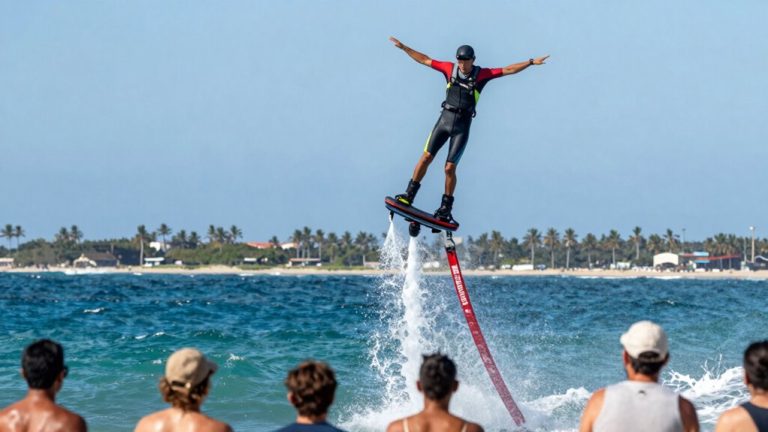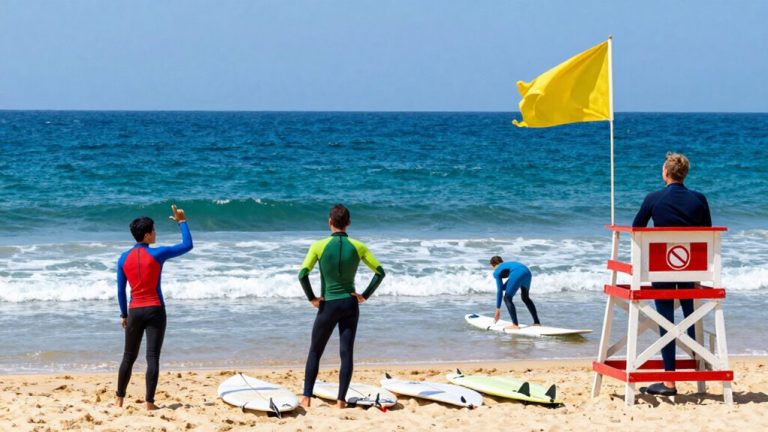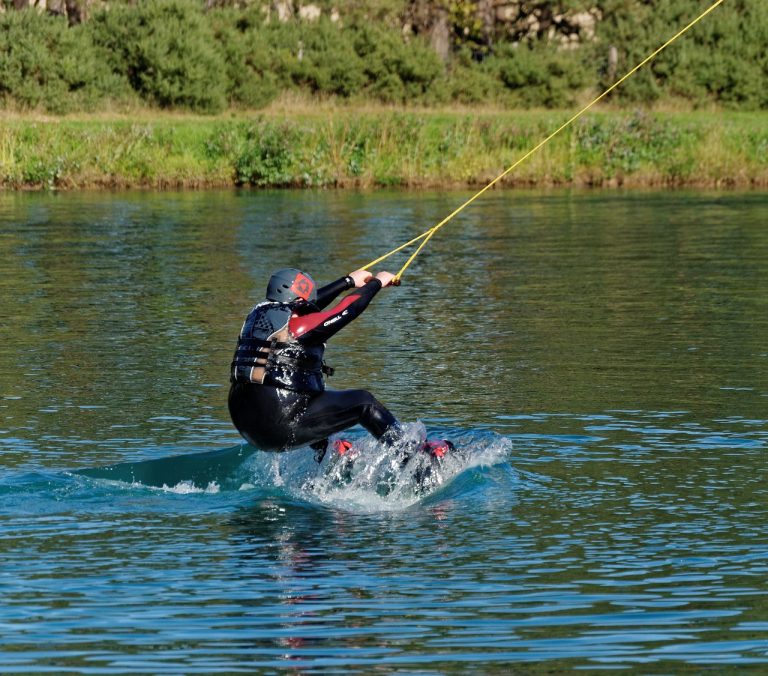
Flyboarding Safety Rules
Many people underestimate the importance of safety rules when it comes to flyboarding. It’s not just about having fun; it’s about ensuring a secure experience on the water. You need to understand your equipment and wear the right safety gear. Familiarizing yourself with your surroundings and following your instructor’s guidance can make all the difference. There’s more to reflect on, including your limits and having a solid safety plan. Let’s explore these essential aspects further.
Understand Your Equipment

Before you hit the water, it’s essential to understand your flyboarding equipment. Familiarize yourself with the different equipment types, such as the flyboard itself, the jet ski or watercraft, and the necessary hoses. Each component plays a vital role in your experience, providing the freedom you crave while ensuring your safety.
Pay attention to the safety features integrated into your gear, like adjustable foot straps and quick-release mechanisms, which enhance control and security. Understanding how these elements work together will empower you to maximize your performance and enjoyment.
Properly configured equipment allows you to glide effortlessly above the water, giving you that exhilarating sensation of freedom. So, take the time to learn your gear before launching into the skies.
Wear the Right Safety Gear
Wearing the right safety gear is vital for your protection while flyboarding.
Essential equipment like life jackets, helmets, and proper footwear can greatly reduce the risk of injury.
Prioritizing safety gear not only enhances your experience but also guarantees you’re prepared for any unexpected situations on the water.
Essential Protective Equipment
Safety gear is crucial for flyboarding, as it greatly reduces the risk of injury. To make sure you’re prepared for an exhilarating experience, always wear the right protective gear, which meets safety standards. This not only enhances your freedom on the water but also guarantees your safety.
| Protective Gear | Purpose |
|---|---|
| Helmet | Protects your head from impacts |
| Life Vest | Keeps you afloat in emergencies |
| Knee Pads | Shields your knees from abrasions |
| Wrist Guards | Protects wrists from strain |
Investing in quality equipment is essential. Remember, your freedom to fly can only be fully enjoyed when you prioritize safety. Don’t skimp on protective gear; it’s the foundation of safe flyboarding.
Importance of Life Jackets
While enjoying the thrill of flyboarding, you can’t underestimate the importance of wearing a life jacket. Choosing the right life jacket types is vital for your safety.
Opt for a Coast Guard-approved personal flotation device that fits snugly yet comfortably. Buoyancy aids are essential, as they provide the support you need if you unexpectedly fall into the water.
A well-fitted life jacket allows you to stay afloat while still enjoying the freedom of movement that flyboarding offers. Remember, safety should never be an afterthought.
Whether you’re a beginner or an experienced flyer, wearing a life jacket not only protects you but also enhances your confidence on the water. Prioritize your safety and immerse yourself in the adventure with peace of mind!
Helmets and Footwear Safety
To fully enjoy the exhilarating experience of flyboarding, you must prioritize wearing the right safety gear, including helmets and appropriate footwear. Helmets protect your head from impact, and choosing the right helmet type—such as full-face or open-face—can enhance your comfort and safety. Additionally, proper footwear is essential; it should provide grip and support while being made from durable materials like rubber or neoprene.
| Helmet Types | Footwear Materials | Benefits |
|---|---|---|
| Full-Face Helmet | Rubber | Maximum protection |
| Open-Face Helmet | Neoprene | Enhanced comfort |
| Lightweight Helmet | Synthetic | Reduced weight |
| Adjustable Helmet | Mesh | Custom fit |
Check Weather Conditions
Before you hit the water, it’s vital to check the weather conditions, as they can greatly impact your flyboarding experience.
Start by reviewing weather forecasts to make sure you’re not caught off guard by sudden changes. Pay close attention to wind conditions; strong winds can make control difficult and increase the risk of accidents.
Ideally, flyboarding is best enjoyed on calm days with light winds. Don’t underestimate how weather can affect your safety and performance. If the forecast indicates storms or high winds, it’s wise to postpone your session.
Prioritizing safety allows you to fully embrace the exhilarating freedom of flyboarding while minimizing risks. Always respect nature’s power to guarantee a thrilling yet safe adventure on the water.
Familiarize Yourself With the Water Area
Understanding the layout of the water area is essential for your safety and enjoyment while flyboarding. Before you hit the water, take time to assess the water depth and current strength.
Shallow areas can pose risks, so make sure you’re in deeper water where you can maneuver freely. Also, be aware of any strong currents that could affect your stability and control.
Familiarizing yourself with the surroundings helps you avoid obstacles like rocks or boats, allowing for a more exhilarating experience. Know the entry and exit points, and always keep an eye on your surroundings while you flyboard.
This awareness not only enhances your freedom on the water but also guarantees you stay safe throughout your adventure.
Follow Instructor Guidance
Listening to your instructor is essential for a safe and enjoyable flyboarding experience. Their expertise guarantees you grasp the skills needed to navigate the water confidently.
Remember, effective instructor communication is vital. Embrace their guidance and be aware of the following:
- Follow all safety briefings and instructions.
- Ask questions if you don’t understand something.
- Maintain eye contact with your instructor during sessions.
- Adjust your posture and movements as directed.
The importance of guidance can’t be overstated; it’s your roadmap to freedom on the water.
By adhering to your instructor’s advice, you’re not just enhancing your flyboarding skills, but you’re also fostering a safer environment for yourself and those around you.
Enjoy the thrill while staying safe!
Maintain a Safe Distance From Others
When flyboarding, it’s essential to maintain clear zones around you.
Always monitor the activities of others nearby to avoid collisions or accidents.
Staying aware of your surroundings guarantees a safer experience for everyone involved.
Keep Clear Zones
To guarantee a safe and enjoyable flyboarding experience, it’s important to maintain clear zones around you.
These safety perimeters help prevent accidents and guarantee everyone has a great time on the water.
Here are some key points to remember:
- Stay at least 10 feet away from other flyboarders to avoid collisions.
- Keep clear of boats and jet skis; they can create dangerous wakes and obstacles.
- Avoid crowded areas where other water activities are taking place.
- Communicate with others in the vicinity to maintain awareness of each other’s positions.
Monitor Surrounding Activities
While you’re enjoying the thrill of flyboarding, it’s essential to monitor surrounding activities to guarantee your safety and that of others. Maintain activity awareness by performing environmental scanning. Keep a safe distance from other watercraft, swimmers, and fellow flyboarders. This vigilance allows you to react promptly to any unforeseen situations.
| Tips for Monitoring | Actions to Take |
|---|---|
| Stay aware of other users | Adjust your position accordingly |
| Watch for signs of distress | Be ready to assist if necessary |
| Keep an eye on changing weather | Return to shore if conditions worsen |
Be Aware of Your Surroundings
Being aware of your surroundings is essential for ensuring a safe flyboarding experience.
Awareness of your surroundings is crucial for a safe and enjoyable flyboarding experience.
To maximize your enjoyment and minimize risks, focus on enhancing your environmental awareness and spatial orientation.
Keep these points in mind:
- Watch for obstacles: Be alert to nearby boats, jet skis, or swimmers that could pose a danger.
- Understand wind and water conditions: Changes in weather can affect your flight and control.
- Check local regulations: Some areas have specific rules for flyboarding that you must follow.
- Maintain communication: Stay connected with your instructor and fellow riders to coordinate movements.
Know Your Limits
Knowing your limits is essential for a safe and enjoyable flyboarding experience. Before you hit the water, assess your personal capabilities and physical fitness.
If you’re new to the sport, start with basic maneuvers and gradually build your skills. Pushing beyond what you can handle can lead to accidents or injuries.
Remember, flyboarding requires balance, strength, and coordination, so it’s vital to be in good shape. Listen to your body; if you’re feeling fatigued or unsteady, it’s better to take a break than to risk a fall.
Embrace the freedom that flyboarding offers, but always prioritize safety by knowing your limits. This awareness will enhance your experience and allow you to enjoy the thrill without unnecessary risks.
Have a Safety Plan in Place
Having a safety plan in place is essential for guaranteeing a secure flyboarding experience. You need to identify potential risks and establish emergency procedures before hitting the water.
A safety plan is crucial for a secure flyboarding experience, ensuring risks are managed and emergency procedures are clear.
A thorough risk assessment will help you understand your surroundings and prepare for any unforeseen circumstances. Here’s what to include in your safety plan:
- Designate a safety officer to oversee the session.
- Guarantee all participants are briefed on emergency procedures.
- Keep a first aid kit and communication devices on hand.
- Establish clear signals for emergencies or equipment issues.
Frequently Asked Questions
How Old Do You Need to Be to Flyboard?
You need to be at least 16 years old to flyboard, according to safety guidelines. Always check local regulations, as age requirements may vary. Prioritize safety while enjoying the exhilarating freedom flyboarding offers.
Can I Flyboard With a Pre-Existing Medical Condition?
You can flyboard with a pre-existing medical condition, but you’ll need medical clearance and a risk assessment. Always prioritize your health and make certain you’re fit to enjoy the freedom of flyboarding safely.
Is Flyboarding Safe for Beginners?
Flyboarding can be safe for beginners, with a 90% success rate reported in lessons. Just remember beginner tips and essential safety precautions; stay aware of your surroundings and listen closely to your instructor’s guidance.
What Should I Do if I Fall Off?
If you fall off, stay calm and remember your falling techniques. Keep your body relaxed, and be aware of the water’s surface. This way, you’ll minimize impact and return to enjoying your flyboarding experience.
How Much Does It Typically Cost to Flyboard?
Typically, flyboard pricing ranges from $100 to $200 per hour for rentals. Prices can vary based on location and provider, but investing in this exhilarating experience offers you an unmatched sense of freedom and adventure.