10 Best Lifting Belts for Powerlifting
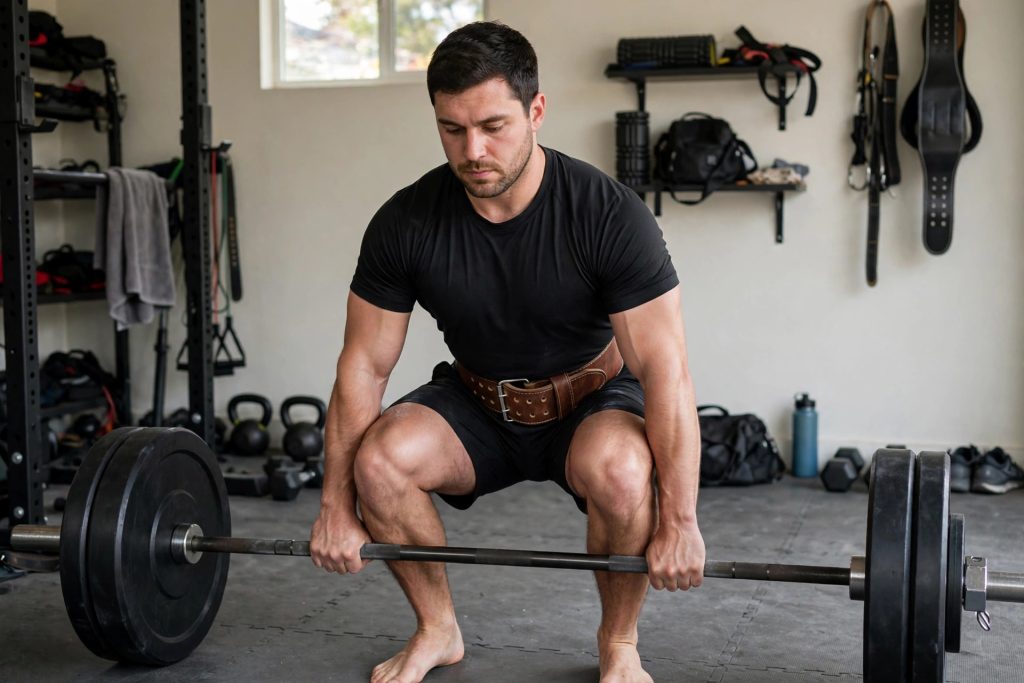
A lifting belt is one of the few pieces of gym gear that can genuinely add pounds to your squat and deadlift on day one. It gives your core something to brace against: take a big breath into a properly tightened belt and intra-abdominal pressure spikes, turning your trunk into a rigid column that keeps your spine safe and transfers force cleanly instead of leaking it through a soft midsection.
Not every belt serves a powerlifter’s needs, though. The right choice comes down to buckle type (lever, prong, or quick-lock), thickness (5mm for comfort up to 13mm for maximum rigidity), and sizing — measured around your navel, never by pants size. A belt is also the natural next purchase after the big-ticket station of a home gym: if you’re still building out your setup, our guide to power racks for your home gym covers the foundations these belts are meant to be used under. I’ve verified the specs, sizes, prices, and editorial signals behind the ten best lifting belts on Amazon so you can buy the right support the first time.
As an Amazon Associate, I earn from qualifying purchases. Prices fluctuate — check the current price before you buy.
Top 10 Lifting Belts at a Glance
| Product | Price | Key Spec | Dimensions | Best For | |
|---|---|---|---|---|---|
| Inzer Advance Designs Forever Lever Belt 10MM | ~$115–$140 | 10mm solid leather, patented lever, IPF approved, made in USA | 4" wide, XS–5XL (measure navel) | Best Overall Lever Belt | CHECK PRICE |
| SBD 13mm Powerlifting Belt | ~$300–$330 | 13mm British cowhide, gliding lever, IPF approved | 13mm × 10cm, XS–5XL | Best Premium 13mm Belt | CHECK PRICE |
| Pioneer 10mm Lever Belt PAL V2 | ~$190–$240 | PAL V2 adjustable lever, 5 half-inch increments, no tools | 4" wide, multiple sizes | Best Adjustable Lever Belt | CHECK PRICE |
| Hawk Sports 10mm Lever Belt | ~$45–$65 | 10mm genuine leather, 4" lever belt, #70 in category | 4" wide, sizes 26"–44" | Best Value Lever Belt | CHECK PRICE |
| Gymreapers 7MM Pro Leather Belt | ~$45–$65 | 7mm pro-grade leather, single prong, suede lining, ~4.5★ | 4" wide, XS–2XL | Best Value Prong Belt | CHECK PRICE |
| Dark Iron Fitness Genuine Leather Belt 5mm | ~$35–$50 | 5mm leather, double prong, 4.7★/~24,920 ratings, lifetime guarantee | 4" wide, XS–XL | Best Budget Leather Belt | CHECK PRICE |
| Hawk Fitness 10mm Double Prong Suede Belt | ~$30–$50 | 10mm suede leather, double prong, very stiff | 4" wide, multiple sizes | Best Budget 10mm Double-Prong | CHECK PRICE |
| Harbinger 4" Padded Leather Contoured Belt | ~$25–$40 | Leather + foam core, suede lining, dual-prong roller buckle, 4.6★ | 4" contoured (6" option) | Best Padded Bodybuilding Belt | CHECK PRICE |
| Element 26 Self-Locking Weight Lifting Belt | ~$55–$75 | Heavy-duty nylon, self-locking metal buckle, #1 in category | 4" wide, S–XL | Best Nylon Belt | CHECK PRICE |
| Gymreapers Quick Locking Weight Lifting Belt | ~$30–$45 | Nylon + 4" neoprene, quick-lock metal buckle, #3 in category | 4" wide, XS–XL | Best Quick-Lock Neoprene Belt | CHECK PRICE |
The 10 Best Lifting Belts — Quick Reviews
1. Inzer Advance Designs Forever Lever Belt 10MM — Best Overall Lever Belt
The Inzer Forever is the belt every other lever belt gets compared to: a single solid 10mm of leather — no laminated layers to separate — with a suede finish, four rows of lock-stitched nylon, and a patented quick-release lever that locks tighter than any buckle and flicks open in under a second. IPF approved, made in the USA, and guaranteed FOREVER at a workingman’s price — one belt for a lifetime of squats and deadlifts.
The honest trade-offs: a new Inzer is a brick, so expect a real break-in, and moving the lever between holes needs a screwdriver. Note: the linked ASIN is a 2XL child variant — confirm your size and color on the parent listing before checkout. Measure your braced waist at the navel, never your pants size; if you’re between sizes, go up, because the lever pulls tighter than any buckle.
Key specs: 10mm single solid leather, no laminates · 4″ width · patented quick-release lever · 4 rows lock-stitched nylon · IPF approved · made in USA · guaranteed FOREVER · XS–5XL · ~$115–$140
2. SBD 13mm Powerlifting Belt — Best Premium 13mm Belt
SBD solved the oldest argument in belt design: the gliding lever gives prong-style fine adjustability with lever lockdown, so you never choose between perfect fit and maximum tightness. It’s 13mm thick and 10cm wide — the maximum competition dimensions — built from four layers of British cowhide leather prepared over five months, with a black oiled finish and red suede interior. IPF approved, made in Great Britain, and the benchmark belt of elite powerlifters. If money is no object and you want the single best bracing tool money can buy, this is it.
The caveats are price and listing maturity: ~$300–$330 is triple the Inzer, and this Amazon listing is relatively new (mid-2025) with a thin review history — verify the live listing and your exact size variant at checkout before buying. Size by your braced waist at the navel (Medium ≈ 28.5–35.5″), and note that 13mm is the stiffest, most unforgiving option here — built for maximal attempts, not casual accessory days.
Key specs: 13mm × 10cm, max competition dimensions · patented gliding lever · 4 layers British cowhide + suede · IPF approved · made in Great Britain · XS–5XL · verify the live listing before you buy · ~$300–$330
3. Pioneer 10mm Lever Belt PAL V2 — Best Adjustable Lever Belt
Every classic lever belt has one maddening flaw: fixed one-inch hole spacing means you’re always either between holes or crushing yourself. Pioneer’s patent-pending PAL V2 lever fixes that with five half-inch tightening and loosening increments — no tools, no screwdriver — for prong-belt adjustability with lever tightness. The belt is 10mm of vegetable-tanned sole leather with black suede inside and out (no slip, no leather dust), made in Texas, and backed by a lifetime guarantee. For lifters whose bodyweight fluctuates between training blocks, it’s the most practical lever on this list.
Two things to know. First, the Amazon ASIN is single-sourced — verify the live listing before you buy. Second, and this matters for competitors, Pioneer levers are approved for all federations EXCEPT IPF and its affiliates. USAPL and USPA lifters are fine; IPF lifters need the Inzer or SBD above. Within those bounds, it’s the cleverest lever design in powerlifting and worth the premium over fixed-hole levers.
Key specs: 10mm vegetable-tanned leather · 4″ width · PAL V2 adjustable lever, five ½” increments, no tools · black suede inside/out · USPA/USAPL legal (NOT IPF approved) · made in USA · lifetime guarantee · verify the live listing before you buy · ~$190–$240
4. Hawk Sports 10mm Lever Belt — Best Value Lever Belt
The Hawk Sports 10mm lever is the cheapest credible way into a true 10mm lever belt — roughly a third of the Inzer’s price. You get genuine 10mm leather, a full 4-inch width, and a lever buckle from a listing live since 2018, ranked #70 in Amazon’s Weight Lifting Belts. For a lifter who wants to try the lever experience without committing to a premium belt, or a beginner who wants real 10mm support on a student budget, this is the obvious entry point.
The price shows in the details: it’s an import belt, and the leather finish and lever quality reflect that versus the US-made levers above. It’s also a parent listing with multiple color and size variants, so confirm your exact color and size at checkout rather than trusting the default selection. A working 10mm lever that out-braces any nylon belt — not a forever heirloom, and at this price that’s a fair trade.
Key specs: 10mm genuine leather · 4″ width · lever buckle · #70 in Weight Lifting Belts · sizes 26″–44″ · Small/Silver/Black colorways · confirm color/size at checkout · ~$45–$65
5. Gymreapers 7MM Pro Leather Belt — Best Value Prong Belt
Some lifters simply don’t want a lever — they want a classic prong belt that’s infinitely adjustable, easy to share with a training partner, and free of hardware that needs tools. The Gymreapers 7MM Pro splits the difference between thin budget belts and stiff 10mm comp bricks: 7mm of pro-grade genuine leather with a suede lining, 4-inch width, and a single-prong buckle. With ~4.5 stars across roughly 3,100 reviews and a strong category rank, it’s one of the most trusted mid-thickness belts on Amazon — and it breaks in faster than any 10mm or 13mm belt here.
The honest framing: 7mm doesn’t deliver the maximum rigidity of 10mm or 13mm belts, so if you’re peaking for a meet and chasing a PR total, one of the lever picks above is the better competition tool. But for heavy squats, deads, rows, overhead pressing, and general strength work, 7mm is plenty, and the single prong means micro-adjusting tightness between sets with no screwdriver. If you’re also upgrading hand protection for heavy sessions, our guide to the best gym gloves for heavy lifting pairs well with this belt.
Key specs: 7mm pro-grade genuine leather · 4″ width · single-prong buckle · suede lining · ~4.5★ / ~3,100 reviews · sizes XS–2XL · ~$45–$65
6. Dark Iron Fitness Genuine Leather Belt 5mm — Best Budget Leather Belt
The Dark Iron Fitness belt is the budget king of real leather belts: 5mm genuine leather, 4-inch width, double-prong buckle, reinforced double-row stitching, and 12 adjustable holes across XS–XL. It carries a lifetime replacement guarantee — almost unheard of at this price — and the deepest review base of any leather belt on this list: roughly 24,920 ratings at 4.7 stars, ranked #12 in the category. When a budget belt has that much crowd proof behind it, the review volume is doing real verification work.
The limitation is physics, not quality: 5mm is thinner than the 7mm, 10mm, and 13mm picks, so it braces less rigidly on maximal squats. This is the belt for lifters who want leather’s feel and durability for general strength training, volume work, and early progression — not the belt for a 600-pound squat attempt. The dense hole spacing means you must follow the waist-measurement chart carefully: size by waist, not pants, or you’ll land between usable holes.
Key specs: 5mm genuine leather · 4″ width · double-prong buckle · reinforced double-row stitching · 12 holes, XS–XL · lifetime replacement guarantee · 4.7★ / ~24,920 ratings · #12 in category · ~$35–$50
7. Hawk Fitness Power Lifting Belt 10mm Double Prong (Suede) — Best Budget 10mm Double-Prong
Here’s the interesting one: a genuine 10mm thick belt with a double-prong buckle at a price that undercuts most 5mm belts. The Hawk Fitness suede-leather belt delivers maximum-thickness support in the infinitely-adjustable prong format — one verified reviewer deadlifted 360 kg on it, and it’s widely used as a first meet belt in the UK powerlifting scene. If you want 10mm rigidity but refuse to pay lever prices, this is the cheapest door in.
Three caveats. First, it’s very stiff out of the box — allow weeks of break-in. Second, the red colorway can fade and bleed onto shirts in sweaty sessions, so dark training shirts are the safe call. Third, the mirror data skews UK — confirm you’re buying the US .com variant with live pricing before checkout. Break it in patiently and it rewards you with competition-grade support at a fraction of the cost.
Key specs: 10mm suede leather · 4″ width · double-prong buckle · very stiff out of box, long break-in · 1-year warranty · confirm the US .com variant live · ~$30–$50
8. Harbinger 4″ Padded Leather Contoured Belt — Best Padded Bodybuilding Belt
Not every training day is a max-effort squat day. The Harbinger contoured belt is the classic comfortable bodybuilding belt: real leather over a foam core with an interior suede lining, a contoured 4-inch profile (a 6-inch option exists), and a heavy-duty dual-prong steel roller buckle that cinches smoothly. With 4.6 stars across 1,897 reviews and decades of gym-floor proof behind the Harbinger name, it’s the belt that eliminates rib-digging on rows, presses, and accessory work — sessions where a stiff comp belt feels like armor you don’t need.
The boundary to respect: padded and contoured means this is NOT a maximum-rigidity powerlifting belt. For comp-style braced squats and deadlifts, pick a flat 10mm lever or prong belt from the picks above; foam cushioning trades away exactly the rigidity those lifts demand. Buy it for what it is — the comfortable everyday belt for bodybuilding sessions and lifters who find flat comp belts punishing on their ribs.
Key specs: Leather with foam core + suede lining · contoured 4″ profile (6″ option) · dual-prong steel roller buckle · double-stitched · sizes S–XL · 4.6★ / 1,897 reviews · ~$25–$40
9. Element 26 Self-Locking Weight Lifting Belt — Best Nylon Belt
The Element 26 is the #1 belt in Amazon’s entire Weight Lifting Belts category, and it earned that rank by solving velcro’s biggest weakness: instead of hook-and-loop that wears out and pops mid-set, it uses a patented self-locking metal buckle on heavy-duty nylon webbing. It locks at any tightness, holds through the set, and never degrades. At 4 inches wide and roughly 6.5mm thick, it’s the reference self-locking belt for functional fitness, Olympic lifting, and lifters who cinch and release fast between exercises.
Know what you’re getting: nylon is not leather. It feels different under load and braces less rigidly than a 10mm leather belt, so this isn’t the tool for maximal powerlifting attempts — it’s the tool for CrossFit-style WODs, Olympic lifts, and general training where adjustment speed matters more than absolute stiffness. One listing note: the linked ASIN is the Medium child variant — size strictly by waist measurement and confirm your size variant at checkout.
Key specs: Heavy-duty nylon webbing · patented self-locking metal buckle (no velcro) · 4″ wide, ~6.5mm thick · competition approved · #1 in Weight Lifting Belts · sizes S–XL · linked ASIN is Medium — confirm your size on the parent listing · ~$55–$75
10. Gymreapers Quick Locking Weight Lifting Belt — Best Quick-Lock Neoprene Belt
The Gymreapers Quick Locking belt is the crowd favorite for lifters who live in supersets: heavy-duty nylon over 4 inches of neoprene with a metal quick-lock buckle that releases and relocks in seconds. At #3 in Weight Lifting Belts with 4.4 stars across 1,745 reviews and a lifetime warranty, it has the buy-velocity and crowd proof of a belt that gets used daily — comfortable against bare skin, uniform 4-inch width, and priced for lifters who want support without leather maintenance or break-in.
Keep it in its lane: this is not a substitute for a rigid leather belt on max-effort squats and deadlifts — neoprene flexes where leather locks, and it should. Use it for metcons, accessory circuits, Olympic lifting, and volume training where you’re constantly loosening and retightening. One variant note: some colorways (notably tan) carry different child ASINs, so confirm the variant you want at checkout. Size around the navel, not your pants waistline.
Key specs: Heavy-duty nylon + 4″ neoprene · metal quick-lock buckle · uniform 4″ width · 4.4★ / 1,745 reviews · #3 in category · lifetime warranty · sizes XS–XL · confirm colorway variant · ~$30–$45
How to Choose a Lifting Belt
- Lever vs. prong vs. quick-lock: pick your buckle philosophy. Levers lock down tightest and release in a flick, but adjusting tightness needs tools (except Pioneer’s PAL V2). Prongs adjust infinitely with no tools and are easy to share; they’re slower to cinch.
- Match thickness to your training: 5mm, 7mm, 10mm, or 13mm. 5mm is comfortable and flexible for general strength work; 7mm is the sweet spot for most lifters — rigid but quick to break in; 10mm is the competition standard for heavy squats and deadlifts; 13mm is the maximum — stiffest bracing, longest break-in, built for maximal attempts.
- Size by navel measurement, never pants size. Measure your waist around the navel while braced — pants sizes run 2–4 inches smaller than reality. On a lever belt, size up if you’re between sizes: levers pull tighter than buckles, and an undersized lever belt is unusable.
- Leather vs. nylon vs. neoprene: choose honestly. Leather is rigid, durable, and the only choice for maximal bracing — but it needs break-in. Nylon is light, adjusts in seconds, and suits Olympic lifting and WODs. Neoprene is the most comfortable and fastest on/off, but flexes too much for max-effort powerlifting.
- Check federation legality if you compete. Most flat 10mm and 13mm belts are broadly approved, but there are exceptions: the Pioneer PAL V2 is legal for USPA and USAPL but NOT for IPF, while the Inzer Forever and SBD 13mm carry IPF approval. Before buying a comp belt, confirm your federation’s current rules — the general rules of powerlifting cover the equipment standards to check.
- Respect the break-in. A new 10mm or 13mm leather belt is a stiff board — expect days to weeks of rolling, wearing, and training before it molds to your torso. That’s normal, not a defect. Nylon and neoprene belts have essentially zero break-in, which is part of their appeal for fast-paced training.
FAQs
Lever vs. prong buckle — which is better for powerlifting? For pure competition performance, lever belts win: they lock tighter than any buckle and release in a second, which matters when you’re catching your breath between heavy attempts. The Inzer Forever is the classic answer. Prong belts trade a little lockdown for infinite adjustability with no tools — better if your bodyweight fluctuates or you share the belt. The Pioneer’s PAL V2 lever splits the difference. If you only train (no meets), either works; if you compete, a lever is the standard choice.
What belt thickness should a beginner start with? Start at 7mm or 5mm. A 7mm belt like the Gymreapers Pro gives genuine rigid support with a short break-in; a 5mm belt like the Dark Iron is the gentlest introduction to braced lifting. Beginners should not start at 10mm or 13mm — those belts are stiff, uncomfortable until broken in, and overkill until your squat and deadlift loads demand maximum rigidity. Upgrade to 10mm when your top sets consistently feel limited by the belt.
How tight should a lifting belt be, and how do I size one? Tight enough to brace against hard, not so tight you can’t take a full breath into your belly — you should be able to fit a finger or two between the belt and your abdomen when braced. Size by measuring around the navel while lightly braced, never by pants size (which runs 2–4 inches small). Wear it higher for squats (covering lower ribs to hips) and slightly lower for deadlifts so it doesn’t jam your ribs at the bottom. Between sizes on a lever belt? Always size up.
Do lifting belts weaken your core? No — not when used correctly. A belt doesn’t brace for you; it gives your abdominal wall something to push against, which actually lets you contract your core harder and build more trunk strength under heavier loads. The evidence-based guideline: use the belt for heavy working sets (roughly 80%+ of your max) and do warm-ups without it, so your unbelted bracing stays strong. Belts only become a crutch if you wear one for every rep or cinch so tight you brace against the belt instead of creating your own pressure.