
Adjustable Dumbbells vs Traditional Dumbbells: Pros, Cons, and Which to Buy
Imagine a gym in a box, where every rep can be tweaked without swapping plates. You’ll weigh the compact convenience of adjustable dumbbells against the rugged precision of fixed ones, balancing space, cost, and weight‑range accuracy. Durability, maintenance, and quick‑change mechanisms each tip the scales for different users. Knowing which trade‑offs matter most to your training goals will guide you toward the set that truly fits your routine.
Adjustable vs. Traditional Dumbbells: How They Work
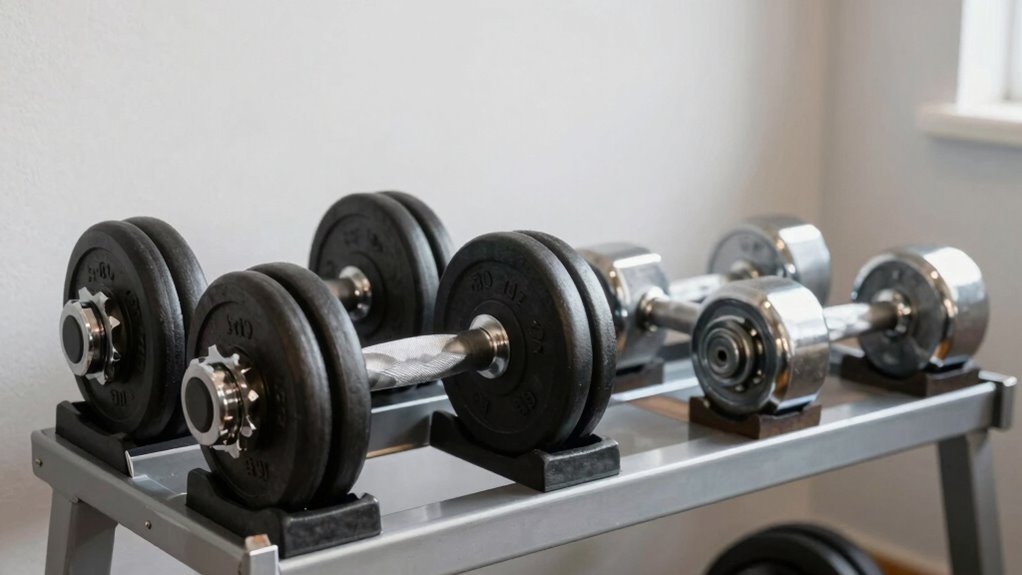
One quick glance shows the core difference: adjustable dumbbells use a single handle with interchangeable weight plates, while traditional dumbbells consist of fixed‑weight bars and fixed plates.
You’ll notice the adjustable mechanisms rely on quick‑lock pins or dial‑style selectors, letting you add or remove plates in seconds. Traditional weights, by contrast, require you to swap entire dumbbells for each load, which can interrupt flow.
The user experience with adjustables feels fluid—your workout versatility expands as you shift from curls to presses without hunting for new equipment.
Fixed‑weight sets deliver consistent feel and balance, but they limit incremental progression.
Durability of Traditional Dumbbells – Built to Last
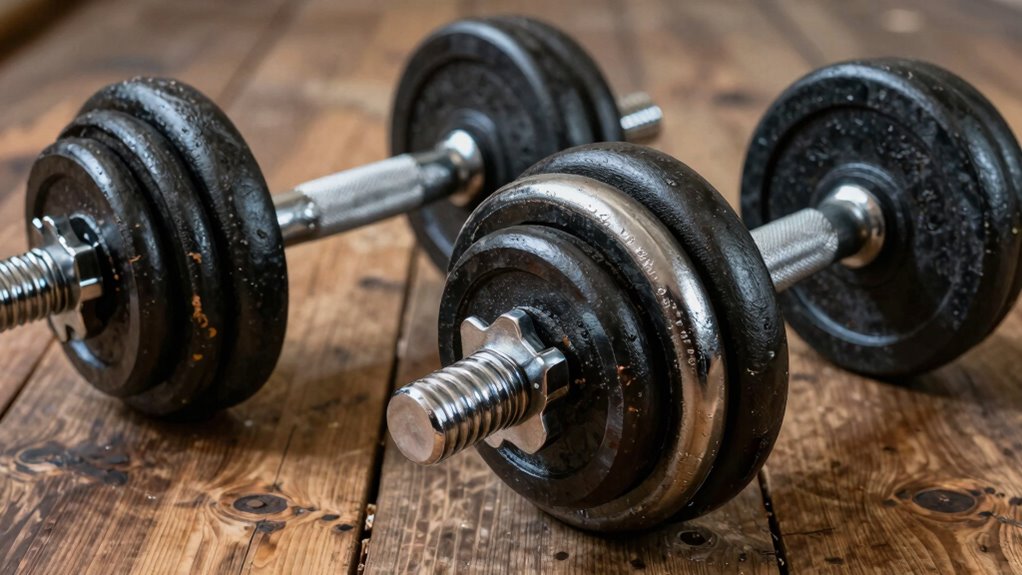
After noting how quickly adjustable sets let you swap plates, you’ll find that traditional dumbbells excel in long‑term durability.
Their solid‑cast iron or steel cores, often coated with rubber or urethane, deliver material quality that resists dents, corrosion, and wear. Because each weight is integral, there are no moving parts to loosen, so you experience consistent balance and grip throughout years of use.
This construction translates directly to user longevity—you won’t replace a set after a few hundred reps like you might with a mechanically complex adjustable pair.
Compared with the friction‑prone hinges of adjustable models, traditional dumbbells maintain structural integrity, offering a reliable, hassle‑free workout experience that aligns with your desire for freedom and uninterrupted training.
Space Needs for Adjustable vs. Traditional Dumbbells
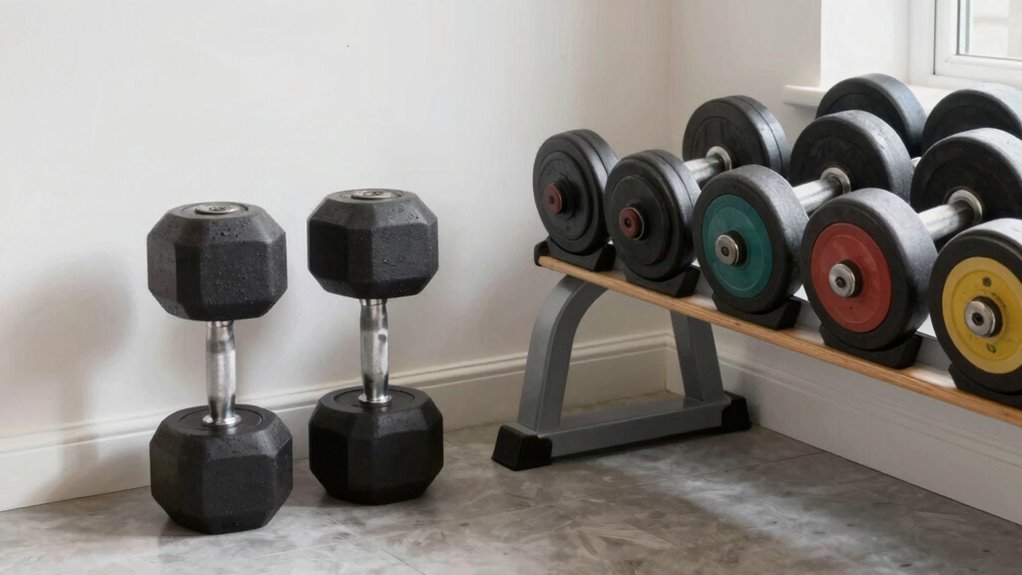
You’ll notice the adjustable set occupies a compact footprint while a full rack of traditional dumbbells spreads across the floor.
The concentrated weight distribution of the adjustable unit lets you stack plates without sacrificing balance, whereas each traditional dumbbell’s mass is fixed and spaced apart.
Consequently, storage flexibility favors the adjustable option, especially in tight home gyms.
Compact Footprint Comparison
A typical home gym can accommodate an adjustable dumbbell set in roughly a third of the floor space a full rack of traditional dumbbells consumes, because the former consolidates multiple weight plates into a single, compact unit while the latter requires individual bars and plates spread across a rack.
You’ll notice immediate space efficiency: a single 5‑inch footprint replaces a multi‑tier rack that can dominate a corner. This reduction frees up room for cardio gear, yoga mats, or functional‑training zones, enhancing the versatility benefits of a minimalist setup.
When you compare dimensions, the adjustable pair usually weighs less and stacks neatly on a shelf, whereas traditional sets demand a dedicated storage rack and often a floor‑level footprint.
The compact design translates to faster setup, easier rearrangement, and a more open workout environment that supports unrestricted movement.
Weight Distribution Impact
When you load an adjustable dumbbell, the weight is centralized in a single, compact housing, so the overall footprint stays nearly unchanged regardless of the load. In contrast, adding plates to a traditional dumbbell expands its radius and often requires a broader rack to accommodate the growing stack.
This difference in weight distribution directly influences exercise efficiency. A tightly packed mass keeps the center of gravity close to your hand, reducing torque and allowing smoother, more controlled lifts. Traditional sets, with their outward‑projecting plates, shift the balance outward, demanding extra grip strength to stabilize each rep.
Consequently, adjustable dumbbells let you maintain consistent form across loads, while traditional ones may compromise efficiency as the stack grows. This technical trade‑off matters for anyone seeking unrestricted movement and peak performance.
Storage Flexibility Options
The compact mass of an adjustable dumbbell means you can stash a full 100‑lb set in a single, shoe‑box‑sized compartment, whereas a traditional rack expands outward as plates accumulate, often demanding a dedicated shelf or a floor‑standing rack that can accommodate a 5‑foot‑wide footprint.
You’ll notice that adjustable units rely on integrated weight organization, so a single clamp or dial replaces dozens of plates and pins. This translates into minimal storage solutions: a closet corner, under a bed, or a garage pegboard can hold the entire range.
Traditional dumbbells, by contrast, require separate plates, collars, and a sturdy frame, inflating the spatial footprint and forcing you to allocate a permanent zone. When you value freedom to rearrange rooms, the adjustable system’s compact design offers decisive advantage.
True Cost of Adjustable vs. Fixed Dumbbells
Even if you focus solely on price tags, the true cost of adjustable dumbbells versus fixed ones extends beyond the sticker. You’ll compare upfront expense, maintenance, and space‑efficiency, which together shape a cost comparison that feels like a long term investment in freedom.
Even beyond price tags, adjustable dumbbells offer long‑term savings, durability, and space‑efficiency.
- Initial purchase – Adjustable sets often cost 30‑50 % less than buying a full rack of fixed pairs.
- Durability & wear – Fixed dumbbells have fewer moving parts, reducing long‑term repair risk.
- Space & logistics – Adjustable units collapse into a single footprint, saving rental or garage space that could otherwise demand extra fees.
Weight‑Range Precision of Adjustable and Traditional Dumbbells
Beyond cost, the way you fine‑tune each rep hinges on how precisely the dumbbell’s weight increments match your training needs.
Adjustable sets typically offer 2‑lb or 5‑lb steps, giving you a broad range but sometimes compromising weight precision for convenience. Traditional fixed dumbbells deliver exact 1‑lb increments, letting you fine‑tune loads for progressive overload without guesswork.
When you chase micro‑progressions, that 1‑lb granularity can be decisive. However, adjustment speed matters: a dial‑or‑pin system lets you shift 10‑lb in seconds, while swapping plates can take longer.
You the faster adjustment speed of premium adjustables with the granular weight precision of fixed plates, you can maintain a fluid workout rhythm while still targeting exact load targets.
Do Quick‑Change Mechanisms Slow You Down? Maintenance Tips
While you’re racing between sets, a quick‑change mechanism can feel like a double‑edged sword: it slashes the time spent swapping plates, yet a poorly designed dial or pin may jam, forcing you to pause and troubleshoot.
To keep quick change efficiency high, treat the mechanism like a high‑performance gear system—regular upkeep prevents costly downtime.
Treat the quick‑change mechanism like a high‑performance gear system—regular upkeep prevents costly downtime.
- Inspect the dial and pins after every 10‑15 workouts; clean debris with a dry cloth.
- Lubricate moving parts using a silicone‑based spray once a month; avoid oil that attracts dust.
- Tighten loose screws quarterly; a torque wrench guarantees consistent pressure and prevents slippage.
Who Benefits Most? User Profiles for Each Dumbbell Type
Which user gains the most from each dumbbell design?
If you’re a beginner lifter craving simple progression, adjustable sets let you add weight without swapping plates, keeping your routine fluid.
Space savers and home gymmers benefit from the compact footprint of a single adjustable tower, freeing floor area for cardio gear.
Strength trainers who demand precise increments and rapid plate changes prefer traditional dumbbells; the fixed‑weight feel supports heavy, low‑rep work and consistent load distribution.
Fitness enthusiasts who mix cardio, HIIT, and circuit training enjoy the versatility of both—adjustables for quick load shifts, traditional pairs for quick drop sets.
Budget buyers lean toward adjustables, because one set replaces dozens of fixed plates, reducing upfront cost while preserving upgrade potential.
Which Dumbbell Set Wins for Your Budget, Space, and Goals?
Ever wonder how to balance cost, footprint, and performance when choosing dumbbells? You’ll need to weigh budget considerations against fitness goals, space optimization, and user experience. Below are the three decisive factors:
- Price vs. Weight Preferences – Adjustable sets often undercut traditional kits when you need a wide range, yet assembly while‑ a‑ dumbbells can become pricey per pound.
- Space & Assembly Requirements – Adjustable units excel in compact rooms; they need minimal floor area and simple click‑lock assembly. Traditional sets demand a rack or floor space that grows with each plate.
- Workout Variety & Brand Comparisons – Adjustable dumbbells deliver fast weight changes for circuit training, while fixed pairs provide consistent balance for heavy lifts.
Compare durability, grip ergonomics, and warranty to match your performance and freedom‑focused routine.
Choose the system that aligns with your space, budget, and long‑term training plan.
Frequently Asked Questions
Can Adjustable Dumbbells Be Used for Olympic Lifting Techniques?
Yes, you can use adjustable dumbbells for Olympic lifting, but their weight distribution often differs from barbell setups, limiting balance and power transfer during complex lifts. Choose wisely for peak performance.
Do Traditional Dumbbells Require Special Flooring to Protect Floors?
Yes, traditional dumbbells need floor protection; without proper weight distribution, they can dent or scratch surfaces. Use rubber mats or interlocking tiles to preserve your space, ensuring safe, unrestricted workouts.
How Do Temperature Changes Affect the Weight Plates of Adjustable Sets?
Temperature swings can cause expansion or contraction in the metal plates, slightly altering weight stability and material durability; you’ll notice minor shifts in balance, especially if the set’s alloy isn’t temperature‑treated.
Are There Insurance Options for Damage to Adjustable Dumbbell Mechanisms?
You can get insurance coverage for adjustable mechanisms, though policies vary; compare providers, check exclusions, and guarantee the plan specifically lists equipment failure to protect your investment.
Can I Integrate Smart Tracking Sensors Into Either Dumbbell Type?
You can embed smart technology into both, but adjustable dumbbells offer easier fitness‑tracking integration thanks to their modular design, while traditional sets require external sensors, limiting seamless data capture.